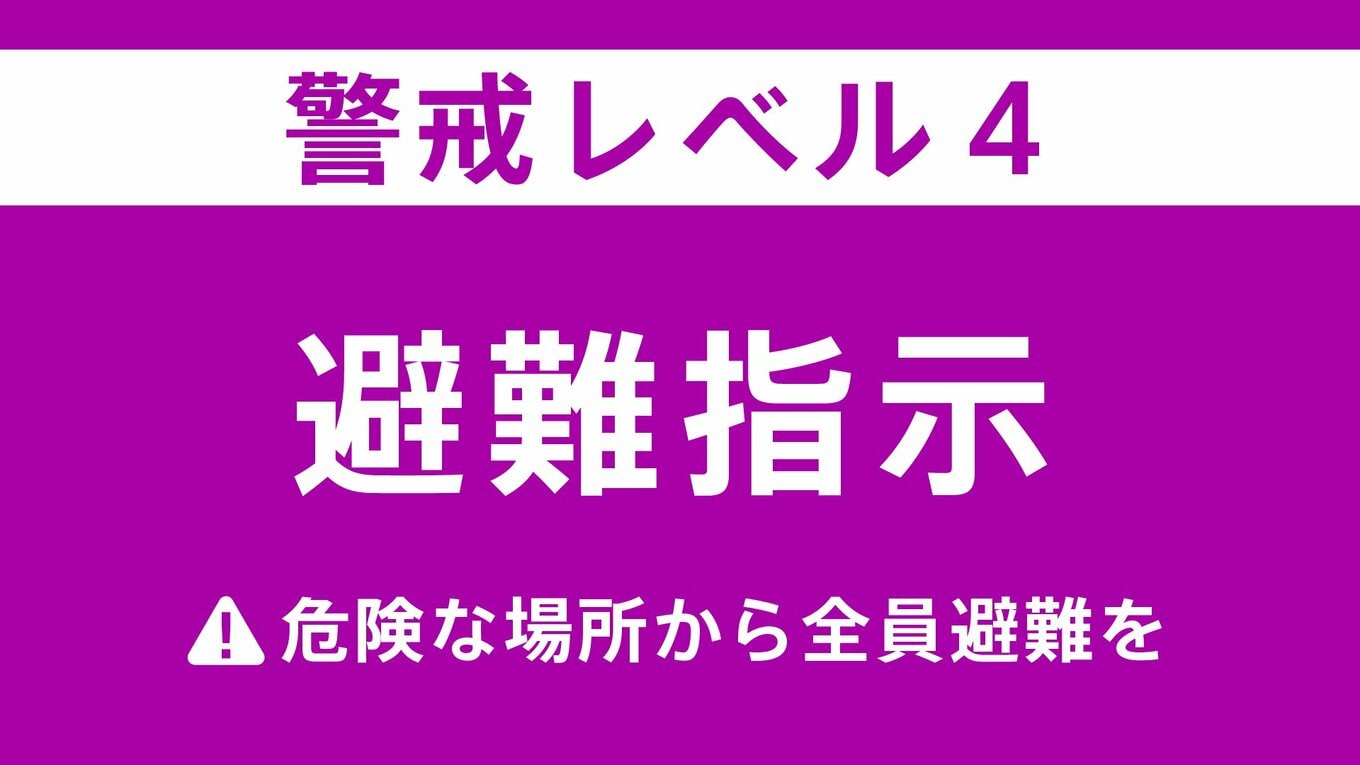
Mie Prefecture’s Taiki Town issued an “Evacuation Order (Warning Level 4)” at 10:00 AM on the 8th.
The “Evacuation Order (Warning Level 4)” was issued for 819 households and 1,500 people in the Nishiki area.
Those who are subject to evacuation under the “Evacuation Order” are people in dangerous areas with potential for flooding or landslides. If you are in a dangerous area, please evacuate to a safe place immediately.
◆Additional Information from Local Government
Due to a tsunami advisory being issued,
an evacuation order is in effect for coastal areas.
◆Areas Under Evacuation Order
○Nishiki Area: 819 households (1,500 people)
◆Check the Latest Evacuation Information for Your Current Location
◆About Evacuation Information
When an “Evacuation Order” is Issued
An “Evacuation Order (Warning Level 4)” is the second highest danger level, “Warning Level 4,” out of five warning levels. Those subject to evacuation under “Warning Level 4” are people in dangerous areas with potential for flooding or landslides.
If you are in a dangerous area, please evacuate to a safe place immediately.
By evacuating immediately, you can expect to complete a “relocation evacuation” to a nearby designated emergency evacuation site set by the municipality before a disaster occurs. Starting evacuation after a “Heavy Rain Special Warning” or “Flood Occurrence Information,” which correspond to the highest danger “Warning Level 5,” may lead to delays. Do not wait for “Warning Level 5”; be sure to start evacuating during “Warning Level 4” and complete your evacuation before it escalates.
*Please confirm the latest information on the local government’s website.
*This evacuation information is posted based on announcements from the local government.
Mie Prefecture
Mie Prefecture is a region in Japan known for its rich cultural heritage and natural beauty, including the historic Ise Grand Shrine, one of Shinto’s most sacred sites. The area was historically significant as a center of pilgrimage and trade along the Tokaido road, and it also features the ninja heritage of Iga Province. Today, Mie is famous for its pearl cultivation, Matsusaka beef, and scenic spots like the Kumano Kodo pilgrimage routes.
Taiki Town
Taiki Town, located in Hokkaido, Japan, is known for its scenic coastal landscapes and agricultural heritage. Historically, the area developed as a fishing and farming community, with its name derived from the Ainu language. Today, it is recognized for its dairy farming, seasonal festivals, and the Taiki Town Museum, which showcases local history and culture.
Nishiki area
The Nishiki area in Kyoto, Japan, is best known for Nishiki Market, a vibrant, narrow shopping street often called “Kyoto’s Kitchen.” Dating back to the early Edo period (17th century), the market originally served as a wholesale fish market and has since evolved into a bustling hub with over a hundred shops and stalls selling fresh seafood, produce, and traditional Kyoto specialties. Today, it remains a cultural landmark where locals and visitors alike can experience the city’s rich culinary heritage.
Ise Grand Shrine
Ise Grand Shrine, located in Mie Prefecture, Japan, is one of the most sacred Shinto sites, dedicated to the sun goddess Amaterasu. Its history dates back over 2,000 years, and it is famous for the ritual of *shikinen sengū*, where the shrine’s main buildings are meticulously rebuilt every 20 years to symbolize renewal and purity. The shrine complex consists of two main shrines, Naikū and Gekū, and remains a major pilgrimage destination.
Tokaido road
The Tokaido Road was one of Japan’s most important historical highways, connecting Kyoto, the imperial capital, with Edo (modern-day Tokyo), the seat of the shogunate. Established during the Edo period (1603–1868), it served as a major route for travel, trade, and communication, featuring 53 post stations where travelers could rest and resupply. Today, its legacy is preserved in literature, art, and modern highways that roughly follow the ancient path.
Iga Province
Iga Province, located in present-day Mie Prefecture, Japan, was a historic region known as the birthplace of ninjutsu and the famous Iga ninja clans. During the Sengoku period, the Iga ninja were renowned for their guerrilla warfare and espionage skills, but their autonomy was crushed by Oda Nobunaga’s invasion in 1581. Today, the area preserves its legacy through museums and cultural sites dedicated to ninja history.
Kumano Kodo pilgrimage routes
The Kumano Kodo are ancient pilgrimage routes through the mountainous Kii Peninsula of Japan, connecting several sacred Shinto and Buddhist sites, including the three grand shrines of Kumano. For over a thousand years, emperors, aristocrats, and commoners have traveled these paths seeking spiritual purification and rebirth. Designated a UNESCO World Heritage Site in 2004, the network remains a living cultural landscape that blends natural beauty with centuries of religious tradition.
Taiki Town Museum
The Taiki Town Museum, located in Hokkaido, Japan, focuses on the natural history and cultural heritage of the Taiki region, with a particular emphasis on dinosaur fossils. The area is famous for the discovery of the *Kamuysaurus japonicus* (“Japanese dragon dinosaur”) in 2013, one of the largest complete dinosaur skeletons ever found in Japan, which is now a centerpiece of the museum. Through its exhibits, the museum showcases the region’s prehistoric past as well as its local history, including the Ainu culture and early settlement.
Nishiki Market
Nishiki Market is a historic, narrow shopping street in Kyoto, Japan, often called “Kyoto’s Kitchen” for its long-standing focus on fresh and specialty food items. Its origins date back to the early 17th century, when it began as a fish market and later expanded to include a wide variety of local produce, seafood, and traditional Kyoto delicacies. Today, it remains a vibrant cultural site where visitors can experience the city’s culinary heritage through its many shops and small eateries.