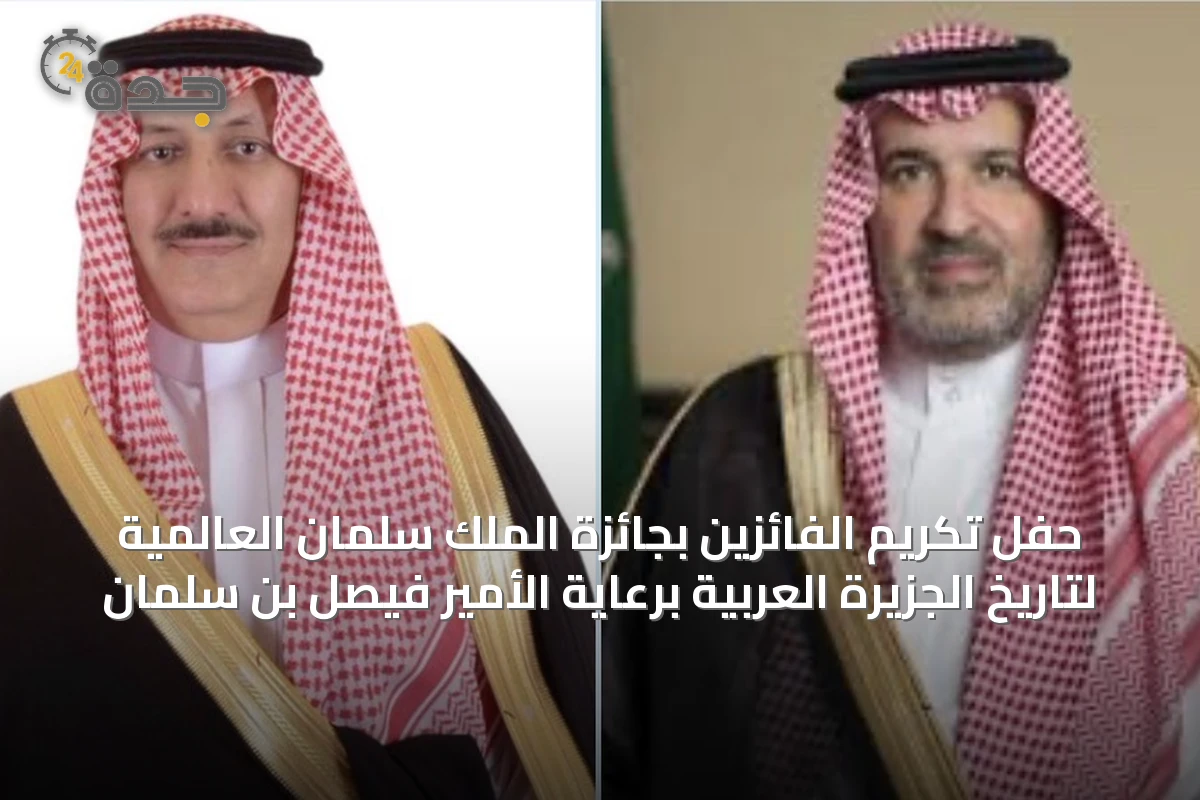
Prince Dr. Naif bin Thunayan bin Mohammed, the General Supervisor of the King Salman Center for the Study of the History and Civilization of the Arabian Peninsula at King Saud University, and the Secretary-General of the King Salman Global Award for Graduate Studies in this field, announced that the center will hold the award ceremony for its third session for the year 2026.
Details of the Ceremony and Its Patronage
Prince Naif explained that the event will take place tomorrow (Monday) on the campus of King Saud University, under the patronage of Prince Faisal bin Salman bin Abdulaziz, the Special Advisor to the Custodian of the Two Holy Mosques, and Chairman of the Board of Directors of the King Abdulaziz Foundation.
Award Objectives and Promotion of Scientific Research
He noted that the award seeks to recognize the efforts of the Custodian of the Two Holy Mosques, King Salman bin Abdulaziz Al Saud, in supporting researchers and scholars. It also aims to motivate graduate students at Saudi and foreign universities to conduct research related to the history and civilization of the Arabian Peninsula, and to foster a spirit of competition in preparing distinguished academic theses both within and outside the kingdom.
Award Fields and Target Categories
Prince Naif stated that the scope of the award covers everything related to the history and civilization of the Arabian Peninsula. The target beneficiaries are graduate students who have completed master’s or doctoral theses of outstanding quality in this field. The award is granted in two categories: master’s theses (or equivalent) and doctoral theses, and includes a financial component, medals, and specially designed certificates bearing the award’s logo.
Developments in the Current Session
Prince Naif explained that this session has seen notable improvements in its basic system, both in the formation of judging committees and in the rules for evaluating research. Additionally, the scope of nominations has been expanded to include all Arab and foreign universities, after being limited in its previous two sessions to researchers from Saudi Arabia and the Gulf Cooperation Council countries.
He concluded by expressing his deep gratitude to the Custodian of the Two Holy Mosques, King Salman bin Abdulaziz Al Saud, and his faithful Crown Prince, for their continuous support of scientific research and its programs in all academic institutions inside and outside the kingdom.