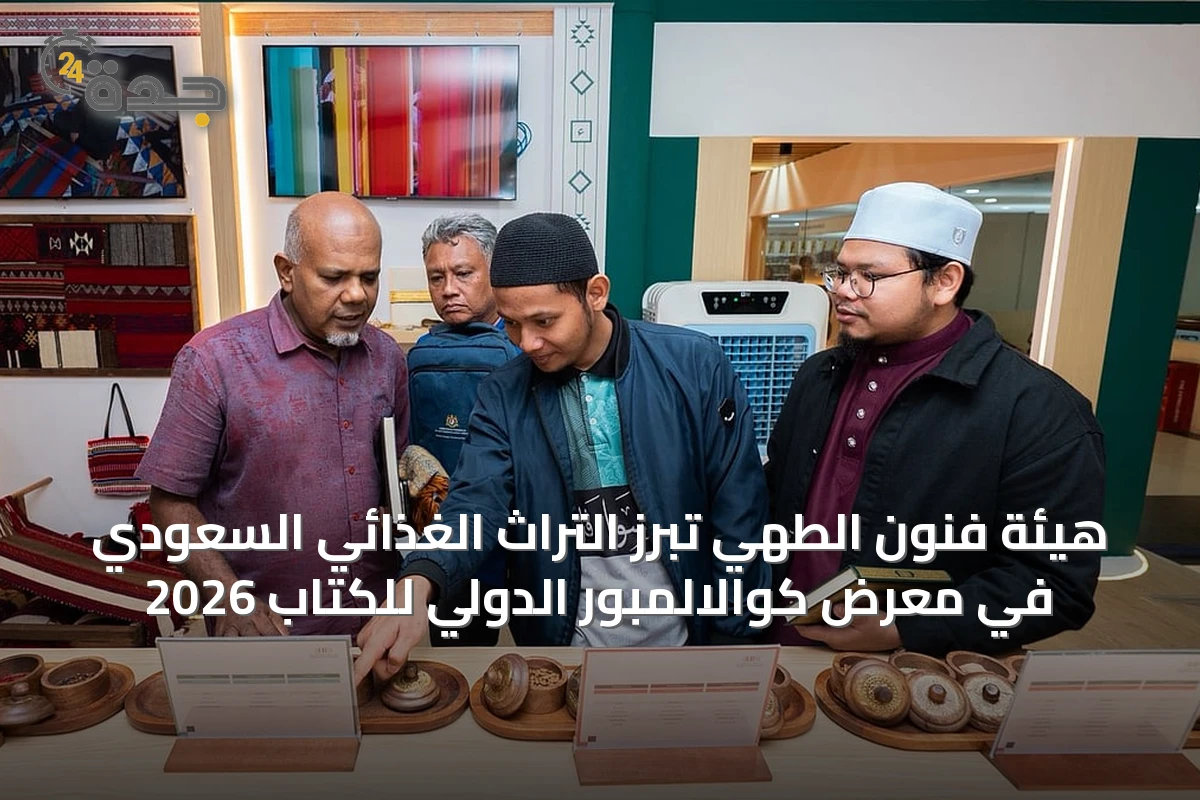
The Culinary Arts Commission participated in the Saudi pavilion at the Kuala Lumpur International Book Fair 2026, showcasing a collection of publications that document and preserve the Kingdom’s food heritage, presenting local culinary arts as an integral part of the national cultural identity.
Book “Saudi Table Spread” Highlights Regional Diversity
Among the displayed publications, the book “Saudi Table Spread,” issued by the “Heritage of Our Kitchen” initiative, stands out. The book documents cooking traditions across Saudi Arabia’s thirteen regions, and in 2024 it won the prestigious “Gourmand” World Cookbook Award in the categories of “Best Hospitality Book” and “Best Arabic Cookbook.”
“Buraydah” Corner Tells the Story of Food Heritage in Al-Qassim
The corner dedicated to the book “Buraydah” contains a narrative of the food and cultural heritage of the Al-Qassim region, focusing on popular dishes that emerged due to the agricultural environment and traditional markets. It also discusses the city’s journey to being registered as a UNESCO Creative City of Gastronomy, becoming the first from the Gulf states and the second in the Arab world within the Creative Cities Network in this field.
Commission’s Goals from Participating in the Fair
Through its presence, the Commission aims to introduce fair visitors to its efforts in collecting and documenting traditional Saudi recipes, enhancing the capabilities of chefs and artisans, and preserving the national food heritage as an element of intangible cultural heritage.
Emphasis on the Role of Food Heritage in National Identity
The participation in Kuala Lumpur shows how food heritage contributes to strengthening national pride, giving new momentum to documenting and reviving traditional dishes that express the history and culture of the Saudi people.
Kuala Lumpur International Book Fair 2026
The Kuala Lumpur International Book Fair 2026 is a major annual literary event held in Malaysia, continuing a tradition that began in the 1980s. It serves as a vibrant platform for publishers, authors, and readers from around the world to gather, exchange ideas, and celebrate books and reading culture. The fair typically features book launches, discussions, and cultural performances, reflecting Malaysia’s diverse literary heritage and its role as a hub for Southeast Asian publishing.
Saudi pavilion
The Saudi Pavilion is a cultural exhibition space that showcases the heritage, innovation, and future vision of Saudi Arabia, often featured at global events like Expo 2020 Dubai. Its design typically blends traditional Arabian architecture with modern elements, highlighting the country’s history as a crossroads of trade and culture. The pavilion also emphasizes Saudi Arabia’s contemporary developments, including its Vision 2030 plan for economic and social transformation.
Saudi Table Spread
“Saudi Table Spread” refers to the traditional hospitality practice in Saudi Arabia where hosts present a large communal meal, often featuring dishes like Kabsa (spiced rice with meat), dates, and Arabic coffee. Rooted in Bedouin customs of generosity and community, this practice has been central to Saudi culture for centuries, symbolizing unity and respect for guests. Today, it remains a cherished tradition at family gatherings, festivals, and formal events, reflecting the kingdom’s deep cultural heritage.
Buraydah
Buraydah is a major city in central Saudi Arabia and the capital of the Al-Qassim Province. Historically, it has been a significant agricultural and trading hub, known especially for its production of dates, and it served as an important stop along ancient caravan routes. Today, it is a modern city that retains its cultural heritage, hosting the annual Buraydah Date Festival, one of the world’s largest date markets.
Al-Qassim
Al-Qassim is a region in central Saudi Arabia known for its rich agricultural heritage, particularly as a major producer of dates, with Buraidah and Unaizah as its key cities. Historically, it served as an important crossroads for trade and pilgrimage routes, and it played a significant role in the unification of Saudi Arabia under King Abdulaziz in the early 20th century. Today, it is celebrated for its cultural festivals, traditional architecture, and the historic Al-Qassim Museum.
UNESCO Creative City of Gastronomy
The UNESCO Creative City of Gastronomy is a designation awarded by UNESCO to cities that recognize gastronomy as a key part of their cultural heritage and sustainable development. This program, part of the UNESCO Creative Cities Network launched in 2004, highlights cities that use food to foster creativity, social inclusion, and economic growth. Examples include cities like Parma, Italy, and San Antonio, USA, which celebrate their unique culinary traditions and innovations.
Kuala Lumpur
Kuala Lumpur is the capital city of Malaysia, known for its iconic Petronas Twin Towers and diverse cultural heritage. Founded in 1857 as a tin mining settlement, it grew rapidly under British colonial rule and later became a major economic hub. Today, it blends modern skyscrapers with historic sites like Merdeka Square and traditional markets, reflecting its multicultural population.
Creative Cities Network
The Creative Cities Network is a UNESCO initiative launched in 2004 to promote international cooperation among cities that identify creativity as a strategic factor for sustainable urban development. Member cities are designated in seven creative fields: Crafts & Folk Arts, Design, Film, Gastronomy, Literature, Media Arts, and Music. The network aims to foster cultural exchange, share best practices, and strengthen the role of culture in city planning and economic growth.