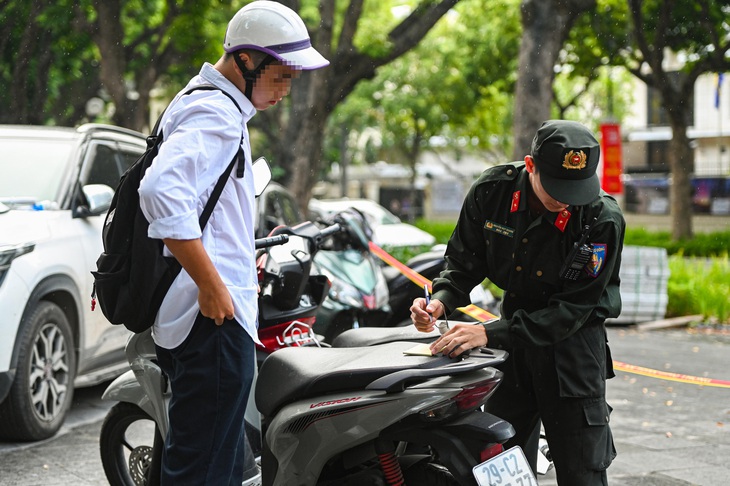
On June 6, it was reported that public attention has recently focused on handling the act of handing over vehicles to people who are not qualified to participate in traffic. However, many people still do not fully understand when vehicle owners will be penalized.
No mechanical enforcement
According to a representative of the unit, drivers must meet standards regarding age, health, and must have a valid driver’s license with remaining points.
In addition, a key factor is that the person receiving the vehicle must ensure that their body contains no alcohol, drugs, or other stimulants prohibited by law.
For the vehicle owner or manager, Clause 7, Article 9 of the Law on Order and Safety clearly prohibits the act of handing over motor vehicles or specialized motorcycles to people who are not qualified to control them.
“This means vehicle owners are responsible for checking and ensuring that the borrower meets all legal requirements before handing over the vehicle,” emphasized a representative of the Traffic Police Department, adding that administrative penalties for the act of handing over vehicles are not applied mechanically.
During the process of handling a case, the authorized person to impose administrative penalties must fully verify all relevant circumstances and evidence.
Penalties are only imposed when it is determined that the vehicle owner or manager knew that the borrower or recipient of the vehicle was not qualified to drive.
Therefore, the assumption that all cases of handing over vehicles result in penalties, or conversely, that none do, does not fully reflect the current legal regulations.
According to Article 65 of the Law on Handling Administrative Violations, there are also five cases where authorities do not issue a penalty decision against the vehicle owner: emergency circumstances, legitimate self-defense, unexpected or force majeure events; inability to identify the violator; expiration of the statute of limitations for penalties or the deadline to issue a penalty decision; the violator has died or gone missing, or the violating organization has dissolved or gone bankrupt; the case file shows signs of a crime and has been transferred for criminal prosecution.
Serious violations may result in up to 7 years in prison
Authorities also stated that Article 264 of the Penal Code clearly defines the crime of “handing over a vehicle to a person not qualified to drive a road vehicle.”
Depending on the nature and severity of the consequences, violators may face fines of up to 50 million VND, non-custodial reform for up to 3 years, or a maximum prison sentence of up to 7 years.
In reality, many localities have prosecuted cases related to this behavior. Therefore, the Traffic Police Department advises people to absolutely not hand over vehicles to minors, people without a valid driver’s license, or those who have consumed alcohol, beer, or drugs.
“Every vehicle owner needs to clearly understand their responsibility in managing and using vehicles. Handing over a vehicle to an unqualified person not only poses a risk of causing serious traffic accidents but can also lead to administrative or criminal liability as prescribed,” added the representative of the Traffic Police Department.
According to records, the situation of parents and students violating traffic rules, such as not wearing helmets, riding three abreast, or driving on sidewalks, is still quite common in front of school gates, posing a risk of accidents.