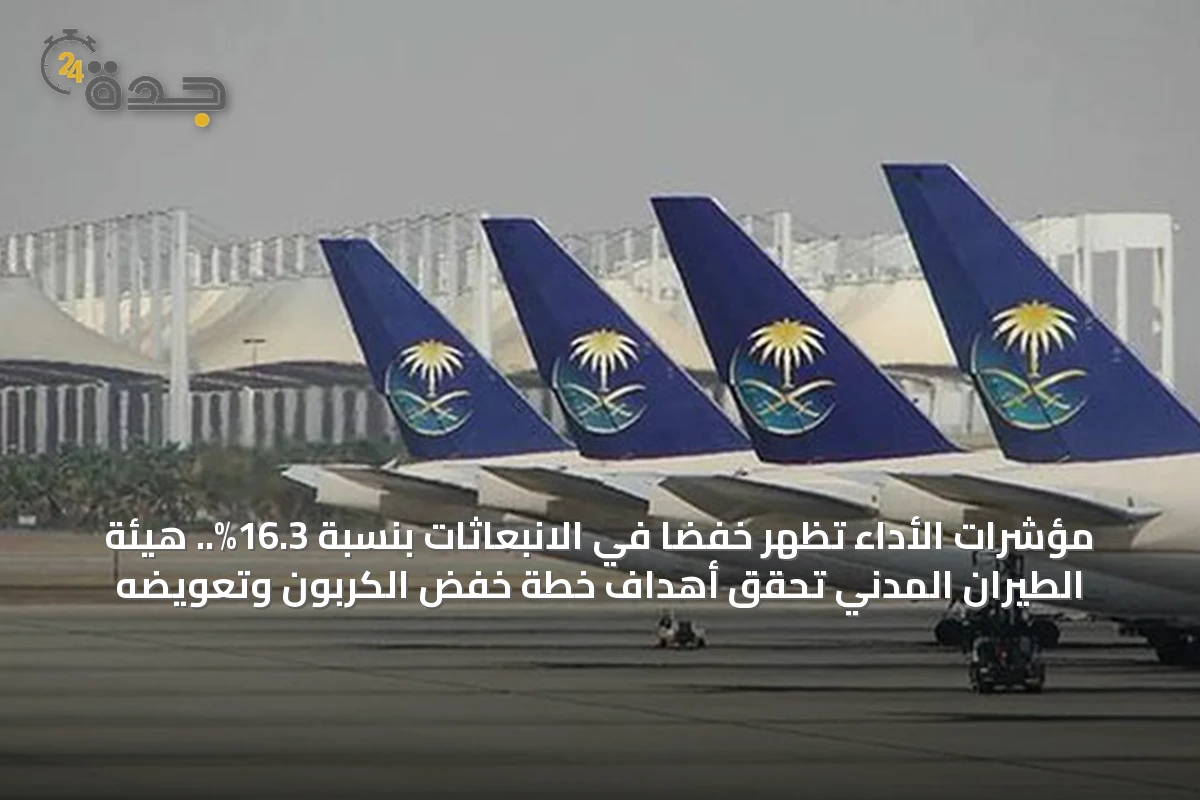
The institutional performance indicators of the General Authority of Civil Aviation during 2025 showed a full compliance rate (100%) with the timeline set for the Carbon Offsetting and Reduction Scheme for International Aviation, known as “CORSIA.” These indicators contributed to reducing carbon dioxide emissions by updating the fleet of national carriers, improving operational efficiency, and increasing the load factor of flights.
Reduction rate compared to the expected scenario
The authority explained, on the occasion of World Environment Day, that the indicators recorded a 16.3% decrease in emissions compared to the expected business-as-usual scenario for the same year. This reduction was supported by the introduction of more than 14 modern aircraft into the fleets of national carriers, as well as an improvement in the load factor, which rose from 148 to 155 passengers per flight movement.
Qualitative achievements in 2025
The year 2025 witnessed a number of qualitative achievements in this field, most notably enhancing compliance with international standards for environmental protection in the aviation sector. This was achieved through the integration of environmental compliance indicators with the national safety program, adopting modern regulatory frameworks that included an advanced air mobility roadmap, and implementing strategic initiatives to improve airspace and resource efficiency.
Sustainability program and commitment to “CORSIA”
The authority continued to implement the environmental sustainability program for civil aviation and the national plan to reduce emissions, while adhering to the requirements of the Carbon Offsetting and Reduction Scheme for International Aviation “CORSIA.” This plan is one of the leading global initiatives of the International Civil Aviation Organization “ICAO” to reduce carbon emissions resulting from international air transport.
The authority’s role in building a sustainable system
These efforts are an extension of the role played by the General Authority of Civil Aviation in building a safe and sustainable civil aviation system that supports economic growth and enhances the kingdom’s global air connectivity, while preserving the environment and achieving national and international sustainability goals. This solidifies the kingdom’s position as a leading model in developing an advanced and sustainable aviation sector.