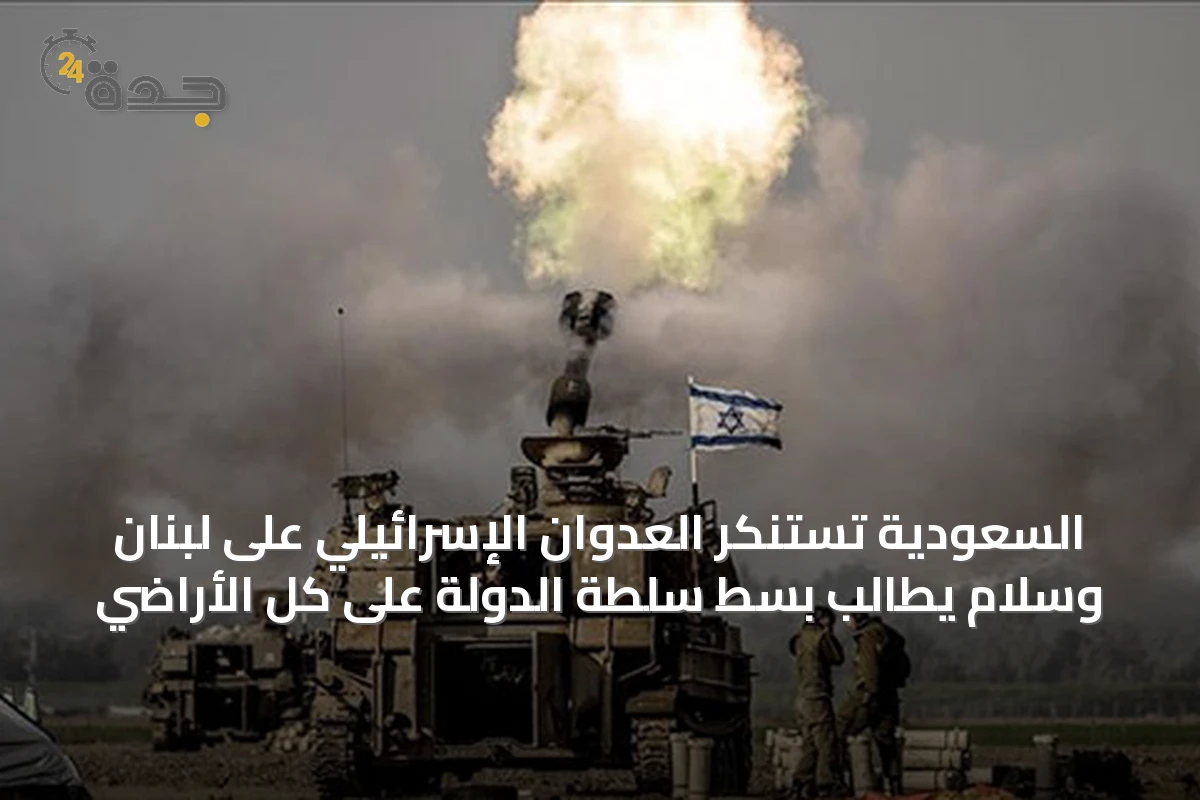
The Saudi Ministry of Foreign Affairs issued an official statement expressing its strong condemnation and denunciation of the continued Israeli aggression against the sisterly Lebanese Republic, stating its absolute rejection of any targeting that violates Lebanon’s sovereignty or its armed forces.
The statement said the Kingdom extends its warmest condolences and sympathy to the families of the victims and to the government and people of Lebanon, following the killing of a number of Lebanese army personnel, including officers, while performing their national duty, affirming its full solidarity with Lebanon and its people in facing anything that threatens its security and stability.
Lebanese Prime Minister: Sovereignty is a Red Line
Meanwhile, Lebanese Prime Minister Nawaf Salam stressed in press statements the necessity of extending the Lebanese state’s authority over its entire territory, as Israeli aircraft continue to launch raids on areas in the south, amid a field escalation that has caused casualties in the army ranks.
Salam affirmed Lebanon’s complete commitment to its sovereignty and security, and its rejection of any violation of them under any circumstances, pointing out that the suffering of the people of the south is the suffering of all Lebanese, and that the state stands by its citizens in facing the repercussions of this ongoing escalation.
Israeli Targeting of a Lebanese Military Vehicle
The Prime Minister’s statements came following serious field developments, represented by an Israeli drone striking a military vehicle belonging to the Lebanese army on the Khardali-Nabatieh road, resulting in the deaths of a number of soldiers, including two officers and a soldier, according to an official statement issued by the Lebanese army.
The Lebanese army considered this targeting to be part of a series of ongoing Israeli assaults on Lebanese territory, which, it said, hinder efforts aimed at reaching a political solution, amid continued tension on the southern border.
For its part, Israel justified the attack by stating that the military vehicle was moving in an active combat zone, claiming its forces detected a potential threat before striking it, and indicated that it had opened an investigation into the incident and would draw conclusions based on the results of the investigations.
Israeli Raids and Hezbollah Attacks
Southern Lebanon witnessed Israeli air raids on several towns in recent hours, including Saksakiyeh and other areas, coinciding with warnings issued by the Israeli army for residents of a number of villages in the south and western Beqaa to evacuate.
In response, Hezbollah announced carrying out attacks with drones targeting Israeli military concentrations in the vicinity of the town of Yahmar al-Shaqif, as part of the ongoing mutual retaliation between the two sides that has continued for months.
Diplomatic Moves and Security Arrangements
These developments come despite the diplomatic moves witnessed recently in the American capital Washington, where rounds of talks were held between Lebanese and Israeli delegations under American sponsorship, during which preliminary understandings were reached regarding a ceasefire. However, they remained conditional on implementing security arrangements in the south, most notably the withdrawal of militants from south of the Litani River and the exclusive deployment of the Lebanese army in those areas.
In this context, the Lebanese army continues to strengthen its presence in southern areas within what it described as experimental deployment zones, as part of arrangements aimed at imposing state control over all Lebanese territory, while excluding any presence of non-governmental armed forces.