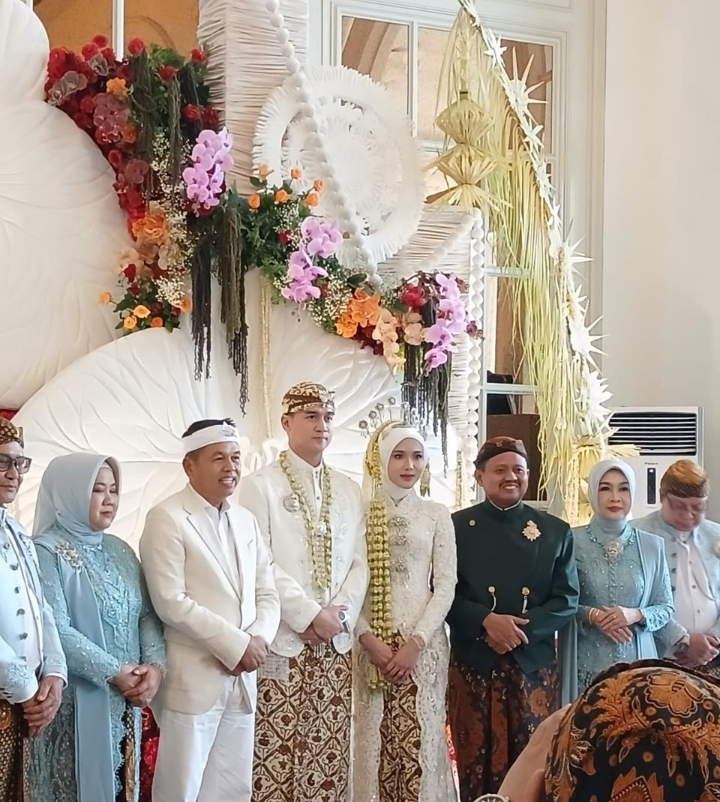
Vice Regent of Sumedang, M. Fajar Aldila, officially ended his bachelorhood on a special date (6/6/2026).
Based on gathered information, the marriage contract between Vice Regent Fajar and his wife Astria Dita Oktavia was held at Tribrata Darmawangsa, South Jakarta.
According to the Head of the Protocol and Leadership Communication Division at the Regional Secretariat of Sumedang, Wuddan Lukmannul Hakim, Vice Regent Fajar conducted the marriage contract around this morning.
The wedding reception will take place at 7:00 PM local time tonight.
“Today I attended the wedding of Mr. Vice Regent with Miss Dita in Jakarta. Coincidentally, Mr. Regent and his wife were also present as witnesses for Mr. Vice Regent’s wedding,” said Wuddan on his Instagram page.
Wuddan also highlighted the phenomenon that might cause many women in Sumedang to feel heartbroken. Because Fajar has been a dream figure for women in Sumedang since he paired with Regent Dony during the last regional election.
“Pray that this wedding goes smoothly, and may Mr. Vice Regent have a blessed and harmonious marriage. Basically, today is a heartbreak day for all of Sumedang,” he said.
Besides Regent Dony, Governor of West Java Dedi Mulyadi also attended the wedding invitation. The presence of Deputy Minister of Home Affairs Bima Arya also provided some words for the couple.
The digital invitations that have been distributed are also quite interesting, considering Fajar and his wife had their pre-wedding photoshoot at leading tourist destinations in Sumedang, such as Taman Seribu Cahaya, Jan’s Park, Tanjung Duriat, Al Kamil Jatigede Mosque, and Menara Kujang Sapsang.
Tribrata Darmawangsa
Tribrata Darmawangsa is a prominent landmark and office complex located in South Jakarta, Indonesia. It serves as the headquarters of the Indonesian National Police, symbolizing law enforcement and security in the country. The site’s name reflects its role in upholding the “Tribrata” police doctrine, which emphasizes dedication to the nation.
Taman Seribu Cahaya
Taman Seribu Cahaya, or “Garden of a Thousand Lights,” is a public park located in Puncak, Bogor, Indonesia, known for its vibrant nighttime light displays. Originally developed as a recreational area, it features illuminated installations, flower gardens, and photo spots that attract tourists seeking scenic views of the surrounding mountains. The site blends modern lighting art with natural landscapes, offering a unique cultural and leisure experience that has become popular since its opening in the 2010s.
Jan’s Park
Jan’s Park is a small, community-centered green space located in the heart of a residential neighborhood. Originally established in the early 20th century as a private garden for a local philanthropist named Jan, the land was later donated to the city and opened to the public in the 1950s. Today, it serves as a peaceful retreat with walking paths, benches, and a playground, preserving its historical charm while offering recreation for visitors.
Tanjung Duriat
Tanjung Duriat is a coastal area located in West Java, Indonesia, known for its scenic beaches and historical significance. Historically, it served as a strategic landing point during the Dutch colonial era and was part of the region’s maritime trade routes. Today, it is a popular destination for visitors seeking natural beauty and a glimpse into Indonesia’s colonial past.
Al Kamil Jatigede Mosque
Al Kamil Jatigede Mosque is a unique floating mosque located in Sumedang, West Java, Indonesia, built on the waters of the Jatigede Reservoir. Completed in 2021, it was constructed to serve the local community after the original village was submerged due to the creation of the reservoir. The mosque’s design blends modern architecture with traditional Islamic elements, making it a notable spiritual and cultural landmark in the region.
Menara Kujang Sapsang
Menara Kujang Sapsang is a prominent landmark in Bogor, Indonesia, recognized for its unique architectural design shaped like a kujang, a traditional West Javanese dagger. Built in 2017, the tower stands as a symbol of Sundanese culture and heritage, offering a panoramic view of the city from its observation deck. Its construction aimed to boost local tourism and celebrate the region’s historical identity.