Tripoli, June 5, 2026 – The President of the Presidential Council, Mohamed al-Menfi, praised the peaceful demonstrations rejecting the settlement of foreigners in Libya, which took place in the capital yesterday, Thursday, and today, Friday, affirming that expressing opinion is a constitutionally guaranteed right as long as it remains peaceful.
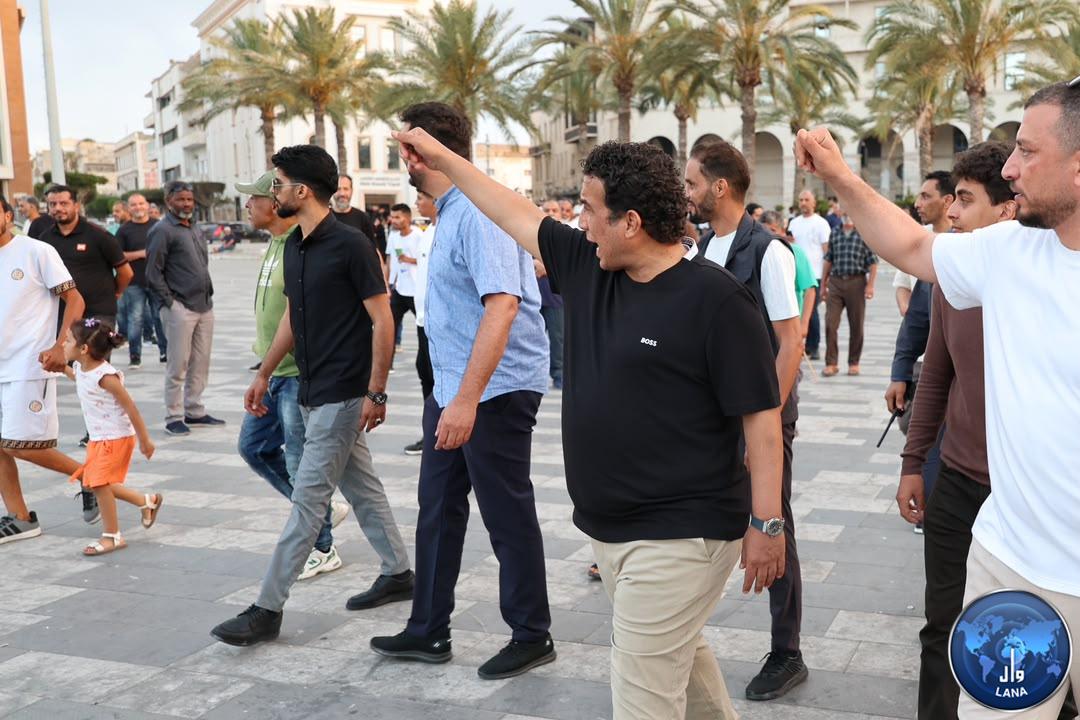
This came during his tour on Friday evening in the center of the capital, Tripoli, which included Martyrs’ Square and a number of main streets, where he met with several protesters and listened to their demands and observations regarding the current situation.
The media office of the Presidential Council reported that al-Menfi, during his meeting with the protesting citizens, emphasized that Libya, its security, sovereignty, national unity, and cultural identity are red lines that cannot be compromised under any circumstances, stressing the importance of maintaining the country’s stability and preserving state institutions.
According to the office, al-Menfi addressed the issue of illegal immigration, explaining that dealing with migrants must be in accordance with laws and humanitarian charters that ensure their protection and respect for their dignity, while working to return them to their home countries in safe and organized ways without endangering their lives.
Al-Menfi noted that Libya has always been an open country to all and a destination for cooperation and exchange between peoples, but this must be done according to the applicable legal controls and procedures, preserving the interests of the state and the security of society.