Alleged carnapping group arrested in separate operations in Metro Manila and Rizal.
Filtered by: Topstories
Police arrested the alleged leader and seven members of a robbery and carnapping group in separate operations in Metro Manila and Rizal on Friday night.
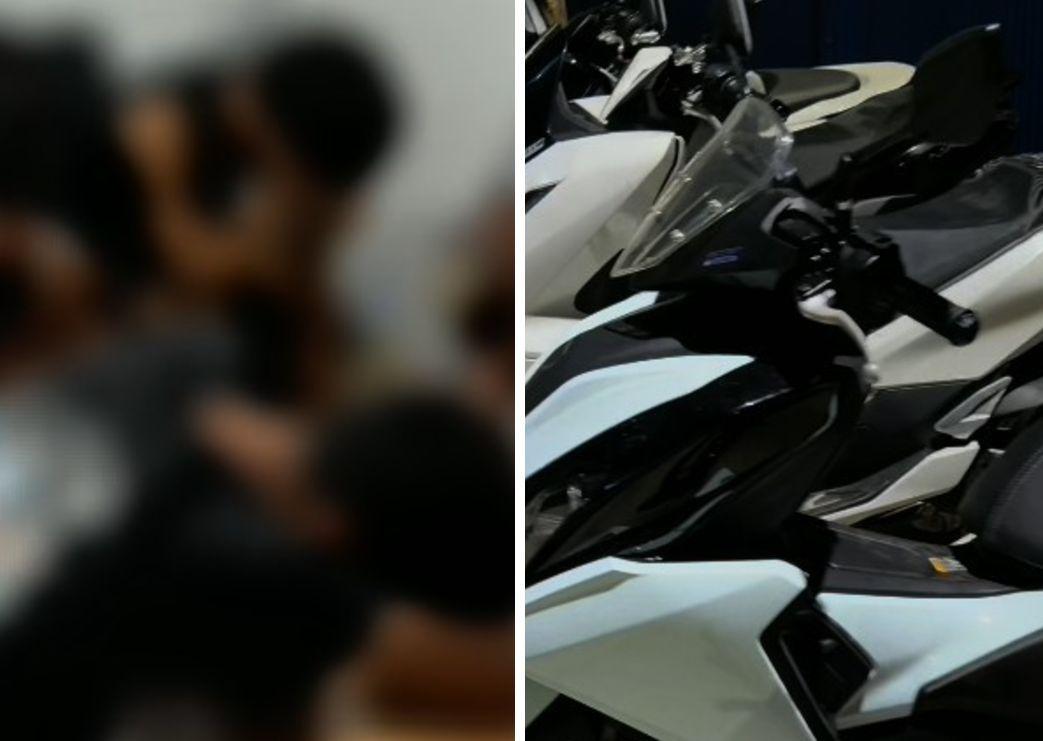
Eight motorcycles, two cars, two guns, bullets, and clothes were recovered during the operation. Two of the motorcycles were the ones allegedly used by the suspects in carnapping, authorities said.
The Eastern Police District (EPD) said they launched the operation after receiving a complaint from a man who was robbed of his motorcycle and cellphone in Barangay Tumana, Marikina City before dawn on Thursday.
The 20-year-old victim said he and his girlfriend just went out to buy food when four men aboard two motorcycles stopped in front of them and pointed a gun at them.
“They pointed a gun at us and ordered us to get down from our motorcycle. So we did then turned our backs on them and just looked down immediately.”
The cellphone of the victim however had GPS which helped authorities to track down the suspects and recover the victim’s motorcycle and other vehicles.
The same modus was observed on May 18 during another robbery that was caught on CCTV.
Three motorcycles were seen stopping in front of a man on a motorcycle in front of a school on Santisimo Street, Barangay Sto. Niño, Marikina City.
Two of the men aboard the said motorcycles got down then pointed a gun at the victim.
The suspects then took his motorcycle. The victim said they still had a gun pointed at him while the suspects fled.
Police believe that the arrested suspects were also involved in the Barangay Sto. Niño incident.
“They admitted it and if you will notice, sir, the clothes match the ones worn by the suspects in the video.”
“This is a criminal gang in Taguig. They call them Paps. Paps Group. So it so happened that we are the ones who got them.”
“This group operates in the National Capital Region and as far as Cavite and Bulacan… Since 2023, if you sum up the number of motorcycles they took, it would reach more than 100.”
“Based on the initial information we got from one of the suspects, they bring the carnapped vehicles to Mindanao. Whenever they get a motorcycle, they bring it to the pier.”
The suspects have been placed under the custody of the Marikina City Police Station. They are set to face multiple charges.
Efforts are underway to get comment from the suspects.
Their relatives meanwhile refused to give a statement.
Police are also conducting an investigation to identify the owners of the vehicles recovered so they may also be able to file charges against the suspects.
Their manhunt operations meanwhile continue to track down the other members of the group.
Metro Manila
Metro Manila is the densely populated capital region of the Philippines, composed of 16 cities including Manila, Quezon City, and Makati. Historically, it grew around the ancient walled city of Intramuros, established by Spanish colonizers in the 16th century, and later became a major hub for trade and governance. Today, it serves as the country’s political, economic, and cultural center, blending colonial-era landmarks with modern skyscrapers and vibrant urban life.
Rizal
Rizal is a province in the Philippines named after the national hero, Dr. José Rizal. It was established in 1901 and played a significant role in the country’s history, with its lush mountains and scenic views serving as a backdrop for various revolutionary activities against Spanish colonial rule. Today, it is known for its natural attractions, such as the Masungi Georeserve, and its proximity to Metro Manila.
Barangay Tumana, Marikina City
Barangay Tumana is a densely populated residential area in Marikina City, Philippines, known for its vulnerability to flooding due to its proximity to the Marikina River. Historically, it was part of the city’s agricultural landscape before urban expansion transformed it into a thriving community. The barangay gained national attention after Typhoon Ondoy (Ketsana) in 2009, which caused devastating floods and highlighted the need for improved disaster preparedness in the area.
Santisimo Street, Barangay Sto. Niño, Marikina City
Santisimo Street in Barangay Sto. Niño, Marikina City, is a residential area that reflects the city’s development from a rural town into a major urban center. The street and barangay are named after the Holy Child (Sto. Niño), a popular devotion in Filipino Catholic culture. Historically, this area has grown alongside Marikina’s transformation, particularly known for its shoe industry and community-driven neighborhoods.
Taguig
Taguig is a highly urbanized city in Metro Manila, Philippines, historically known as a fishing and farming settlement during the Spanish colonial era. It gained prominence in the 20th century as the site of Fort Bonifacio, a major military base that later became the Bonifacio Global City, a thriving financial and business district. Today, Taguig is a key economic hub, blending modern skyscrapers with cultural landmarks like the Mind Museum and the Enchanted Kingdom theme park.
National Capital Region
The National Capital Region (NCR) is a planning area in India centered around New Delhi, encompassing the entire city of Delhi and several neighboring districts in Uttar Pradesh, Haryana, and Rajasthan. Established in 1985 to promote balanced and harmonized development across the region, it includes historic sites like the Red Fort and Qutub Minar, reflecting Delhi’s long history as a capital under various empires, from the Mughals to the British. Today, the NCR is a major economic and cultural hub, home to over 46 million people.
Cavite
Cavite is a province in the Philippines with a rich history as a key site during the Philippine Revolution against Spanish colonial rule. It was in Cavite that the Katipunan, a revolutionary society, launched the uprising in 1896, and it later became the location for the declaration of Philippine independence in 1898. Today, it is known for its historical landmarks, such as the Aguinaldo Shrine in Kawit, and its role in the country’s early fight for freedom.
Bulacan
Bulacan is a province in the Philippines known for its rich historical and cultural heritage, playing a key role in the country’s struggle for independence. It is home to the Barasoain Church in Malolos, where the First Philippine Republic was established in 1899, marking a pivotal moment in Filipino history. Today, Bulacan is celebrated for its vibrant festivals, ancestral houses, and traditional crafts like jewelry-making and pyrotechnics.