Filtered by: Topstories
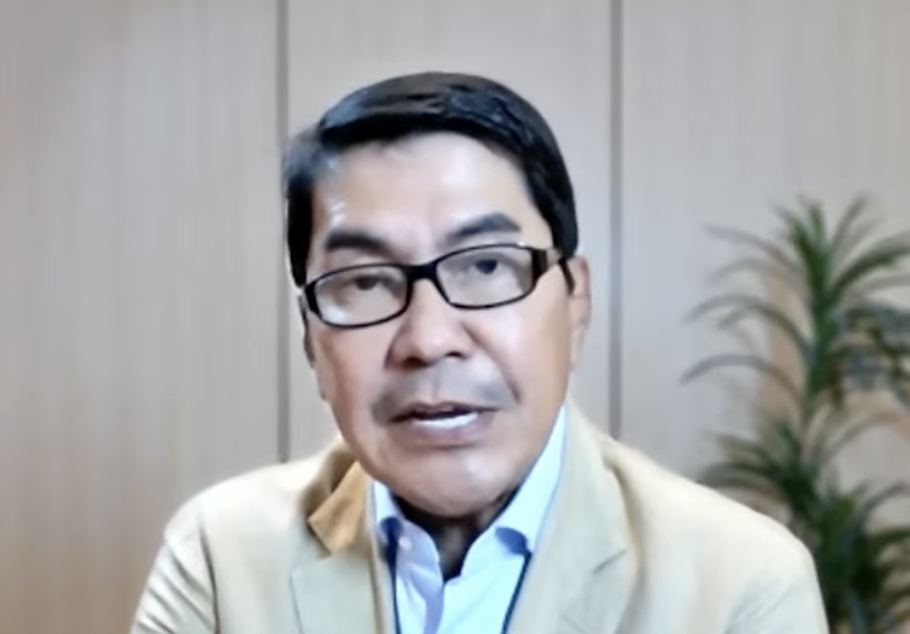
In an interview, Tulfo said he is the legitimate chairman of the Senate Blue Ribbon Committee and has the sole authority to call for a legislative inquiry under the panel.
Tulfo said this after the bloc led by Sen. Alan Peter Cayetano held a Blue Ribbon hearing on Thursday, chaired by Sen. Pia Cayetano and Sen. Rodante Marcoleta.
The hearing saw the 18 ex-Marines, who allegedly worked for former Ako Bicol Rep. Zaldy Co, and who said they delivered suitcases of cash to politicians
“If they repeat holding a hearing, let them try. Especially that of the Blue Ribbon, let them try. Try it, hold a Blue Ribbon hearing, because I will no longer allow you to hold fake hearings there and I will have you arrested. I promise,” Tulfo said.
“Even if you are a senator, even if you say you are old, however many years you have been in the Senate, try me. Hold another Blue Ribbon hearing,” he added.
“I don’t care if you were a former Senate President, a former Speaker of the House… I will definitely have you arrested. If you won’t surrender, if the OSAA won’t do it, I will drag you, grab you by the collar, throw you out of that floor,” Tulfo said.
“Because I am the legitimate Blue Ribbon Chairman and what you are doing is nonsense,” he added.
Tulfo belongs to the Senate bloc led by Sen. Sherwin Gatchalian, who was elected Senate President Pro Tempore and made acting Senate President by 12 senators on Wednesday after the Cayetano-led bloc skipped sessions on Monday and Tuesday following the arrest of Sen. Jinggoy Estrada on Monday.
Alan Peter Cayetano said they skipped the sessions to prevent the other camp of senators from wresting control of the Blue Ribbon hearings. He called Gatchalian a fake acting Senate President, saying the other bloc did not have the needed 13 senators to effect a leadership change.
Gatchalian, when he presided over the session on Wednesday, cited the Supreme Court ruling in the 1949 case of Avelino v. Cuenco, in which the High Tribunal upheld a quorum of 12.
Tulfo said the Cayetano-led hearing was a “blatant disregard of the instruction of the order of the acting Senate President” and a violation of the Senate rules.
“That is why an ethics complaint can be filed against those who participated in the hearing yesterday,” Tulfo added.
Sen. Vicente Sotto III, a member of the Gatchalian-led bloc, and Tulfo were among those who were mentioned by the former Marines as among those who received cash deliveries they made.
Sotto and Tulfo denied the allegations, with Sotto saying that his aide mentioned by the ex-soldiers died in 2015.
Tulfo on Friday said he is preparing to file libel charges against supposed former Marines who accused him and several other lawmakers of receiving suitcases with money, adding the allegations are politically motivated.
“We will definitely file libel charges. They need to answer that because it is easy now to just point fingers, even at anyone,” Tulfo said in an interview.
“The problem is, is it backed up by evidence? We should be evidence-based… That is why perhaps when all this settles, we may need to strengthen the penalties for these kinds of cases, problems because it seems there are no teeth so anyone can just speak against anyone,” he added.
In an interview earlier in the day, Tulfo said he was not offended by the accusations and instead found the claims amusing.
“It’s funny, I watched them yesterday. I am amused, I’m not annoyed. When people tell stories, especially gossip, made-up stories, you just laugh,” he said.
“But of course we won’t let it slide. We are now preparing to file a case against those who accused us,” he added.
Tulfo said he wants his accusers to present evidence before the proper forum and challenged them to bring their allegations before the Office of the O