The investor of the National Highway 51 repair project in Dong Nai province reported that inspections found the contractor violating deadlines and failing to ensure traffic safety.
Regarding the case of "Spending hundreds of billions to repair National Highway 51: What is the current construction status?", the project investor, the Center for Planning, Construction Inspection and Road Maintenance under the Department of Construction, stated that field inspections of the repairs found violations by the contractor as reported.
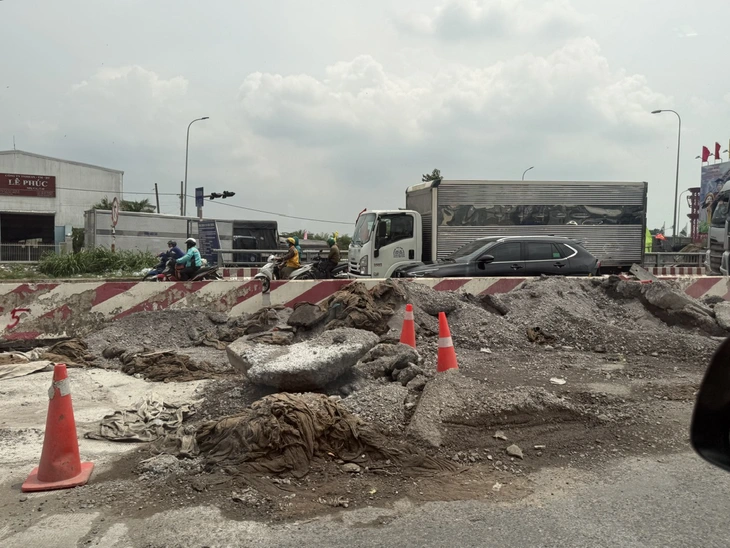
Specifically, during an inspection on the afternoon of June 4, package No. 3 had no site commander, only 2 workers and 1 road roller for repairing National Highway 51.
At the intersection near the Thai Lan junction of National Highway 51, there was a lack of signage and traffic controllers. The road surface had been milled but not yet recycled, revealing many potholes, causing frequent and severe traffic jams.
Therefore, the investor requested the contractor to urgently speed up construction progress and return the road surface to ensure traffic safety.
Similarly, the investor recently issued a report against the construction units of package No. 1 for slow construction and failure to ensure traffic safety on National Highway 51.
The Director of the Center for Planning, Construction Inspection and Road Maintenance under the Department of Construction stated that during the repair of over 17 km of National Highway 51, slow construction progress occurred. The center has repeatedly inspected, invited construction units to issue reports for reminders, rectifications, and required full installation of traffic signs and vehicle regulation.
According to him, after the report, the center inspected and continued to require contractors to completely handle all remaining issues in the packages and avoid inefficient, prolonged construction as seen recently.
At the same time, it required contractors to organize warnings, barriers, traffic diversion, and ensure public traffic safety.
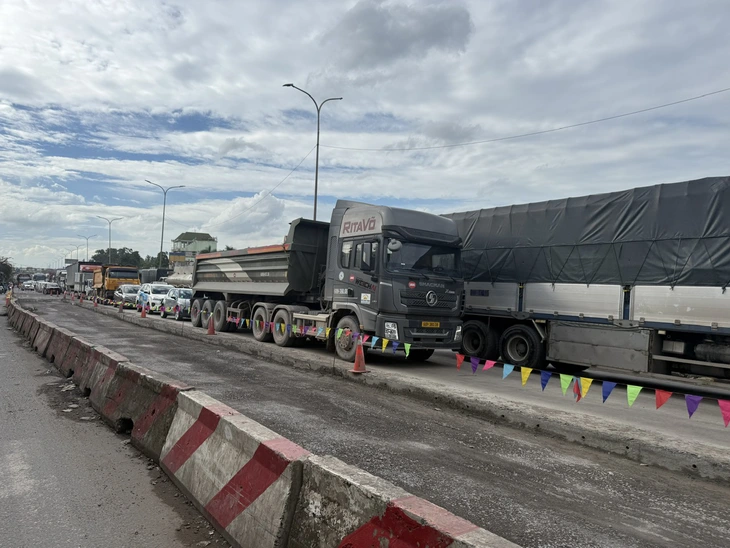
Regarding sanctions against violating contractors, the Director said the center has inspected multiple times and issued written reminders about progress violations and unsafe construction.
"If the contractor continues to violate progress, the center will consider reducing or revoking the workload to assign to another unit. In parallel, the contractor’s name will be added to the list of contractors with a history of violations to limit participation in