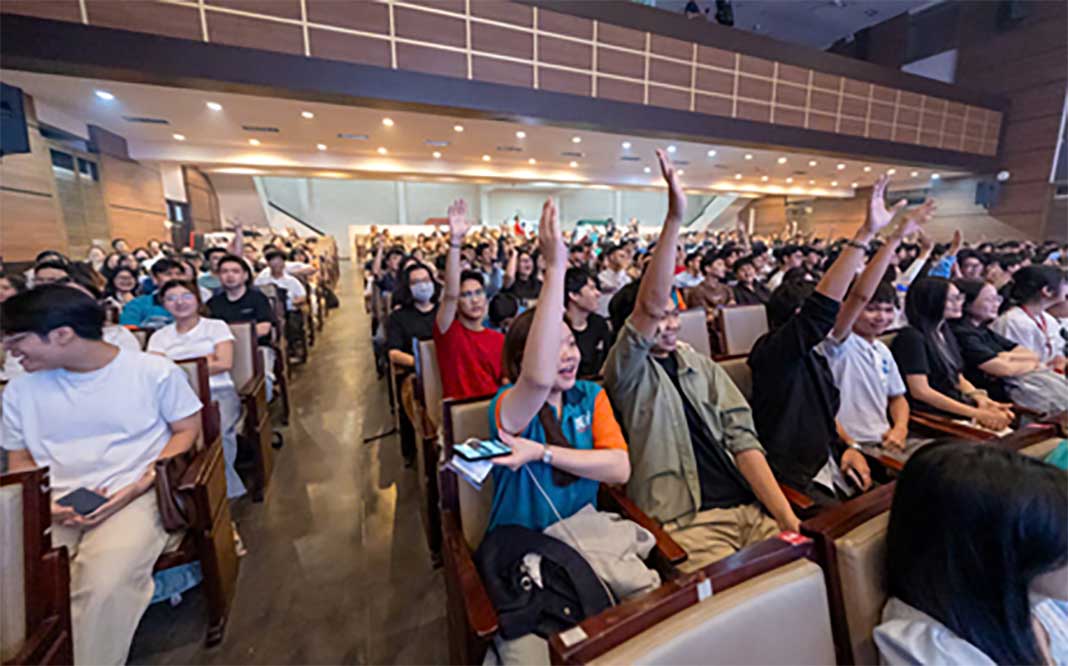
The most energetic part of the event came from the audience itself.
Students lined up at microphones, asking questions that ranged from scientific to deeply personal: Does weightlessness hurt? How do astronauts eat and sleep? What does Earth look like from space? Could a Vietnamese astronaut one day fly into orbit?
The speakers answered each question with patience and enthusiasm.
The students left a particularly strong impression on one speaker.
Reflecting on his return after first participating in Space Week in 2023, he said the warmth of the people and the enthusiasm of young participants were what brought him back.
“Our trip in 2023 was my first visit and it was truly an amazing experience,” he said.
“The people are so warm and welcoming. The students were so enthusiastic, optimistic and curious. They demonstrated a sincere interest in lifelong learning and were an inspiration to me and our group.”
He added that the organizers were eager to return not only to reach more students but also to expand the conversation toward the development of the country’s space industry.
“There are many opportunities for companies and young graduates,” he said.
Asked what remained with him most after this year’s event, he pointed again to the people he met.
“The thing that stays with me the most is the warm and welcoming feeling we received from all the people we encountered. Especially the wonderful, vibrant, enthusiastic, motivated and curious students. I would say that the future is in good hands with such young people.”
His message to the younger generation was simple: “Stay curious, work hard and stay dedicated to lifelong learning.”
Another speaker later echoed that sentiment.
“The depth and sophistication of the students’ questions demonstrated that they were not merely listening attentively; they were seriously considering careers in the space sector. The energy in the room suggests that the space economy has a bright and highly motivated future.”
The sky is no longer the limit
As the global space economy moves toward a projected value of trillions of dollars in the coming decades, the question facing the country may no longer be when it will build its own rockets or send its own astronauts into space.
A more important question may be: What products, services, and knowledge will it contribute to this industry?
The space economy dialogue did not provide definitive answers.
But it did mark an important shift in how space is being viewed — from a symbol of scientific exploration to a genuine economic sector where opportunities exist not only in orbit but also in data, technology, education, and human capital here on Earth.
The theme of Space Week — “The Sky Is No Longer the Limit” — was more than an event slogan.
It was an invitation to an entire generation of young people to dream bigger and reach farther than ever before.
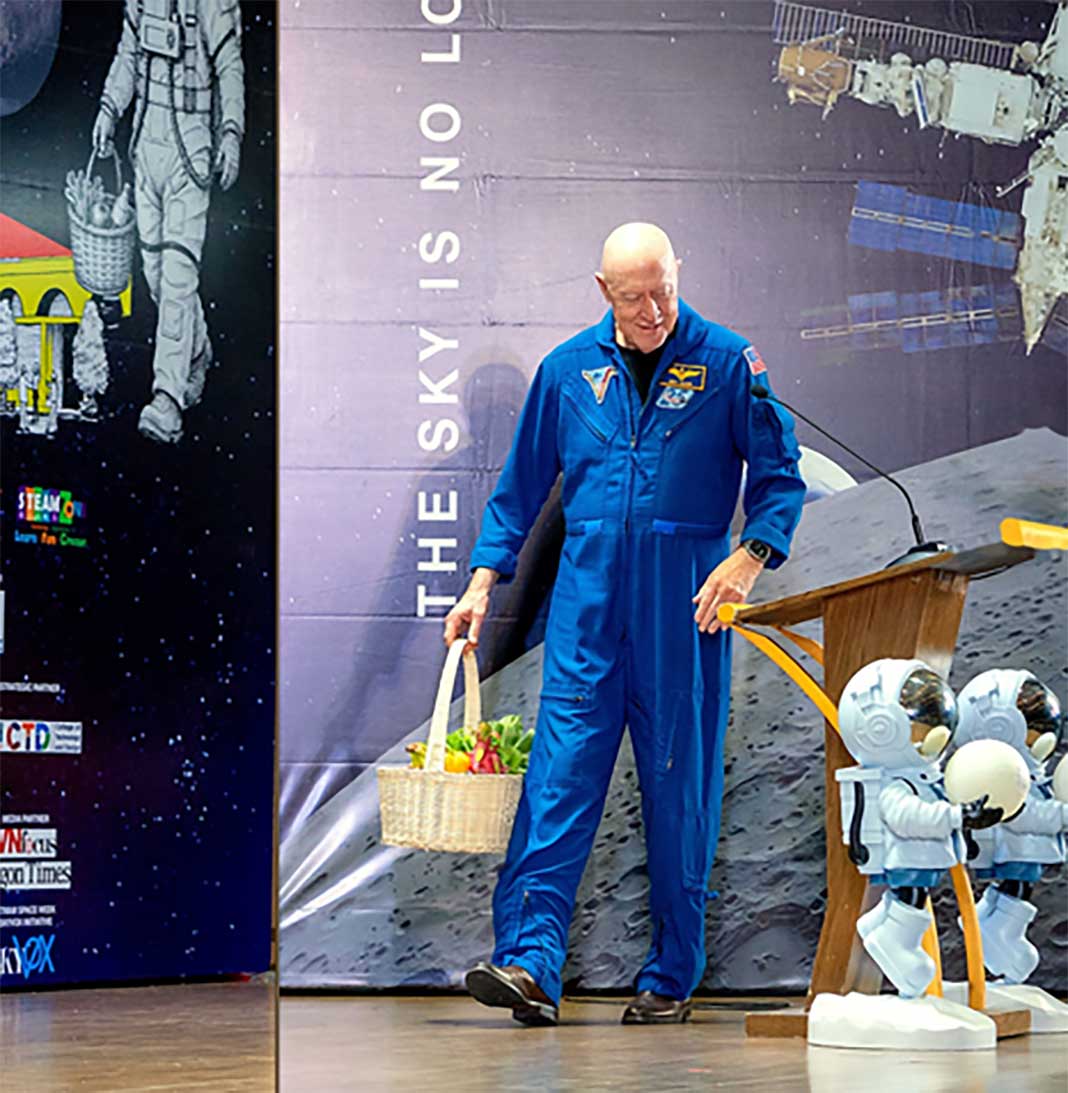
Because when a former NASA astronaut sets a basket of vegetables beside a microphone and begins telling stories about space, everyone understands something important: The door to the space economy is already open.
And it begins today — with the ambitions, talents, and aspirations of the people themselves.
Space Week was co-organized by several foundations and service centers.
A bank reaffirmed its role as a forward-looking financial institution while demonstrating a long-term commitment to education, technology, and innovation through future-oriented social responsibility initiatives.
A global network helped connect the country with international experts, businesses, and development