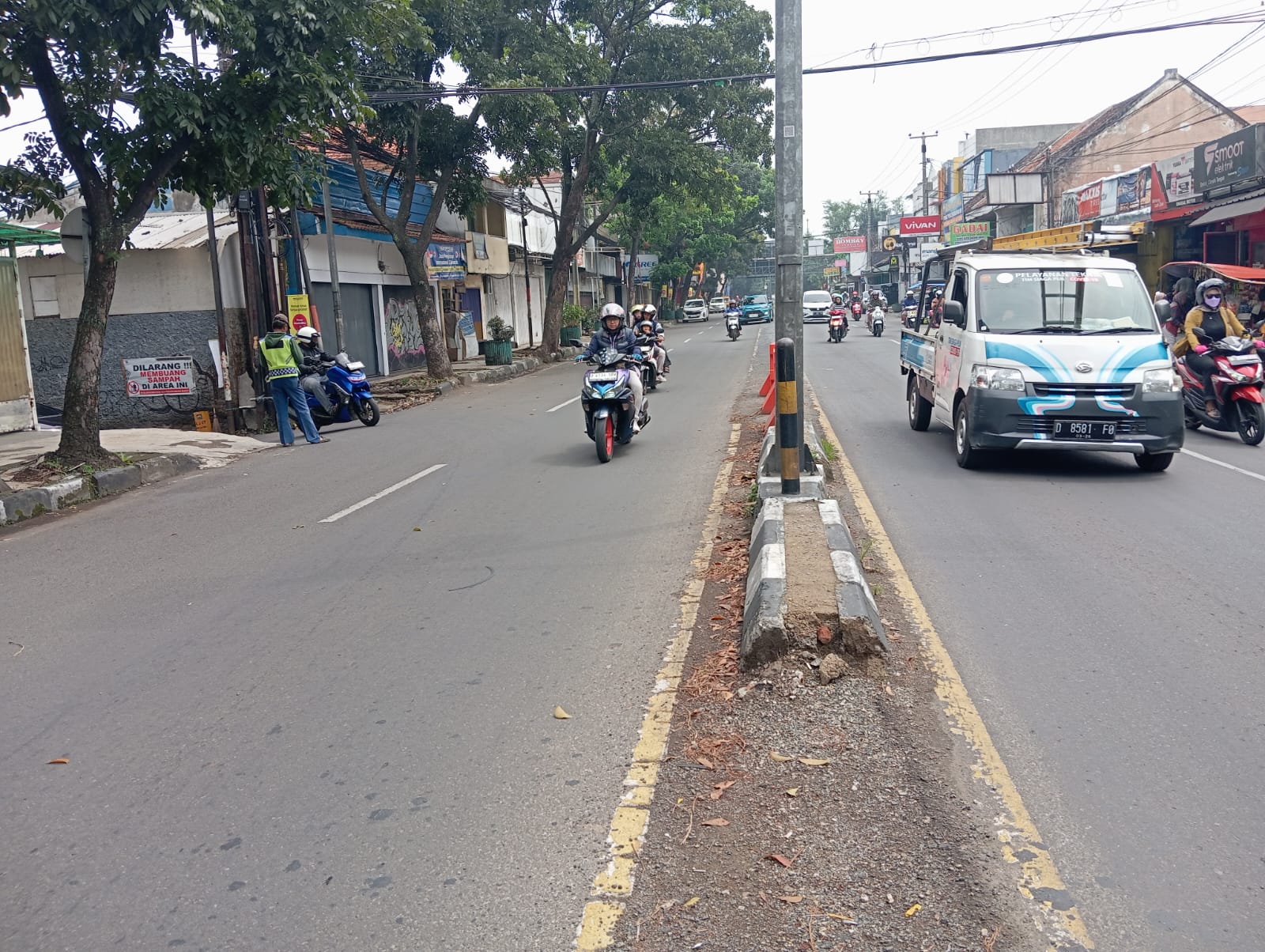
The Transportation Agency will prepare a traffic engineering scheme in the Gatot Subroto road area. This is done to ensure smooth mobility for residents during the construction of an underpass on Gatot Subroto road.
Endang explained that the construction being carried out by the West Java Provincial Highways and Spatial Planning Agency has now entered the auction stage.
“We have prepared a traffic engineering plan around Gatot Subroto road where the underpass will be built. Certainly that road cannot be used during construction,” he said.
He added that currently they have mapped out that small cars and motorcycles from Gatot Subroto road towards the Baros Toll access, Leuwigajah and surrounding areas will be directed to Gedong Opat road, Sriwijaya road, Kartini road, and Baros road.
“Meanwhile, from the opposite direction it remains unchanged via Sudirman road, Urip Sumoharjo road, Sriwijaya road. So during the construction of the new underpass it is planned to be two-way. But only for small cars,” he said.
He also said that for large vehicles like trucks and buses from the Padalarang direction heading to Baros will be directed through Cimindi via Mahar Martanegara road. Likewise from the opposite direction they will take the same road.
“Yes, before it is implemented, we will invite the PPK from the West Java Provincial Highways Agency and the contractor. From our side it is already fixed, but it must also be discussed with those in charge of the work,” he said.
In addition to traffic engineering, Transportation Agency personnel will also be placed at the location to anticipate vehicle density. Officers are planned to be on standby during the construction process.
“Besides engineering, we will certainly have personnel placement during the construction process. Hopefully it can ease the congestion that often occurs when trains pass and reduce traffic accidents,” he concluded.
Gatot Subroto road
Gatot Subroto Road is a major thoroughfare in Jakarta, Indonesia, named after the national hero General Gatot Subroto. The road was developed during the post-independence era as part of the city’s expansion and now serves as a key commercial and business district, lined with office towers, hotels, and government buildings. Its history reflects Jakarta’s transformation from a colonial city into a modern metropolis.
Baros Toll
Baros Toll is a historic toll road located in Cimahi, West Java, Indonesia, originally built during the Dutch colonial era in the early 20th century. It served as a key infrastructure project connecting Bandung with surrounding areas, facilitating transportation and economic growth. Today, it remains an important route, reflecting the region’s colonial heritage and ongoing development.
Leuwigajah
Leuwigajah is a site in Cimahi, West Java, Indonesia, best known for the Leuwigajah Landfill, which was the location of a catastrophic landslide in 2005. The disaster occurred when a massive pile of waste collapsed following heavy rains, destroying two nearby villages and killing over 140 people. This tragedy highlighted critical issues in waste management in Indonesia and led to increased attention on sustainable practices.
Gedong Opat road
Gedong Opat road is a historic street located in Yogyakarta, Indonesia, near the Kraton (Sultan’s Palace). Its name, meaning “Four Buildings” in Javanese, refers to the four colonial-era structures that once stood along the route, which served as administrative and commercial hubs during the Dutch colonial period. Today, the road remains an important cultural and historical landmark, reflecting the blend of Javanese and Dutch architectural influences in the city.
Sriwijaya road
Sriwijaya Road is a historic street in Jakarta, Indonesia, named after the powerful Srivijaya maritime empire that dominated Southeast Asia from the 7th to the 13th centuries. Located in the Menteng area, the road reflects Indonesia’s effort to honor its pre-colonial heritage through urban naming. Today, it serves as a residential and commercial street, surrounded by colonial-era architecture and modern buildings.
Kartini road
Kartini Road is a street commonly found in many Indonesian cities, named after Raden Ajeng Kartini, a national heroine who advocated for women’s rights and education in the early 20th century. The road serves as a tribute to her legacy, often located in central areas or near cultural landmarks. Its history reflects Indonesia’s recognition of Kartini’s contributions to gender equality and national development.
Baros road
Baros Road is a historic street in central Jakarta, Indonesia, known for its unique collection of early 20th-century Art Deco and Indo-European architecture. Originally developed during the Dutch colonial era, it served as a residential area for European and wealthy local families. Today, the road is a cultural heritage site, offering a glimpse into the city’s colonial past through its well-preserved buildings.
Cimindi
Cimindi is an area in the city of Cimahi, West Java, Indonesia, historically known as a key transportation hub connecting Bandung to other regions via the Great Post Road. Its name is derived from the Cimindi River, and the area features a historic railway station built during the Dutch colonial era, which played a role in the region’s economic development. Today, Cimindi remains a busy transit point, blending modern activity with its colonial-era heritage.