From beans to cups: Jiangmen builds a complete coffee industry chain system
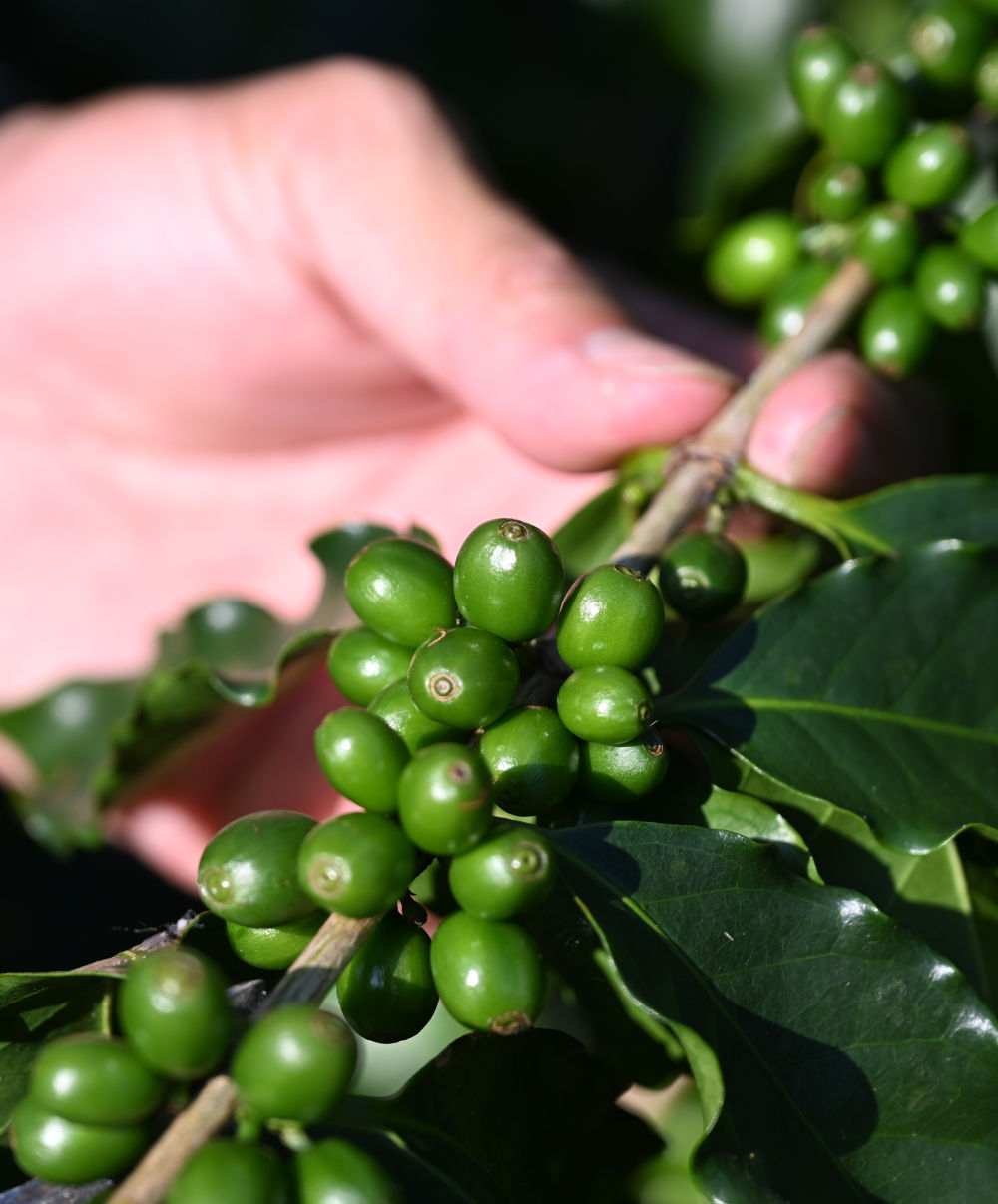
↑ On May 25, at Senlan Coffee Estate in Kaiping, Jiangmen, the person in charge checks the planted coffee cherries.
↑ On May 25, at Senlan Coffee Estate in Kaiping, Jiangmen, the person in charge checks the planted coffee cherries.
Jiangmen, Guangdong, is known as the “No.1 Hometown of Overseas Chinese in China.” In recent years, on this land not traditionally known for growing coffee beans, a “coffee kingdom” with an annual output value exceeding 3 billion yuan has been built, creating a complete industrial chain from green bean trading, intelligent roasting, to precision manufacturing.
The connection between Jiangmen and coffee stems from the overseas Chinese spread across the globe. After the reform and opening up, Hong Kong and Macau coffee companies, with their geographical proximity and close ties, turned their attention to Jiangmen. Leveraging its global overseas Chinese network, Jiangmen has gathered over 300 varieties of specialty green coffee beans from major producing regions such as Brazil, Ethiopia, and Colombia, with annual imports exceeding 30 million yuan. Jiangmen is one of the earliest coffee roasting bases in mainland China, with 21 licensed roasting enterprises, an annual production capacity of over 10,000 tons, and exports accounting for 20% of the national total.
According to the “Overseas Chinese Capital Coffee White Paper” released by the Jiangmen Municipal Bureau of Commerce and other departments, Jiangmen has over 350 coffee equipment and parts enterprises. About 40% of the country’s stainless steel coffee utensils and one out of every five exported coffee machines are produced in Jiangmen.
According to Jiangmen’s action plan to promote the high-quality development of the “Overseas Chinese Capital Coffee” industry, by 2028, Jiangmen’s coffee industry will achieve high-quality development across the entire chain, forming an industrial development pattern characterized by “planting with scale, manufacturing with advantages, trade with channels, consumption with characteristics, and cultural tourism with integration,” fully building the China (Jiangmen) Coffee Industry Base.
↑ This is coffee made on-site at Jiangmen Manye Tribe on May 26.
↑ This is coffee made on-site at Jiangmen Manye Tribe on May 26.
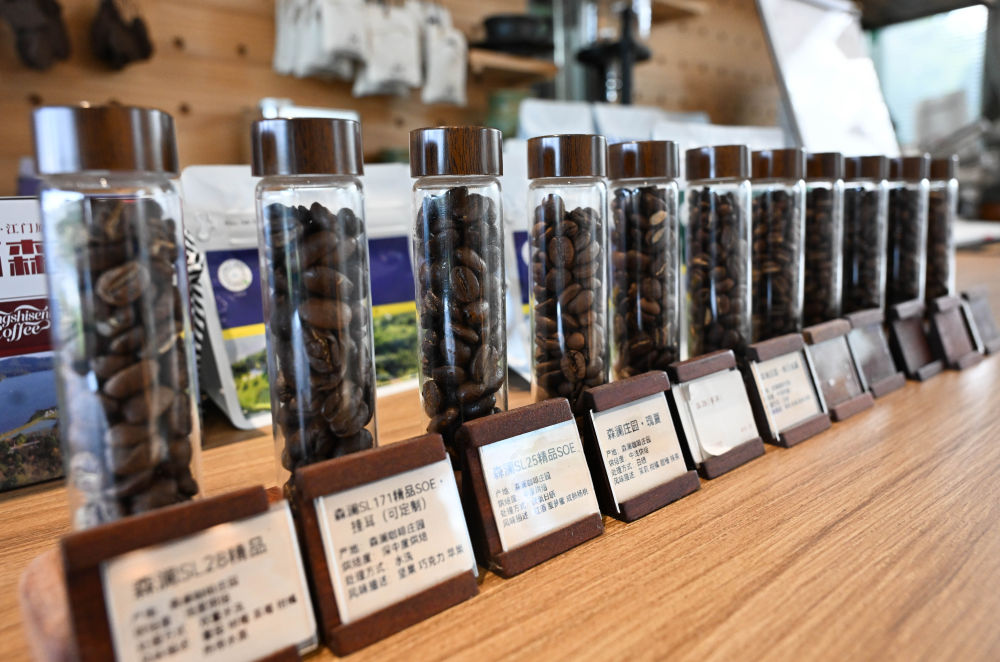
↑ These are locally grown and roasted coffee beans photographed at Senlan Coffee Estate in Kaiping, Jiangmen on May 25.
↑ These are locally grown and roasted coffee beans photographed at Senlan Coffee Estate in Kaiping, Jiangmen on May 25.
<img alt="↑ On May 25, at Senlan Coffee Estate in Kaiping, Jiangmen, tourists take photos and check in." data-catchresult="img_catchSuccess" data-nfw-cms-audio-src="null
Senlan Coffee Estate
Senlan Coffee Estate is a historic coffee plantation located in the highlands of East Java, Indonesia, established during the Dutch colonial era in the 19th century. It is renowned for its traditional processing methods and production of high-quality Arabica coffee, cultivated on the fertile slopes of Mount Ijen. Today, the estate offers visitors a glimpse into its rich heritage through guided tours that showcase the entire coffee-making process, from bean to cup.
Kaiping
Kaiping, located in Guangdong Province, China, is renowned for its unique Diaolou—multi-story fortified towers built by overseas Chinese returnees between the late 19th and early 20th centuries. These structures blend Chinese and Western architectural styles and served as both homes and defensive strongholds during a period of social unrest. In 2007, the Kaiping Diaolou and Villages were designated a UNESCO World Heritage Site, preserving this distinctive fusion of culture and history.
Jiangmen
Jiangmen is a prefecture-level city in Guangdong Province, China, known as a historic gateway for Chinese emigration. During the late 19th and early 20th centuries, many residents left from here to work abroad, leading to its nickname “the hometown of overseas Chinese.” The city features well-preserved diaolou (multi-story watchtowers) in Kaiping County, a UNESCO World Heritage site that reflects a unique blend of Chinese and Western architectural styles.
Jiangmen Manye Tribe
The Jiangmen Manye Tribe is a cultural tourism site in Guangdong, China, inspired by the region’s ancient tribal heritage and the lifestyle of the indigenous Baiyue people. It features reconstructed traditional stilt houses, immersive folk performances, and exhibits that showcase local customs, crafts, and agricultural history. The site aims to preserve and present the unique cultural identity of the Lingnan area, blending historical reenactment with modern entertainment.
Brazil
Brazil is the largest country in South America, known for its vibrant culture, diverse ecosystems, and rich history. Originally inhabited by indigenous peoples, it was colonized by Portugal in 1500 and gained independence in 1822. Today, Brazil is famous for landmarks like Christ the Redeemer, the Amazon Rainforest, and its annual Carnival festival.
Ethiopia
Ethiopia is one of the world’s oldest nations, with a history dating back to the ancient Kingdom of Aksum, a major trading empire from the 1st to 7th centuries. It is renowned for being the only African country to resist European colonization, defeating Italy at the Battle of Adwa in 1896. Today, Ethiopia is celebrated for its unique cultural heritage, including the rock-hewn churches of Lalibela and its status as the origin of coffee.
Colombia
Colombia is a vibrant South American country rich in cultural diversity, shaped by its indigenous heritage, Spanish colonization, and African influences. Its history includes the rise of the Muisca and Tairona civilizations, followed by Spanish conquest in the 16th century, and eventual independence in 1819 under Simón Bolívar. Today, Colombia is known for its colorful festivals, coffee regions, and archaeological sites like Ciudad Perdida.
China (Jiangmen) Coffee Industry Base
The China (Jiangmen) Coffee Industry Base, located in Jiangmen, Guangdong, is a major hub for coffee processing and trade in southern China. Established to support the country’s growing coffee market, the base integrates roasting, packaging, and distribution, leveraging Jiangmen’s historical role as a port city and its proximity to key coffee-growing regions in Yunnan. It reflects China’s increasing domestic coffee consumption and its ambition to become a global player in the coffee supply chain.