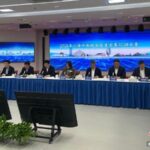
The 12th China (Shanghai) International Technology Import and Export Fair (CSITF) will be held from June 11 to 13 at the Shanghai World Expo Exhibition and Convention Center. The fair is organized by the Shanghai Municipal People’s Government under the theme “Building a New Ecosystem for Technology Trade, Writing a New Chapter of Global Cooperation.” Preparations are now largely complete.
I. Basic Information about the Fair
This year’s fair aligns with the national and Shanghai “15th Five-Year Plan” outlines on technological innovation and expanding high-level opening-up. Adhering to the principles of “innovation-driven development, intellectual property protection, and technology trade promotion,” the fair will feature one themed exhibition area, four professional technology exhibition areas, and one innovation and trading service zone, covering a total area of 38,000 square meters. It will bring together innovative achievements from 22 countries and regions worldwide and 24 provinces and cities across China. The number of participating companies will exceed 1,000 for the first time, reaching 1,006. During the event, there will be an opening ceremony, as well as three themed days focused on the Guest City of Honor, international organizations, and intellectual property, along with over 40 themed promotion activities.
II. Main Features of the Fair
1. More Prominent Professional Characteristics. In line with the “15th Five-Year Plan” requirements to deepen the integration of technological and industrial innovation and cultivate new productive forces, the exhibition areas are targeting new tracks. The Digital Intelligence and Technology Zone will focus on cutting-edge technologies in artificial intelligence, large models, commercial cryptography, the industrial internet, and smart ports, showcasing Shanghai’s digital transformation achievements. Aiming for the “dual carbon” goals, the Green Technology Zone will gather innovations in green fuels, energy storage and transportation, and agricultural technology. Supporting the “Maritime Power” strategy, the Marine Technology Zone will cover technologies such as smart ships, marine engineering equipment, and maritime communications, highlighting Shanghai’s industrial advantages and leadership. To boost the “consumption stimulation” initiative, the Consumer Technology and Health Technology Zone will introduce new technologies and products in smart homes, brain-computer interfaces, and rehabilitation and elderly care, using interactive and immersive experiences to demonstrate the latest applications in “AI + consumption” areas like smart wearables, beauty, and fashion.
2. More Diverse Supporting Activities. Using a “1+3+N” model, the Guest City of Honor Day will feature trade and economic exchange activities with foreign partners; the International Organizations Day will host high-level seminars and promotions by the United Nations Industrial Development Organization, the United Nations Development Programme, and the World Intellectual Property Organization; and the Intellectual Property Day will include briefings on Shanghai’s IP work for consulates. Over 40 themed promotion activities will be held based on exhibition area features, such as the Cryptography Application and Innovation Development Conference and the Brain Science and Brain-Computer Interface Innovation Development Exchange Meeting. For cross-border trade and investment, the “Export China” 2026 Shanghai International Technology Cooperation Matchmaking Meeting will take place. Additionally, over 60 matchmaking meetings between Chinese and foreign enterprises will be organized.
3. Deeper International Cooperation. For the first time, the fair will adopt a dual Guest City of Honor mechanism, with Lausanne (Switzerland) and the Scottish city cluster (Glasgow, Stirling, Inverness, Dundee, Edinburgh) serving as overseas Guest Cities of Honor, and Dalian and Nanjing as domestic Guest Cities of Honor. An international exhibition area will feature 26 overseas trade promotion agencies and business associations from countries including Germany and France, organizing 74 companies to showcase innovations in robotics, precision manufacturing, and digital solutions, while releasing over 80 technology cooperation demands.
4. More Practical Supply-Demand Matching. By coordinating with municipal and district departments, key business associations, industrial parks, and provincial representative offices in Shanghai, and expanding new channels such as consulates and overseas trade promotion agencies, a comprehensive recruitment system combining domestic and international efforts, online and offline integration, and targeted invitations will be built to precisely invite professional visitors. Alongside exhibition and recruitment work, technology cooperation demands and projects will be widely collected, and preliminary results will be prepared. Nearly 200 technology managers will be on-site to “scout exhibitions,” facilitating precise matching of technology supply and demand and achievement transformation both domestically and internationally.
5. More Optimized Service Ecosystem. Focusing on key links in achievement transformation and technology trade, the fair will organize 36 domestic and overseas universities, high-quality incubators, concept validation centers, and open innovation centers of large enterprises to exhibit, showcasing the full-chain ecosystem of “basic research – concept validation – incubation acceleration – industrial implementation.” The Innovation and Trading Service Zone will