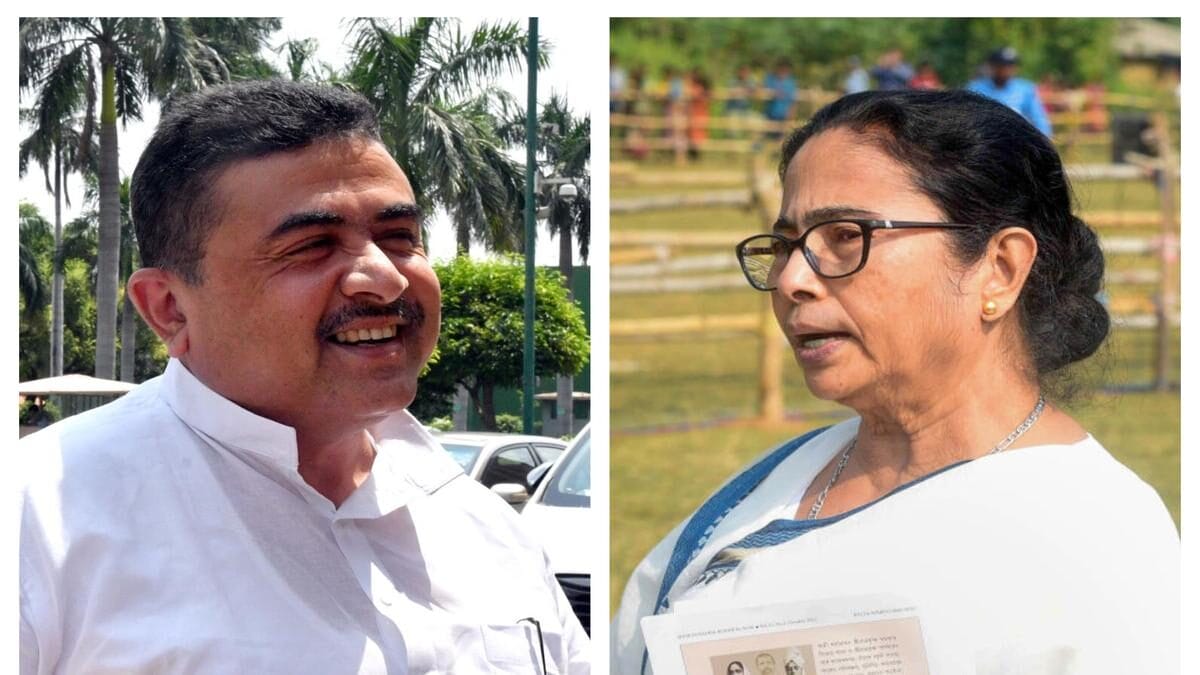
Kolkata, Several senior leaders of the Trinamool Congress, considered close to former Chief Minister Mamata Banerjee, were present at the administrative review meeting chaired by West Bengal Chief Minister Suvendu Adhikari on Wednesday.
STORY | TMC loyalists attend Bengal CM Suvendu’s administrative meet as rebellion deepens in party
The presence of several TMC leaders considered close to Mamata Banerjee at Chief Minister Suvendu Adhikari’s administrative review meeting on Wednesday added a fresh political…
This development is seen as a new political turn within the main opposition party, Trinamool Congress, which is facing its biggest internal rebellion since a crushing defeat in the assembly elections. Amid signs of a potential split in the Trinamool legislative party, legislators considered old loyalists of Mamata Banerjee, including Naya Bandyopadhyay, Kolkata Mayor Firhad Hakim, Ashok Dev, and Kunal Ghosh, attended this administrative meeting held at the state secretariat ‘Nabanna’.
This development comes just hours after 58 dissident Trinamool legislators elected expelled legislator Ritabrata Banerjee as the new leader of the legislative party and formally informed Assembly Speaker Ratindra Bose of the decision. In a move that completely shifts the power balance of the opposition camp in the house, Ritabrata Banerjee, along with rebel legislator Sandeepan Saha and other dissident legislators, met the Assembly Speaker and submitted a support letter signed by 58 legislators. The rebel faction has also proposed a new leadership structure, with Ritabrata Banerjee as leader of the opposition legislative party, Javed Khan, Sandeepan Saha, and Shiuli Saha as deputy leaders, and Raghunathganj legislator Akhruzzaman as chief whip.
Discussions intensify over changing equations in opposition camp
Notably, Ritabrata Banerjee, Javed Khan, and Saha were also seen participating in the Chief Minister’s administrative meeting. The entire episode began after a meeting of dissident legislators at the assembly complex during the day. Significantly, none of the legislators who attended this rebel meeting were seen at Mamata Banerjee’s protest in central Kolkata on Tuesday, clearly indicating the growing rift between the party’s traditional leadership and the dissident faction.
Interestingly, several leaders associated with the Kalighat (Mamata Banerjee’s residence) camp, including Hakim, Bandyopadhyay, Dev, and Ghosh, kept their distance from the rebel meeting held in the assembly but did attend the Chief Minister’s administrative meeting. Just a few days earlier, senior Trinamool MP Kakoli Ghosh Dastidar and six party legislators participated in an administrative review meeting called by Suvendu Adhikari in Kalyani, sparking speculation about changing equations within the opposition camp after the crushing defeat in the assembly elections.