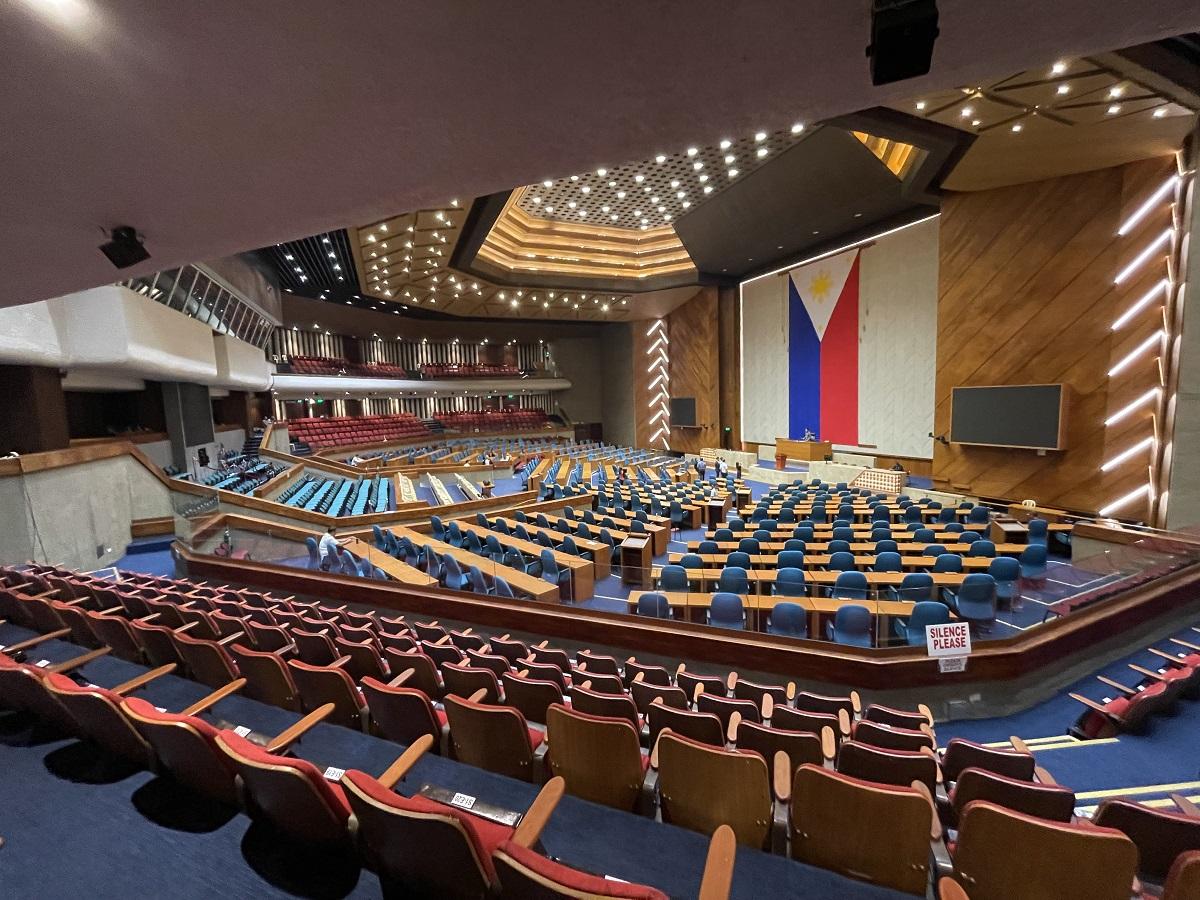
The House passes a bill against political dynasties on its final reading.
Filtered by: Top Picks
In an unprecedented move, the House of Representatives on Wednesday passed an anti-political dynasty bill banning relatives up to the second degree of consanguinity or affinity from running for or occupying a post in the same constituency or jurisdiction on final reading.
Lawmakers voted 267-20-7 to approve House Bill 8389 on third reading, two weeks after the measure hurdled approval.
Wednesday’s passage of the anti-political dynasty bill is also the farthest the bill has reached – whether in the House or in the Senate – since the 1987 Constitution was enacted.
“This bill is not about attacking families. It is about protecting institutions,” House Deputy Speaker Ferdinand Hernandez of South Cotabato’s 2nd District said.
“There are fair criticisms. But an imperfect reform is still reform. This is better than a permanent paralysis,” he added.
Navotas City Representative Toby Tiangco, who initially opposed the measure, agreed that progress needs to start somewhere.
“It would be better for us to start this reform rather than go against it just because we disagree with other provisions of the bill. Rejecting the bill entirely would result in no reduction whatsoever in political dynasties, while passage of the measure — even with weaker provisions — would still establish meaningful restrictions,” Tiangco said in explaining his yes vote.
Meanwhile, House Assistant Minority Leader Chel Diokno of Akbayan party-list criticized the passage of a "pro-dynasty bill."
“We have waited for this for at least 38 years, only to be given a piece of legislation that is more concerned with perpetuating political dynasties than ending them. Let’s not kid each other here. While it is named anti-dynasty, this is a pro-dynasty bill,” Diokno said in explaining his no vote.
“If one family can hold positions across multiple levels of government, that is still concentration of power. If they occupy a national and a local post at the same time, they can still cover for each other’s mistakes. This situation is no different from what is happening now,” he added.
Article 2 Section 26 of the 1987 Philippine Constitution mandates that “the State shall guarantee equal access to opportunities for public service, and prohibit political dynasties as may be defined by law.”
There is no existing anti-political dynasty law to this day, although President Ferdinand Marcos Jr. earlier urged Congress to its passage.
HB 8389’s principal authors include Speaker Faustino “Bojie” Dy III and House Majority Leader Ferdinand Alexander “Sandro” Marcos, the President’s eldest son.
House of Representatives
The House of Representatives is the lower chamber of the United States Congress, established by the Constitution in 1789. Its members are directly elected by the people, with representation based on each state’s population, and it holds the sole power to initiate revenue bills and impeach federal officials. Historically, it has been a key arena for major legislative debates and policy-making, reflecting the evolving political and social landscape of the nation.
South Cotabato’s 2nd District
South Cotabato’s 2nd District is a legislative area in the Philippines, encompassing the municipalities of Tupi, Polomolok, T’Boli, and Surallah. Historically, this district was part of the larger South Cotabato province, which was established in 1966 from parts of Cotabato province. The district is known for its agricultural productivity, particularly in pineapple and banana plantations, as well as its rich Indigenous T’boli culture and the scenic Lake Sebu area.
Navotas City
Navotas City is a highly urbanized coastal city in Metro Manila, Philippines, known as the “Fishing Capital of the Philippines” due to its massive fishing industry. Historically, it was once part of Malabon before becoming a separate municipality in 1859, and it officially became a city in 2007. Its culture and economy remain deeply tied to the sea, with fish ports and markets playing a central role in local life.
Akbayan party-list
The Akbayan party-list is a progressive political organization in the Philippines, founded in 1998 to represent marginalized sectors such as farmers, workers, and the urban poor. Rooted in the country’s democratic socialist movement, it emerged from various civil society groups and has been a key advocate for human rights, social justice, and good governance. Over the years, Akbayan has participated in national elections and has held seats in the House of Representatives, pushing for progressive legislation and reforms.
1987 Philippine Constitution
The 1987 Philippine Constitution is the supreme law of the Philippines, enacted following the People Power Revolution that ousted dictator Ferdinand Marcos. Drafted by a constitutional commission appointed by President Corazon Aquino, it was ratified in a national plebiscite on February 2, 1987. This constitution restored democratic institutions, limited presidential powers, and established strong protections for human rights and social justice.
1987 Constitution
The 1987 Constitution of the Republic of the Philippines is the country’s supreme law, drafted and ratified following the People Power Revolution that ousted President Ferdinand Marcos. It was promulgated on February 2, 1987, replacing the 1973 Constitution and restoring a democratic presidential system of government. The constitution emphasizes human rights, social justice, and the prohibition of nuclear weapons, and remains the foundation of Philippine governance today.