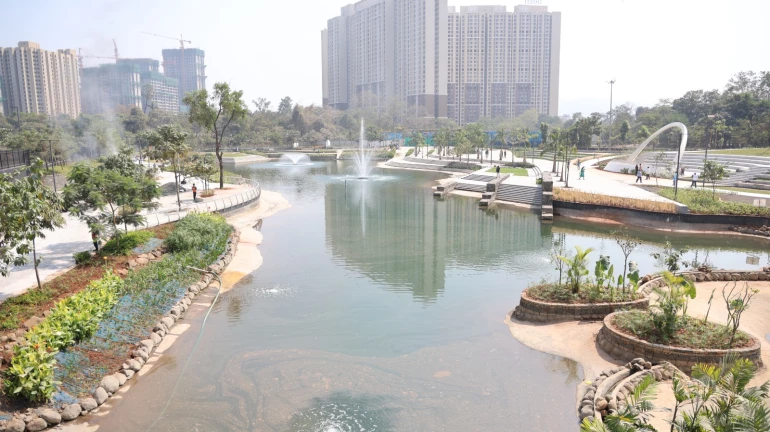
TMC collects INR 1.16 crore from NaMo Grand Central Park in Thane.
More than 485,000 citizens have visited the ‘Namo the Grand Central Park’, which was built on 20.5 acres of land in Kolshet. Due to this visit, a revenue of 1.16 crore rupees has accumulated in the municipal corporation’s treasury. On this occasion, it is evident that the public’s desire to visit Central Park continues.
A 20.5-acre facility plot was made available under the development project in the Parkcity housing project area of Kolshet in Thane. The municipal corporation developed the park ‘Namo the Grand Central Park’ through the builder Kalpataru using Construction TDR. This park features more than 3,500 plants and flowers of different types.
Mughal Garden, Chinese themed garden, Moroccan themed garden showcasing Moroccan culture, and Japanese Park are the major attractions here. A playground for children, a jogging track for seniors, the country’s largest skating rink, lawn tennis, and a volleyball court have been arranged in the park. Separate facilities have also been made for yoga and meditation. This park was inaugurated by Chief Minister Eknath Shinde on February 9.
Also Read:
After this, the park has been open to everyone since the second day, and citizens from Thane city and the Mumbai metropolitan area are gathering here. More than 485,000 citizens have visited in twenty-two months. Due to this visit, a revenue of 1.16 crore rupees has accumulated in the municipality’s treasury.
More than 485,062 citizens have visited ‘Namo the Grand Central Park’ in two and a half months. This includes 382,422 adults, 22,871 senior citizens, and 79,769 children. Until now, the municipal corporation has received a revenue of INR 1.16 crore from this park.
Namo the Grand Central Park
Namo the Grand Central Park is a large-scale urban park located in Namo, a district in northern Thailand near Chiang Rai. Designed as a recreational and cultural hub, it features gardens, walking paths, and a central lake, blending modern landscaping with local traditions. The park was developed in the early 21st century as part of community revitalization efforts, aiming to provide a green space for relaxation and events, though it is not a historic site.
Mughal Garden
The Mughal Garden is a style of garden architecture developed by the Mughal Empire in the Indian subcontinent, blending Persian, Islamic, and Indian influences. Characterized by symmetrical layouts, water channels, and floral pathways, these gardens were often designed as earthly paradises, with famous examples including the Shalimar Gardens in Lahore and the gardens surrounding the Taj Mahal. The tradition flourished from the 16th to the 18th century, reflecting the Mughal emperors’ love for nature and their vision of creating serene, harmonious retreats.
Chinese themed garden
A Chinese themed garden is a designed landscape that replicates traditional Chinese horticultural and architectural principles, often featuring elements like pavilions, bridges, rockeries, ponds, and carefully pruned plants. Its history dates back over 2,000 years, originating in imperial and scholarly gardens of ancient China, which were created as harmonious retreats for contemplation and artistic expression. Today, these gardens are built worldwide to showcase Chinese culture, with famous examples like the classical gardens of Suzhou recognized as UNESCO World Heritage sites.
Moroccan themed garden
A Moroccan themed garden is a landscape inspired by the traditional Islamic gardens of Morocco, featuring geometric tilework, fountains, citrus trees, and lush, drought-tolerant plants. Historically, these gardens draw from the influence of the 14th-century Marinid dynasty and later the Saadian dynasty, with famous examples like the Jardin Majorelle in Marrakech, originally designed by French painter Jacques Majorelle in the 1920s. They are designed as serene oases, blending art, water, and greenery to create a space for relaxation and contemplation.
Japanese Park
The Japanese Park, often known as a *nihon teien*, is a traditional garden style that originated in Japan over a thousand years ago, influenced by Shinto, Buddhist, and Chinese garden design principles. These parks are meticulously crafted to represent natural landscapes in miniature, featuring elements like ponds, bridges, stone lanterns, and carefully pruned trees to create a serene, harmonious environment for reflection. Popularized during the Heian and Edo periods, Japanese parks have since become cultural symbols, with famous examples like Kenroku-en in Kanazawa and the gardens of Kyoto inspiring similar spaces worldwide.