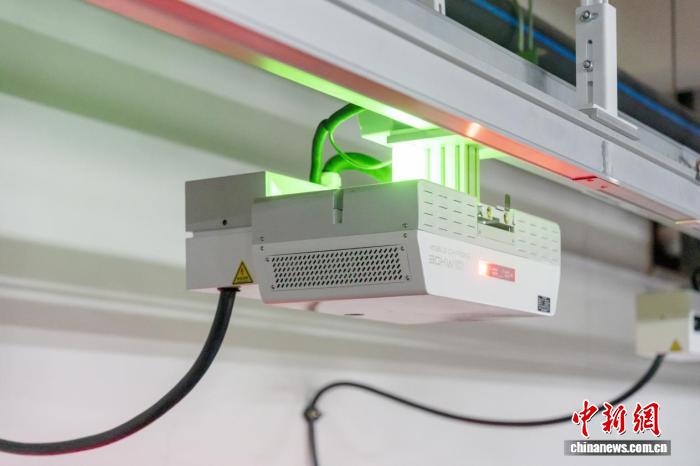
A new rail-mounted shared charging robot station has been deployed in commercial office scenarios in Shanghai, such as Zhongjian Plaza and Zhongjian Corporate World, offering a flexible new approach to address challenges with electric vehicle charging. The system uses an innovative model that separates the charging pile from the gun, employs robotic transport, and enables orderly charging. Through coordinated operation of a track, mobile charging units, charging boxes, and charging guns, the system allows charging equipment to move on demand and be intelligently dispatched.
The station is equipped with six 30kW mobile charging units covering 24 parking spaces, with a total power demand of 180kW. Under the same power conditions, the system can serve at least 150 vehicles per day, increasing effective charging space coverage by three to five times compared to conventional stations. It also integrates functions such as parking space detection, collision warning, fire monitoring, and automatic diagnosis of faulty orders, enhancing safety management and emergency response capabilities.
From the user perspective, the model significantly improves convenience. Drivers can schedule charging times based on their needs, and the system automatically generates an optimal charging strategy. After charging is complete, drivers do not need to immediately move their vehicles, and no overtime parking fees are charged, effectively alleviating common issues such as difficulty finding chargers, long wait times, and parking space occupation.
Notably, the station also achieves efficient energy use by integrating photovoltaic carports, energy storage cabinets, and orderly robotic charging into a combined microgrid for solar power generation, storage, and charging. The photovoltaic carport handles clean energy production, the storage cabinet manages electricity storage and peak load shifting, and the robotic charging system intelligently allocates power based on vehicle demand, station load, and energy status, transforming the site from an energy consumption scenario into an energy coordination scenario. In practice, this model can reduce power demand by approximately 70% and lower construction costs by about 20%, offering an economical and efficient solution for urban charging infrastructure.
Zhongjian Plaza
Zhongjian Corporate World
Zhongjian Plaza
Zhongjian Corporate World
<div class="text