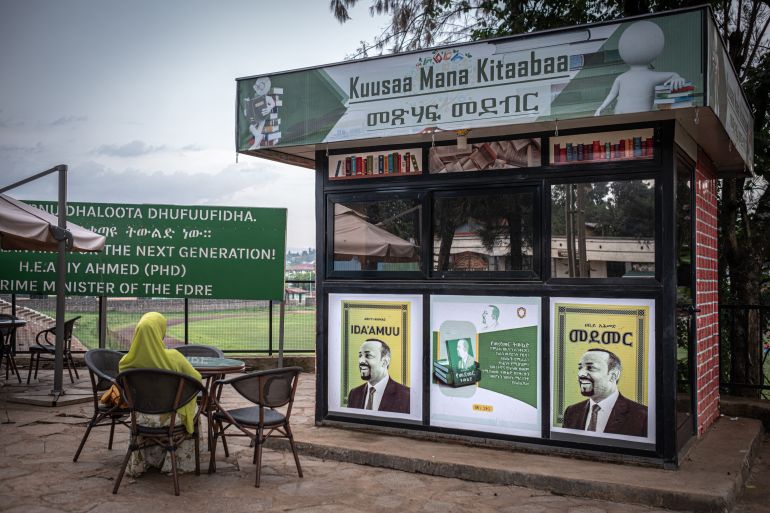
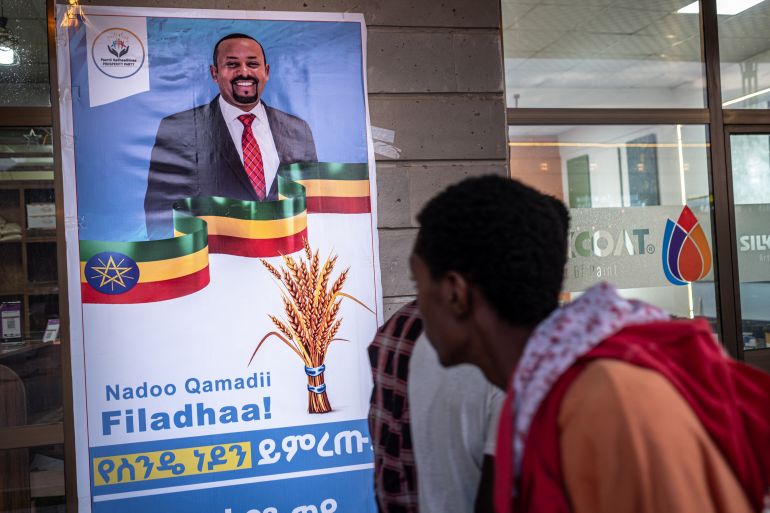
Doubts surround the integrity of the general elections scheduled for next Monday, which the opposition has preempted by asserting that the results are predetermined in favor of the Prime Minister, whom observers say has become a symbol of authoritarianism compared to the hopes placed on him when he took power in 2018.
The Prosperity Party, led by the 49-year-old Ahmed, is contesting these elections without competition in 64 of the 547 constituencies in Ethiopia.
The party held its only major election rally in the capital on Tuesday, ending at exactly 8 a.m., while Abiy, who has governed the country since 2018, did not appear at any public election rally.
No one doubts his return to power with a landslide victory for the Prosperity Party, so observers believe the party prefers not to waste its time and money on election campaigns.
The name Prosperity was given to the party founded by Abiy Ahmed, described as a devout Protestant, in a direct reference to the “Prosperity Theology” that originated in the United States, which views wealth and health as divine blessings.
The author of the book “The Abi Project: God, Power, and War in the New Ethiopia” says, “Abiy believes he is an instrument of God’s will, and that his leadership has a divine purpose, and this view leaves little room for opposition. It is not a democratic mindset.”
Ethiopian opposition parties are contesting the elections amid threats, rebellions, and near-total state control over the media.
No elections will be held in the northern Tigray region, where tensions persist with the federal government following the war that erupted between 2020 and 2022, and about one million people remain displaced due to it.
The results are scheduled to be announced on June 11. Although there are about 40 opposition parties, none are serious contenders, not even the largest represented by the Ezima Party, which will only field candidates in hopes of increasing its current four seats.
The party will field candidates in only 293 constituencies, yet there is a question about whether the Ezima Party is a genuine opposition party, given that one of its members holds a ministerial position in the current government.
A party member said, “We cannot assert the full integrity and freedom of the electoral process, given the challenges we still face.”
The Worst Ever
The Secretary-General of the Ethiopian People’s Revolutionary Party says, “These elections will be the worst ever,” adding that members of his party have faced “physical harassment, arbitrary arrests, and suppression of independent media.”
He continued, “We face challenges in accessing our constituencies, and we are subjected to intense hate campaigns on social media, as well as media disinformation from supporters of the ruling party.”
The chairperson of the coalition of 11 opposition parties believes that holding elections under these conditions “is essentially just a ritual aimed at showing the international community that the government is elected by the people every five years.”
Regional parties also face violent rebel movements, including a nationalist group called Fano, which has threatened to disrupt elections in the Amhara region.
A candidate for the Amhara National Movement said, “We cannot campaign freely in many areas,” adding that “the Fano group intimidates, harasses, and threatens our candidates and supporters with death.”
Usual Results
Ethiopian citizens, numbering