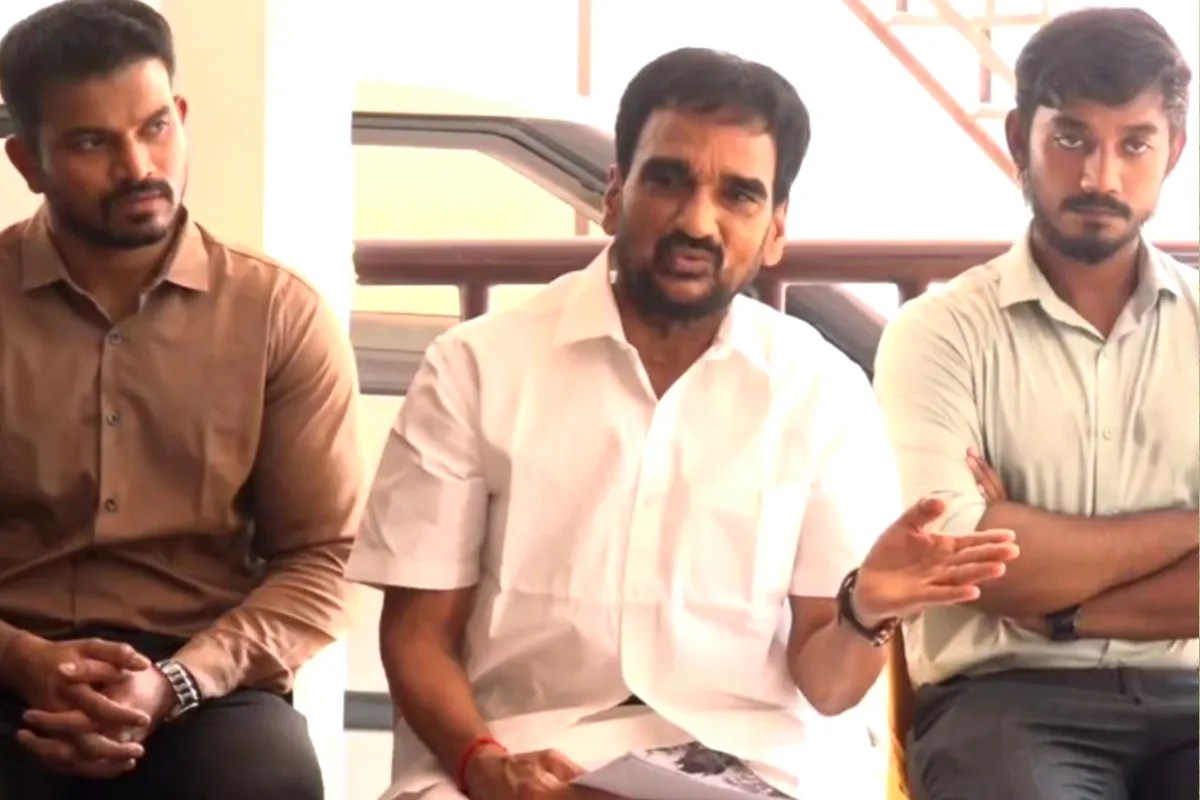
Tamil Nadu Politics: After losing the assembly elections in Tamil Nadu, political turmoil continues within the AIADMK. Former Rajya Sabha MP and AIADMK leader A. Elavarasan resigned from the party on Friday. He subsequently addressed the media at his residence in Trichy. Speaking to the media, Elavarasan alleged that many senior leaders who worked during the tenures of MG Ramachandran and former Chief Minister J. Jayalalithaa, including himself, had been sidelined for the past 10 years.
Earlier, Elavarasan released a copy of his resignation letter submitted to AIADMK General Secretary Edappadi K. Palaniswami. In the letter, he stated that he had served the AIADMK for 42 years since 1983, holding various positions, and had worked tirelessly for the party’s growth.
Elavarasan said that after the death of former Chief Minister Jayalalithaa, millions of party workers, including himself, were saddened to see the party drifting like a rudderless boat under the current leadership. He stated that after Jayalalithaa’s demise, party workers expressed confidence in Edappadi K. Palaniswami, electing him as General Secretary with high expectations. However, he alleged that many decisions taken under his leadership have shaken the trust of party workers.
He further claimed that after Jayalalithaa’s death, the importance of loyalty and hard work in the party diminished, while new members and financial power were prioritized. According to him, this was the main reason for the AIADMK’s consecutive 11 electoral defeats.
He criticized the leadership’s failure to analyze the reasons for the losses and accused the General Secretary of refusing to take responsibility for the defeats. He also alleged that the opinions of senior leaders were ignored. Elavarasan said, “I do not want to work with a General Secretary who refuses to accept defeat. Edappadi K. Palaniswami’s stubborn attitude is the reason for the party’s continuous losses. That is why I am leaving the AIADMK.”
In a sharp remark, Elavarasan claimed that efforts were also made to become Chief Minister with the support of the DMK, which he described as the AIADMK’s political rival. Citing these reasons, he announced that he was resigning with deep regret from both the position of Deputy Propaganda Secretary and the primary membership of the AIADMK. He further alleged that anyone who pointed out the reasons for the party’s repeated failures was immediately expelled from the organization.
Trichy
Rajya Sabha
Trichy
Rajya Sabha
Related news

Seven people dead in four days after three sisters and a brother and sister drown in a tank.
A Samajwadi Party MP is accused of seizing a Dalit’s land in Sant Kabir Nagar, undermining the PDA.

4 crore cash recovered at Chennai railway station just before Tamil Nadu elections; 3 arrested, including a BJP worker.
“Tamils have given their lives for their language, don’t play with it” – Why did Kamal Haasan say this?