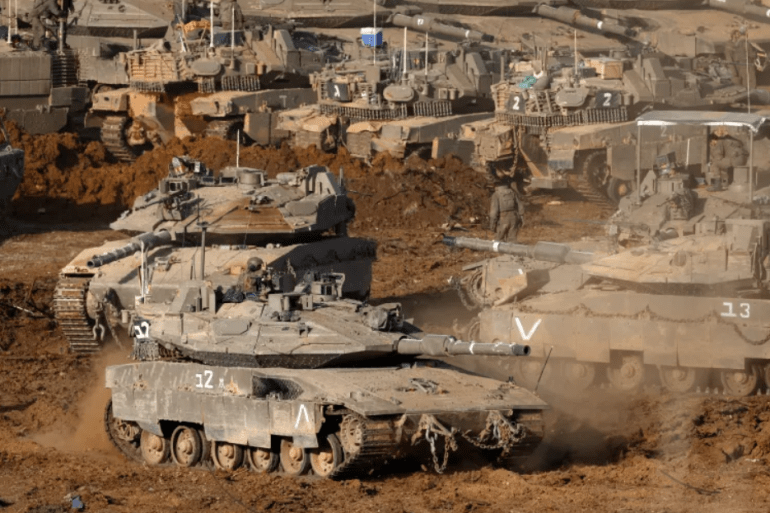
The Lebanon war lacks a clear objective, and soldiers are dying for nothing.
Under the title “The war in Lebanon has no strategic goal.. Our soldiers are dying in vain,” an article deconstructs the official Israeli narrative regarding the northern front after two months of escalation.
The analytical reading of the article stems from a core idea: the absence of any strategic objective for the military and political establishments in Lebanon, similar to what happened in Gaza to prolong the ruling coalition’s lifespan.
The article quotes a senior commander in the ground forces saying: “There are no attacks, no goal, no purpose.” It mocks claims of eliminating 600 fighters, emphasizing that restricting the army’s movement by orders from the Trump administration prevents any real maneuvers, and stressing that assassinating individuals is not a strategic goal in guerrilla wars, where attrition is quickly compensated.
The report also highlights the strategic failure; Israel believed it had lured Hezbollah into a trap, while reality proves it threw itself into a quagmire similar to the “security belt” of the last century, which provides an ideal environment for such conflicts.
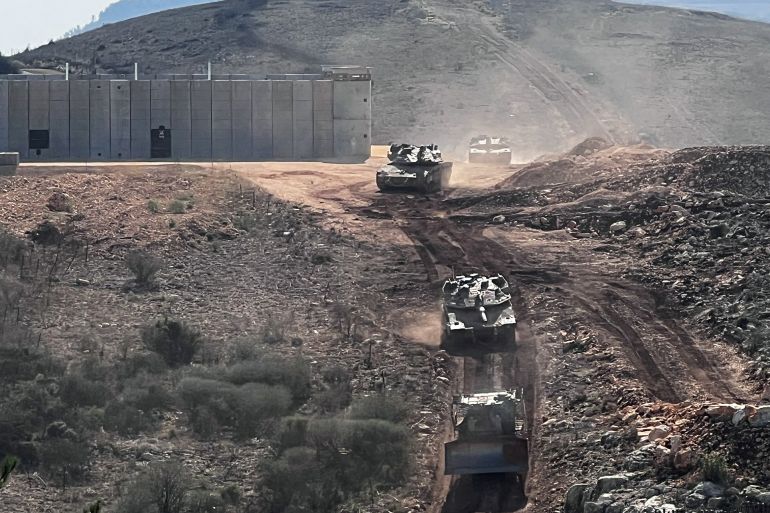
Israeli military vehicles crossing the border with Lebanon toward Israeli territory.
Manifestations of military incapacity appear, according to the article, in the technical failure against the threat of “fiber-optic drones,” where ground forces merely set up “fishing nets” to counter them, alongside a credibility crisis faced by the army spokesperson who releases misleading statements about incursion lines.
The article concludes that continuing this war represents a free waste of lives, driven by a desire for “eternal wars and closing one’s heart to pain.”
It asserts that the only available solution is an immediate move toward a political settlement and a ceasefire under international and regional sponsorship, calling for an end to following the government and presenting a real alternative to end this neglect and chaos.
Upper Galilee
The Upper Galilee is a mountainous region in northern Israel, known for its lush landscapes, historic sites, and diverse communities. Historically, it was part of the ancient Kingdom of Israel and later a center of Jewish scholarship, including the development of the Mishnah. Today, it attracts visitors for its natural beauty, hiking trails, and cultural heritage from various periods.
Lebanon
Lebanon is a small yet historically significant country in the Middle East, known for its rich cultural heritage that spans thousands of years, including Phoenician, Roman, and Ottoman influences. Its capital, Beirut, has often been called the “Paris of the Middle East” due to its vibrant culture and cosmopolitan history, though the country endured a devastating civil war from 1975 to 1990. Modern Lebanon remains a land of diverse religious communities and stunning landmarks, such as the ancient ruins of Baalbek and the cedar forests mentioned in the Bible.
Gaza
Gaza is a densely populated coastal city in Palestine with a history spanning over 4,000 years, serving as a key trade and cultural hub for ancient civilizations including the Philistines, Egyptians, and Romans. In modern times, it became a focal point of the Israeli-Palestinian conflict, and since 2007 has been governed by Hamas under a strict Israeli-Egyptian blockade. The city has faced extensive destruction from repeated military conflicts, most notably the 2023-2025 war, which devastated much of its infrastructure and cultural heritage.
<h3 class="text-lg font-semibold mb-
Upper Galilee
Upper Galilee is a mountainous region in northern Israel, known for its lush landscapes and historical significance. It was part of the ancient Kingdom of Israel and later a center of Jewish scholarship, including the development of the Jerusalem Talmud. Today, it is a popular destination for hiking, wineries, and exploring sites like Safed, a center of Kabbalistic mysticism.
Lebanon
Lebanon is a country in the Middle East with a rich history dating back thousands of years, home to ancient Phoenician civilizations, Roman ruins, and Crusader castles. Its capital, Beirut, has been a major cultural and commercial hub, though the nation endured a devastating civil war from 1975 to 1990. Today, Lebanon is known for its diverse cultural heritage, cuisine, and resilient population.
Gaza
Gaza is a densely populated Palestinian city located on the eastern coast of the Mediterranean Sea, with a history stretching back over 4,000 years. It has been a significant trade and cultural hub, ruled by various empires including the Egyptians, Philistines, Romans, and Ottomans. In modern times, Gaza has been at the center of the Israeli-Palestinian conflict, with its governance and humanitarian conditions heavily impacted by ongoing political tensions and blockades.