On May 29 — Topic: On Capital Development, Xi Jinping Uses the “Cabbage Heart” as a Metaphor

In early summer, Beijing is refreshing and pleasant, with blooming roses visible on streets and alleys, adding unique scenery to the thousand-year-old capital and a touch of poetry to urban life.

Dense population, traffic congestion, air pollution… Addressing these “big city diseases” is a systemic challenge commonly faced by countries in the process of urbanization, and Beijing is no exception.

How to solve Beijing’s “big city disease” and promote coordinated development of the Beijing-Tianjin-Hebei region? General Secretary Xi Jinping has attached great importance to this issue, setting the overarching approach: “Grasp the ‘bull’s nose’ of relieving Beijing of functions non-essential to its role as the capital” and “perform a surgical operation.”

Ten years ago, General Secretary Xi Jinping presided over a meeting of the Political Bureau of the CPC Central Committee to study and deploy the planning and construction of Beijing’s sub-center and further promote coordinated development of the Beijing-Tianjin-Hebei region. The General Secretary pointed out, “Planning and building the Beijing sub-center, relieving Beijing of non-capital functions, and promoting coordinated development of the Beijing-Tianjin-Hebei region are historic projects.”

Regarding the word “relieve,” the General Secretary once made a vivid and profound explanation. In January 2019, during a survey of coordinated development of the Beijing-Tianjin-Hebei region and a symposium, he used the “cabbage heart” as a metaphor, stating: “Xiongan New Area is outward-oriented; Beijing is inward adjustment, optimizing core functions, and making the ‘cabbage heart’ well.”

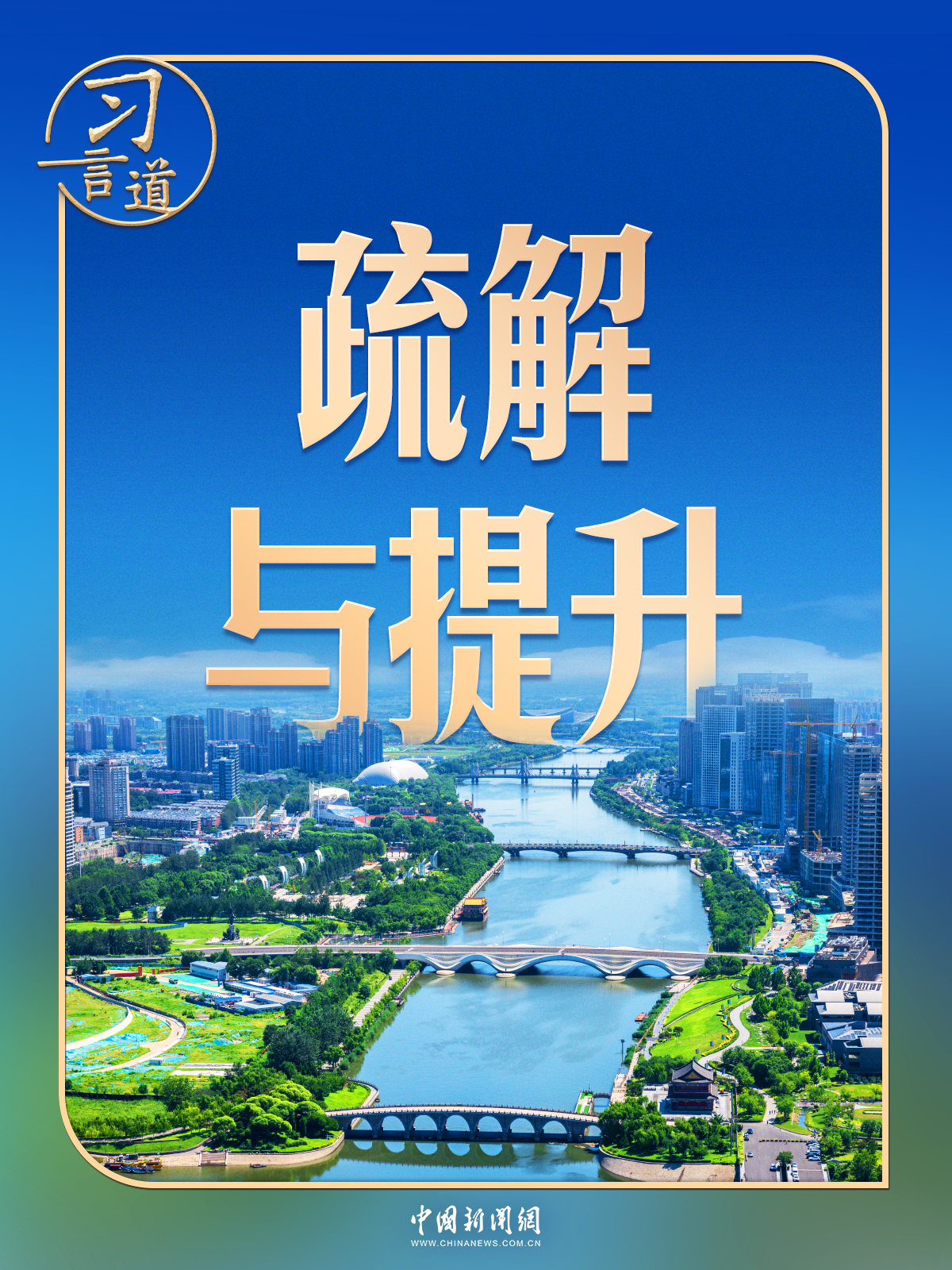
Relief is not simply moving, but also an opportunity for renewal and upgrading. How to understand “relief” and “upgrade”? Over the years, General Secretary Xi Jinping has discussed this vividly during inspections of the Beijing-Tianjin-Hebei region:

“We must adhere to and strengthen the capital’s core functions, adjust and weaken functions unsuitable for the capital, and transfer some functions to Hebei and Tianjin—this is the principle of Yu the Great’s flood control”;

“Building the Beijing sub-center at this point in time requires a 21st-century perspective”…

Over the years, Beijing has adhered to a people-centered approach, implementing comprehensive measures around space, scale, industry, and people’s livelihoods, persisting in drawing a blueprint to the end and working step by step, forging a new path for planning-led governance of a megacity.

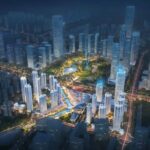
Take the Beijing sub-center as an example: over the years, municipal agencies, state-owned enterprise headquarters, and universities have moved in an orderly manner; Asia’s largest underground comprehensive transportation hub has begun phased operation; the former Dongfang Chemical Plant has transformed into the “Urban Green Heart”; the Art Center, Library, and Grand Canal Museum have become new cultural landmarks.

As for the space vacated in the central urban area due to relief, Beijing has prioritized it for ensuring central government functions, supplementing public service facilities, implementing green space preservation and expansion, and reserving more space for high-precision industries.

Over the past decade or more, Beijing has broken away from the traditional development path of “spreading like a pancake,” leaping beyond “one city, one place” to plan new development space, becoming the first megacity in the country to achieve reduced-quantity development.

At the beginning of this year, the “Modern Capital Metropolitan Area Spatial Coordination Plan (2023-2035),” jointly compiled by Beijing, Tianjin, and Hebei, was released. This is the first metropolitan area plan approved by the CPC Central Committee and the State Council, outlining a blueprint for the capital-centered metropolitan area.

During an inspection of Beijing on the eve of this year’s Spring Festival, General Secretary Xi Jinping emphasized grasping the “bull’s nose” of relieving Beijing of non-capital functions to drive coordinated development of the Beijing-Tianjin-Hebei region, insisting on combining control of increments with relief of stock, achieving organic unity and mutual promotion of relief and enhancement.

Beijing

Beijing, the

Beijing

Beijing, the capital of China, is a city with over 3,000 years of history, serving as the nation’s political and cultural center for centuries. It is home to iconic landmarks like the Forbidden City, which was the imperial palace during the Ming and Qing dynasties, and the Great Wall, a UNESCO World Heritage site. Today, Beijing blends its rich historical heritage with modern development, hosting major events like the 2008 Summer Olympics.

Beijing-Tianjin-Hebei region

The Beijing-Tianjin-Hebei region, often referred to as the Jing-Jin-Ji area, is a major economic and cultural hub in northern China centered around the capital city of Beijing. Historically, this area has been a political and strategic heartland for centuries, serving as the seat of imperial power during the Ming and Qing dynasties. Today, it is a key national development zone, with coordinated efforts to integrate infrastructure, industry, and environmental protection across the three regions.

Xiongan New Area

Xiongan New Area is a major state-level development zone in Hebei Province, China, established in April 2017 to relieve non-capital functions from Beijing and promote regional integration. It is envisioned as a model for green, intelligent, and sustainable urban development, with plans to become a futuristic city emphasizing innovation and ecological balance. The area’s history is brief but significant, representing China’s strategic shift toward decentralized urban planning and high-quality economic growth.

Beijing sub-center

The Beijing sub-center, located in Tongzhou district, is a major urban development project designed to relieve population and administrative pressures from central Beijing. Its construction began in the mid-2010s, with the plan to relocate municipal government offices and key public services there by the early 2020s. This initiative aims to create a self-sustaining, modern city hub that integrates green spaces, cultural facilities, and efficient transportation, reflecting China’s strategic urban planning goals.

Dongfang Chemical Plant

The Dongfang Chemical Plant, located in Beijing, was a major industrial facility built in the 1950s as part of China’s early efforts to develop its chemical and synthetic fiber industries. It played a significant role in the country’s economic growth during the mid-20th century but eventually ceased operations. Today, the site has been repurposed into the 798 Art Zone, a renowned cultural district that blends industrial heritage with contemporary art and creative spaces.

Urban Green Heart

The Urban Green Heart is a large, interconnected network of parks, forests, and waterways located in the heart of the Rotterdam-The Hague metropolitan region in the Netherlands. Originally conceived in the 1950s as a “buffer zone” to prevent urban sprawl and preserve agricultural land, it has since evolved into a vital recreational and ecological area. This green space now serves as a cultural and natural counterbalance to the dense cities surrounding it, offering residents and visitors a place for relaxation and biodiversity.

Art Center

The Art Center refers to a cultural institution dedicated to the exhibition, education, and promotion of visual and performing arts. Many such centers, like the Los Angeles County Museum of Art or the Centre Pompidou in Paris, were established in the 20th century to make art accessible to the public and support contemporary artists. Their history often reflects a shift toward democratizing art appreciation, moving from private collections to community-focused spaces that host galleries, workshops, and performances.

Library

A library is a curated collection of resources—such as books, manuscripts, and digital media—that serves as a hub for knowledge, learning, and community. The earliest known libraries date back to ancient Mesopotamia, with the Library of Alexandria in Egypt (founded around the 3rd century BCE) being one of the most famous, symbolizing the pursuit of universal knowledge. Today, libraries have evolved into modern institutions that preserve history, support education, and provide free access to information for all.

Grand Canal Museum

The Grand Canal Museum, located in Beijing, China, is dedicated to the history and cultural significance of the Beijing-Hangzhou Grand Canal, the world’s longest and oldest artificial waterway. The museum showcases artifacts, models, and interactive exhibits that trace the canal’s 2,500-year history, from its initial construction in the 5th century BCE to its role as a vital economic and cultural artery for imperial China. It highlights the engineering marvels, trade, and urban development spurred by the canal, offering visitors a deep dive into this UNESCO World Heritage Site.

Related news