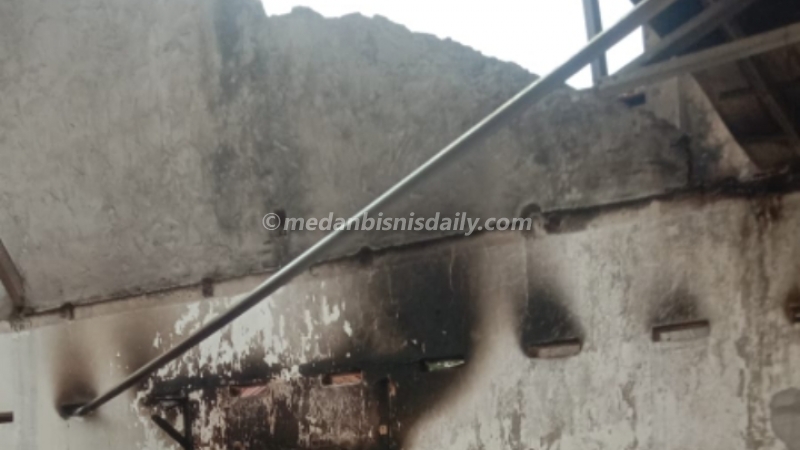
A house on Pasar Baru Street, Medan Baru District, Medan City, caught fire on Thursday (28/5/2026). Three fire trucks were deployed to extinguish the blaze.
After discovering the fire, Yoan immediately informed his parents, who were inside the house. Panic ensued. They tried to put out the fire with makeshift equipment while contacting the fire department.
“The water suddenly stopped. I was surprised it went out, because earlier I had just washed clothes and water was still flowing,” he said.
This situation made Yoan increasingly suspect that the fire was an act of sabotage. Nevertheless, he hopes the police can uncover the exact cause of the fire.
Observations at the scene showed that police personnel from the Medan Baru Police Precinct have conducted a crime scene investigation to determine the cause of the fire.
Medan Baru District
Medan Baru District is a central area in Medan, Indonesia, known for its historic architecture and tree-lined streets, which reflect the city’s colonial-era development in the early 20th century. It was originally planned as an elite residential and administrative zone during the Dutch East Indies period, featuring landmarks like the Titi Gantung bridge and the Medan City Hall. Today, it remains a key cultural and commercial hub, blending old-world charm with modern urban life.
Medan City
Medan, the capital of North Sumatra, Indonesia, is a bustling multicultural city that grew rapidly in the late 19th century as a major center for the Dutch colonial tobacco and rubber trade. Its history is marked by the establishment of large plantations, which attracted diverse ethnic groups, including Chinese, Indian, and Javanese migrants, shaping its unique cultural landscape. Today, the city is known for its colonial-era architecture, such as the Maimun Palace, and its vibrant culinary scene.
Medan Baru Police Precinct
The Medan Baru Police Precinct is a local law enforcement station located in the Medan Baru district of Medan, Indonesia. Its history is tied to the broader development of policing in the city, serving as a community-focused precinct that maintains public order and safety in the area. The precinct operates under the Indonesian National Police, reflecting the country’s decentralized approach to local security.
Titi Gantung bridge
The Titi Gantung bridge is a historic suspension bridge located in Gombak, Selangor, Malaysia. Originally built by the British in the early 20th century to serve the mining community, it was later restored and reopened as a pedestrian bridge. Today, it stands as a cultural landmark, offering scenic views of the surrounding jungle and river.
Medan City Hall
Medan City Hall, located in North Sumatra, Indonesia, is a historic colonial-era building constructed in the early 20th century, originally serving as the administrative center for the Dutch East Indies government. Its distinctive
Titi Gantung bridge
The Titi Gantung bridge, also known as the “Hanging Bridge,” is a historic suspension bridge located in Banyumas, Central Java, Indonesia. Originally built during the Dutch colonial era in the early 20th century, it was constructed as a vital transportation link for pedestrians and light vehicles across the Kali Serayu river. Today, it stands as a cultural landmark, offering scenic views and serving as a popular tourist attraction that reflects the region’s colonial heritage.
Medan City Hall
Medan City Hall, located in North Sumatra, Indonesia, is a historic colonial-era building constructed between 1908 and 1909 under Dutch rule, originally serving as the city’s administrative center. Its architecture features a distinctive blend of European and local styles, reflecting the region’s cultural heritage. Today, it remains the official seat of Medan’s municipal government and a popular landmark for visitors.
Maimun Palace
Maimun Palace, located in Medan, North Sumatra, Indonesia, is a historic royal palace built in 1888 for the Sultanate of Deli. Designed by a Dutch architect in a blend of Malay, Islamic, and European architectural styles, it served as the official residence of the sultan. Today, it remains a cultural landmark and museum, offering visitors a glimpse into the region’s royal heritage and colonial history.