New regulations proposed for cosmetics management; overnight interest rates surge to 7.9%.
Notable News: Proposal for New Regulations on Cosmetics Management; Overnight Interest Rate Jumps to 7.9%; Take Children to Ward or Commune Health Stations for Free Vitamin A…
Proposal for New Regulations on Cosmetics Management
Feedback is being gathered on a draft decree regulating cosmetics management, which will replace Decree 93/2016.
The draft decree stipulates that cosmetics products circulating on the market must ensure safety for human health under normal use conditions.
Regarding cosmetics production in Vietnam, the draft consolidates the conditions for granting a Certificate of Eligibility for Cosmetics Production and a Certificate of Good Manufacturing Practice for Cosmetics (CGMP) to improve the quality of domestically produced cosmetics and integrate internationally.
Businesses can apply for both certificates simultaneously, reducing administrative procedures and business conditions.
The draft also clearly defines cases for granting, re-granting, adjusting, and revoking certificates, specifying that the certificates have indefinite legal validity, but facilities must maintain compliance with CGMP principles and standards throughout their operations and are subject to periodic or unscheduled inspections.
Inspections to maintain CGMP compliance are conducted periodically every 3 to 5 years or unscheduled based on risk management principles.
The draft also specifies cases for revoking the Certificate of Eligibility for Cosmetics Production and updates the status of maintaining CGMP compliance on the national cosmetics database system.
Duties of Village Chiefs and Neighborhood Heads After Mergers
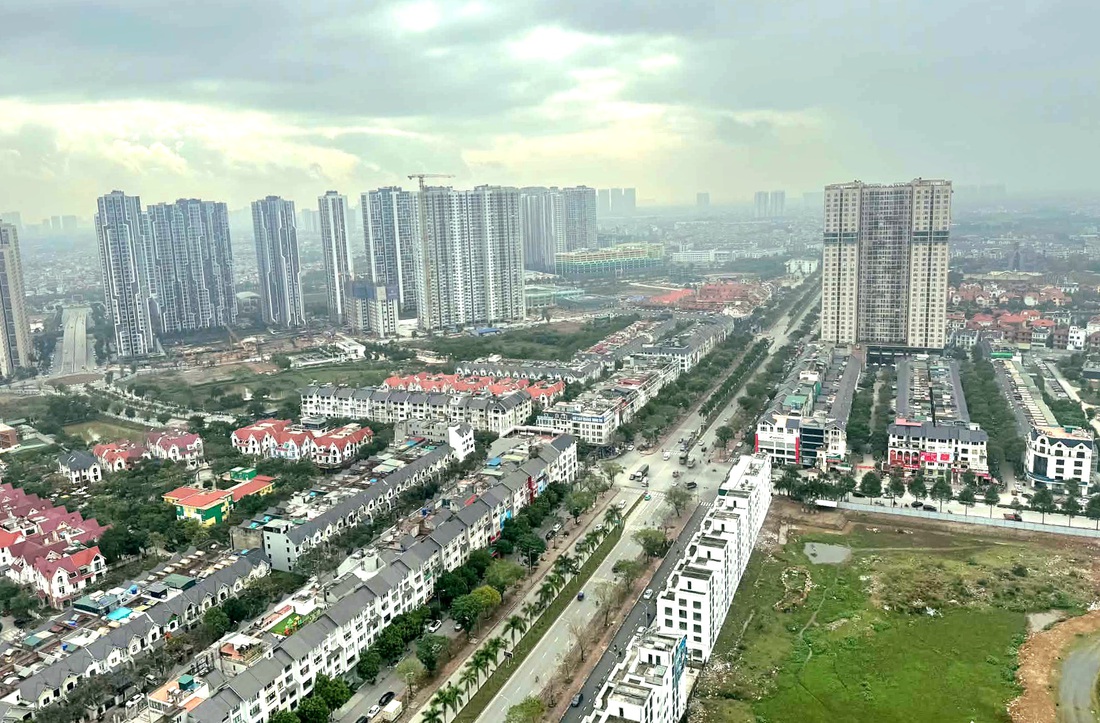
A corner of a residential group in Hanoi
According to Decree 185/2026, village chiefs and neighborhood heads have many duties in organizing and managing the activities of villages and residential groups.
These include presiding over village and residential group meetings and organizing periodic community meetings as required by law on implementing grassroots democracy.
Hanoi
Hanoi, the capital of Vietnam, is one of the oldest cities in Southeast Asia, with a history spanning over a thousand years. Founded in 1010 as Thang Long, it served as the imperial capital of various Vietnamese dynasties and later became the administrative center of French Indochina. Today, it is known for its rich cultural heritage, ancient temples, and vibrant street life, blending traditional Vietnamese charm with modern development.
Thang Long
Thang Long, meaning “Ascending Dragon,” was the ancient capital of Vietnam, founded in 1010 by Emperor Ly Thai To. It served as the political and cultural center of the country for nearly eight centuries, under various dynasties including the Ly, Tran, and Le. Today, its legacy is preserved in the Thang Long Imperial Citadel in Hanoi, a UNESCO World Heritage site that showcases artifacts and architecture from its long history.
Hanoi
Hanoi, the capital of Vietnam, is a city with a rich history dating back over a thousand years, serving as the political and cultural heart of the nation. It was founded as Thang Long in 1010 by Emperor Ly Thai To and later renamed Hanoi in 1831, playing a pivotal role during French colonial rule and the Vietnam War. Today, it is known for its well-preserved Old Quarter, ancient temples, and French colonial architecture, blending traditional Vietnamese culture with modern influences.
Thang Long
Thang Long, meaning “Ascending Dragon,” was the ancient capital of Vietnam, founded in 1010 by Emperor Ly Thai To. Located in present-day Hanoi, it served as the political and cultural center for multiple Vietnamese dynasties for nearly a thousand years. Its historic core, the Thang Long Imperial Citadel, is now a UNESCO World Heritage site, showcasing layers of history from the 11th to the 19th centuries.
Thang Long Imperial Citadel
The Thang Long Imperial Citadel in Hanoi, Vietnam, was the political and cultural center of the country for over a thousand years, serving as the capital under multiple dynasties, including the Ly, Tran, and Le. Its history dates back to the 7th century, with the most significant construction occurring in 1010 when Emperor Ly Thai Thai moved the capital here. The site, now a UNESCO World Heritage site, features ancient palaces, gates, and archaeological remains that reveal layers of Vietnamese history.
UNESCO
UNESCO, the United Nations Educational, Scientific and Cultural Organization, was founded in 1945 to promote international cooperation in education, science, and culture. It is best known for its World Heritage List, which identifies and protects sites of outstanding universal value, such as the Great Wall of China and the Pyramids of Giza. Through these efforts, UNESCO aims to foster peace and cultural understanding across nations.