
On April 16, the University of Education – University of Danang collaborated with the Danang Journalists Association to organize a seminar titled “Journalism and Communication in the Era of Artificial Intelligence: How Should Journalism Respond to AI?”.
The seminar attracted the participation of experts, journalists, lecturers, and numerous students, focusing on the profound changes AI is creating in journalistic activities.
AI: From Tool to Assistant and… Colleague of Journalists
At the seminar, a professor from the Institute of Communication – Social Policy Research at Van Lang University stated that according to the latest statistics, only about 16% of journalists do not use AI.
However, he emphasized that AI is merely a supportive tool, helping journalists work faster and more efficiently in stages such as data analysis, interviewing, transcription, translation… but cannot replace humans.
“The overuse of AI can diminish critical thinking, creative capacity, and professional standards, even creating misleading information or being exploited to pollute the information environment.
We should not ‘deify’ AI but need to approach it soberly, with clear purpose and strategy, avoiding following trends. The application of AI must always be under the supervision of journalists, transparent to users, and guided by the public interest,” he said.
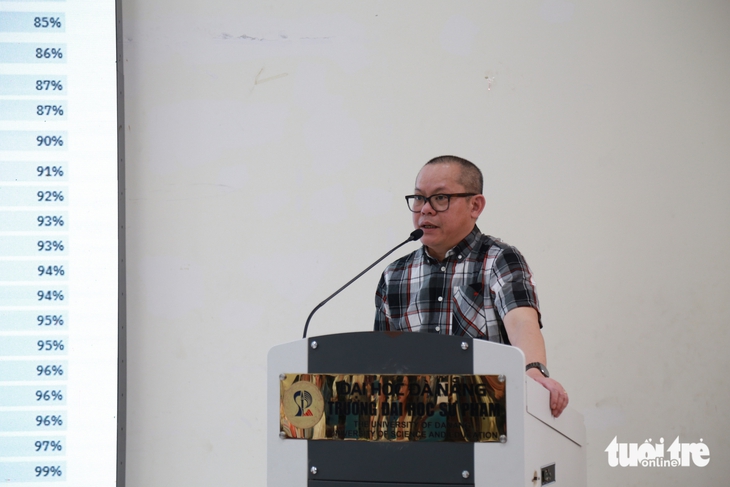
At the seminar, a Deputy Editor-in-Chief shared that the mandatory requirement of journalism is verification and responsibility for information. AI can assist, but cannot shoulder professional responsibility.
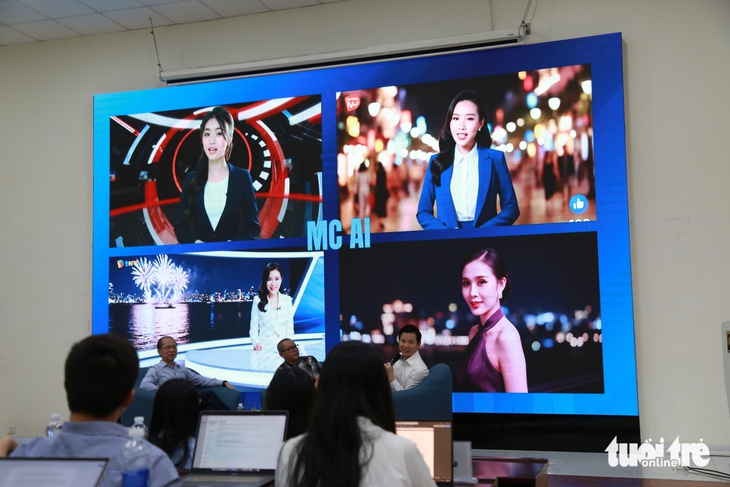
He shared that since the COVID-19 pandemic (2020), in the context of remote work, a newspaper had used AI as virtual program hosts to replace humans.
Over time, AI has not only been a tool but gradually become an “assistant,” even considered a “colleague” in some content production processes.
He cited an example from 2024, where a newspaper used AI to analyze and predict scores for matches at Euro 2024. Accordingly, AI made predictions before matches took place and, by leveraging big data, this tool predicted the results with 100% accuracy.
“Although AI is becoming increasingly powerful, it still requires human control and final decision-making,” he emphasized.
The journalist shared that the application of AI in journalism can be divided into two directions: personal use and integration into the newsroom’s management processes.
If AI is integrated into the content management system, it can support many stages such as editing, analysis, content suggestions, and data processing. Newsrooms must continuously train journalists because each person’s level of access to AI is different.
Does AI Make Journalism “Lose Its Essence”?
At the seminar, a lecturer expressed concern about AI’s impact on the economics of journalism, while also worrying that the use of AI could reduce the personal imprint of the writer, thereby affecting the quality of opinion journalism and in-depth works.
The Chairman of the Danang Journalists Association, who is also the Director of a local media outlet, provided many examples from reality and affirmed that AI does not replace humans, but changes the way journalism is organized.
AI is not simply a story of saving costs or personnel, but a matter of restructuring the journalism management model.
He emphasized that instead of mechanically cutting staff, media agencies should aim to build a high-quality team capable of mastering technology and creating content.
“AI cannot replace the core values of journalists such as emotion, experience, and creative thinking. These are the factors that create the identity of journalism. AI is only a tool, while the distinctive value of journalism still lies with humans,” he said.
Another