The Brazil national team has begun gathering to prepare for the 2026 World Cup at Granja Comary in Teresopolis on May 27. Currently, Brazil has 23 out of 26 players present at the training camp. Three stars, Gabriel Magalhaes, Gabriel Martinelli (Arsenal), and Marquinhos (PSG), have not yet joined because they are busy playing in the Champions League final.
Casemiro was the first to arrive at the Brazil national team headquarters (on the evening of May 26). Casemiro recently announced his departure from Manchester United, and it is still unclear which club he will join.
Brazilian media reports that Casemiro just “handled personal matters at his hometown of Sao Paulo” before reporting to the national team.
It is possible that Casemiro is negotiating a contract to return to play football in his home country.
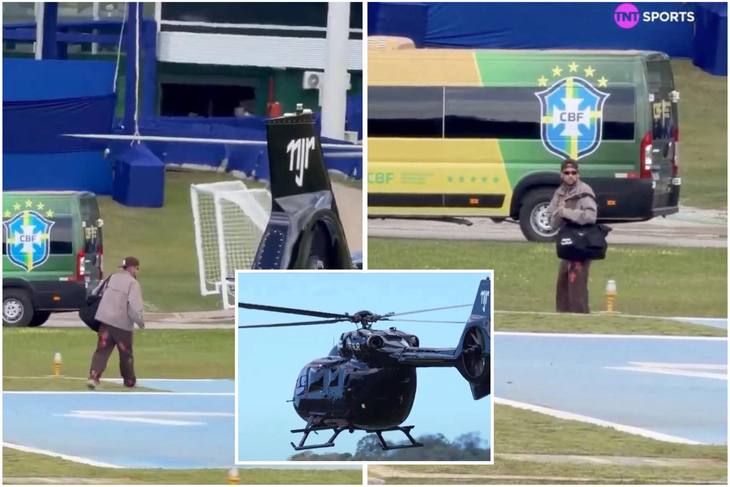
Also according to Brazilian press, Neymar was the last of the 23 early-arriving players to report, and he arrived by private helicopter, landing directly at the team’s base.
Neymar stepped off the helicopter wearing a cream-colored jacket and carrying a sports bag on his shoulder. He shook hands with two members of the Brazil national team staff before entering the training facility.
Neymar’s private helicopter is an Airbus H145, valued at an estimated 13 million USD, designed for business executives and high-end clientele. This is a vehicle Neymar has used for many important events to avoid traffic jams.
Neymar is currently not in peak physical condition due to a right calf injury. However, Neymar stated that this injury does not affect his participation in the World Cup. It is highly likely that Neymar will not play in the friendly matches preparing for the 2026 World Cup.
A Brazilian influencer went viral on social media after smashing a TV at home upon hearing the news that Neymar was called up by Carlo Ancelotti for the 2026 World Cup.
Granja Comary
Teresopolis
Sao Paulo
Granja Comary
Teresopolis
Sao Paulo
Related news

Morning news April 24: National Assembly passes removal of the 500 million VND/year tax-free revenue threshold.
“Thirty breathless minutes rescuing people trapped on overturned Green Bay 58 ship”
Imported cars to Vietnam drop sharply; CMC Technology Group fined.

Another online kidnapping case in Tay Ninh, victim safely returned to family