Voting rights and workers’ rights: A call for a strong struggle from the Central Committee.
The Communist Party of India (Marxist) will build a campaign to protect voting rights and democratic rights. Propaganda against the implementation of labor codes will continue. Movements will be held in all states demanding that anti-worker rules not be enforced.
The CPI(M) Central Committee announced this goal in a statement on Tuesday. The statement said propaganda against imperialist aggression in Iran, Palestine, Venezuela, and Cuba will be intensified. Mass gatherings will be held demanding the immediate implementation of reservation for women in legislative bodies.
The Central Committee meeting in Delhi from May 22-24 analyzed election results in five states. Political, organizational, and ideological factors behind the results were reviewed. CPI(M) will prepare reports analyzing from the grassroots level in Kerala, West Bengal, as well as Tamil Nadu and Assam. The CPI(M) has again got the opportunity to express its views in the West Bengal Legislative Assembly. The Central Committee called this positive.
Overall, it was stated that Hindutva communal forces have been able to consolidate themselves in society. They have managed to come to power in West Bengal. Although the BJP won fewer seats in Kerala and Tamil Nadu, its increased influence is concerning.
Regarding the ‘INDIA bloc’, it was stated that unity of all Left, progressive, secular, and democratic forces is essential to counter the rise of far-right forces. But the role of the Congress is not helpful in this regard. The Congress’s campaign in Kerala was criticized.
Regarding seat reallocation or delimitation, it was stated that the BJP-led central government wants to change the electoral map of the country. Reservation for women has been linked with this. The BJP wants to conduct delimitation to its electoral advantage. It wants to reduce the importance of southern states. The BJP is using state institutions to implement its agenda, which has been proven again.
Regarding the Special Summary Revision (SSR) of electoral rolls, it was stated that by creating a new criterion of ‘logical inconsistency’, many people have been disenfranchised. The judiciary has failed to protect the voting rights of these people. Never before in the country have voter lists been manipulated in the interest of a particular political party. The credibility of the entire election process has been questioned.
The Central Committee said that SSR will be conducted in 17 more states. The Election Commission must ensure that the voting rights of genuine voters are not taken away.
CPI(M) strongly opposed the removal of the government opportunity for objection in the SSR in Bihar and West Bengal.
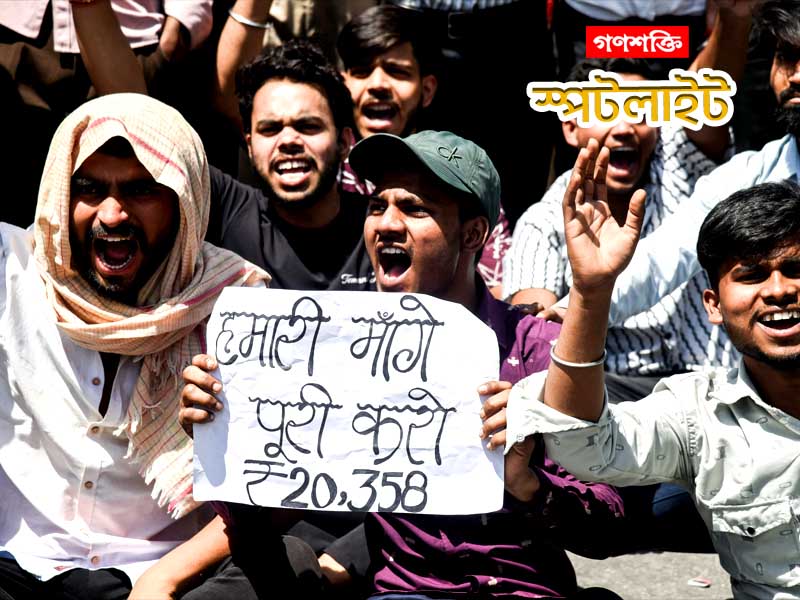
The Central Committee expressed anger over arrangements for showing the Football World Cup, the Cockroach People’s Party, the NEET question paper leak, attacks on women, Dalits, and Adivasis, protests by laborers, the scrapping of MGNREGA, the shortage of fertilizers, the rise in fuel prices, and the dire state of the Indian economy.
Iran
Iran is a country in West Asia with a rich history dating back thousands of years, once the heart of the ancient Persian Empire. Its cultural sites include the ruins of Persepolis, the grand capital of the Achaemenid Empire, and stunning Islamic architecture in cities like Isfahan and Shiraz. Today, Iran is known for its deep Persian heritage, poetry, and vibrant bazaars.
Palestine
Palestine is a historic region in the Middle East, known for its deep cultural and religious significance to Judaism, Christianity, and Islam. Its history includes ancient civilizations, such as the Canaanites and Philistines, and it has been ruled by various empires, including the Romans, Byzantines, and Ottomans. In modern times, the area is central to the Israeli-Palestinian conflict, with ongoing disputes over land, statehood, and sovereignty.
Venezuela
Venezuela is a South American country known for its diverse landscapes, including the Andes mountains, Amazon rainforest, and the world’s highest waterfall, Angel Falls. Its history includes colonization by Spain in the 16th century, a key role in the independence movement led by Simón Bolívar in the early 19th century, and a modern period marked by oil wealth and political upheaval. Today, Venezuela is recognized for its vibrant culture, which blends Indigenous, African, and European influences.
Cuba
Cuba is a Caribbean island nation with a rich and complex history, shaped by Spanish colonization, the Atlantic slave trade, and the Cuban Revolution of 1959. Its vibrant culture is a unique blend of Spanish, African, and indigenous influences, evident in its music, dance, and architecture. Known for its classic cars and tropical landscapes, Cuba remains a significant cultural and political symbol in the Americas.
Kerala
Kerala, located in southwestern India, is a coastal state known for its lush backwaters, serene beaches, and rich cultural heritage. Historically, it was a major spice trading hub, attracting ancient traders from Phoenicia, Rome, and China, and later European powers like the Portuguese and British. Today, it is celebrated for its unique art forms, Ayurvedic traditions, and high literacy rate.
West Bengal
West Bengal is a culturally rich state in eastern India, known for its vibrant arts, literature, and political history. It was a key center of British colonial rule, with Kolkata serving as the capital of British India until 1911. The state is famous for its unique festivals, such as Durga Puja, and was a birthplace of the Indian independence movement and the Bengal Renaissance.
Tamil Nadu
Tamil Nadu is a state in southern India known for its rich cultural heritage, classical arts, and ancient Dravidian architecture. Its history spans over 2,000 years, with powerful dynasties like the Cholas, Pandyas, and Pallavas leaving behind magnificent temples and literature. Today, it remains a vibrant center of Tamil language, music, and dance.
Assam
Assam, a state in northeastern India, is renowned for its rich cultural heritage, lush tea gardens, and the mighty Brahmaputra River. Historically, it was the seat of the powerful Ahom Kingdom, which ruled for nearly 600 years until the British annexation in the 19th century. Today, it is celebrated for its unique Assamese culture, wildlife sanctuaries like Kaziranga National Park, and the annual Bihu festival.