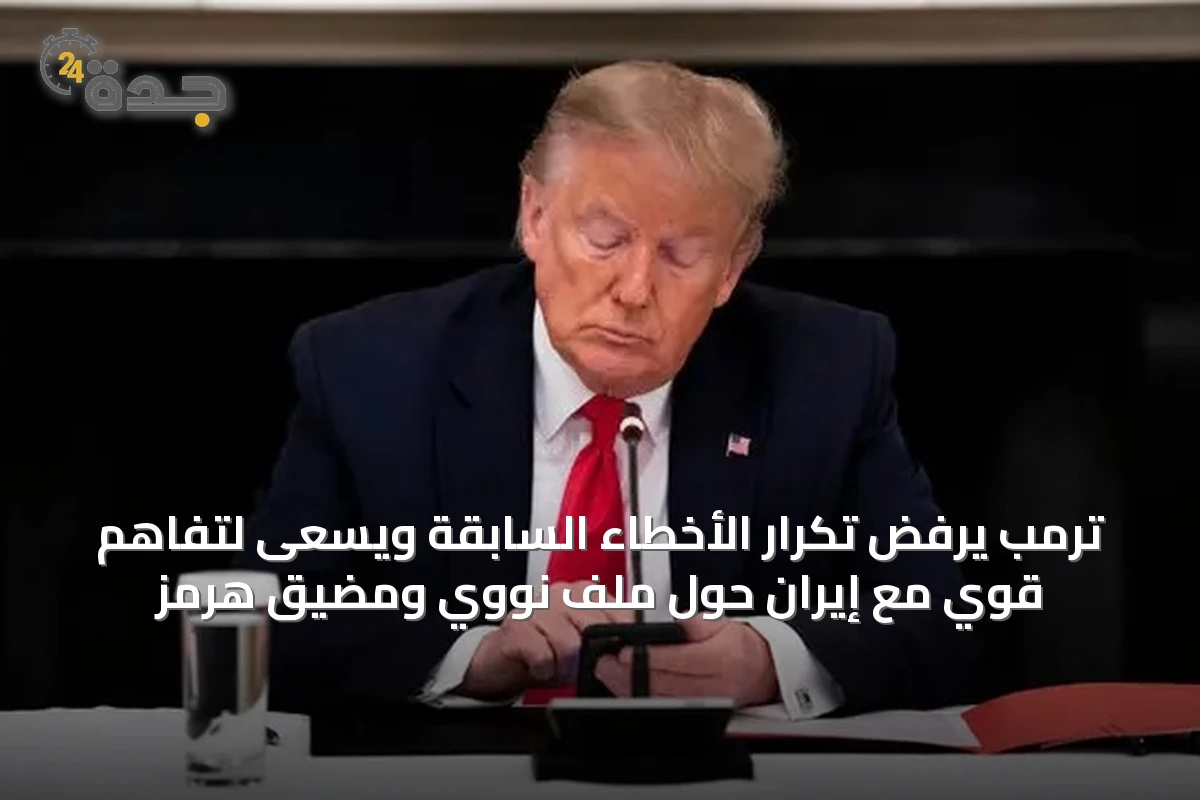
The state of waiting and anticipation continues regarding the future of negotiations between the United States and Iran, with both sides adhering to rigid positions that reflect the complexity of the issues at hand. These issues are led by the Iranian nuclear program, the Strait of Hormuz, economic sanctions, and frozen Iranian assets.
Statements by U.S. President Donald Trump
U.S. President Donald Trump affirmed that Washington will not accept any agreement that does not achieve its strategic goals, stressing the need to reach a “strong and meaningful” agreement. He indicated his refusal to repeat what he described as the mistakes of the previous nuclear agreement signed during the administration of former President Barack Obama, considering that agreement gave Tehran an opportunity to develop its nuclear program.
Position of U.S. Secretary of State Marco Rubio
Trump’s statements coincided with more stringent positions expressed by U.S. Secretary of State Marco Rubio, who stated that his country is giving the diplomatic path a full chance, but added that this path will not continue indefinitely. He explained that Washington will either reach a “good” agreement with Tehran or will resort to other options. He also noted that there is an opportunity to reopen the Strait of Hormuz and enter into serious, time-bound negotiations on the nuclear file.
Iran’s Response and Lowered Expectations
At the same time, Iran lowered the ceiling of expectations regarding the possibility of quickly reaching an agreement. Iranian Foreign Ministry Spokesperson Esmaeil Baghaei confirmed that the current talks are focused more on ending the war and regional tensions, rather than directly on the nuclear file, while acknowledging the existence of a general framework for understanding without a clear final agreement so far.
American Pressures and Demands and Announcement of Continued Blockade
American reports revealed that Washington has given Tehran a short deadline to formulate an agreement that prevents an Iranian nuclear stockpile and does not allow the release of frozen funds, indicating the continuation of economic and political pressures. In the same context, Trump announced the continuation of the American blockade on Iranian ports and ships in the Strait of Hormuz until a formal agreement is signed.
Israeli Discrepancies and International Dimensions
On the Israeli side, reports showed discrepancies between Benjamin Netanyahu’s government and the U.S. administration, as Netanyahu feels his ability to influence the course of ongoing understandings between Washington and Tehran is waning, while he insists on the freedom to carry out military operations against what Israel considers regional threats, especially in Lebanon.
In Doha, diplomatic movements are witnessing increased activity with the arrival of a high-ranking Iranian delegation including Speaker of the Islamic Consultative Assembly Mohammad Bagher Ghalibaf, Foreign Minister Abbas Araghchi, and the Governor of the Central Bank of Iran. The delegation aims to discuss files on ending the war, frozen assets, navigation in the Strait of Hormuz, and uranium enrichment, within broader efforts to reach political, security, and economic understandings in the region.
Strait of Hormuz
Lebanon
Strait of Hormuz
Lebanon
Doha
Baalbek
Byblos
Related news

Academic Alliance of 22 Universities to Develop Globally Competitive Engineering Solutions

Thunderstorms and dust-raising winds today, Monday… Find out where they will occur.

Taif University announces opening of applications for paid diploma programs

Weather conditions: Winds in Mecca and Medina, fog in the Eastern Province.