Ferrari bets on generational tech shift with Luce five-seat EV.
Ferrari presented its first fully electric car on Monday, marking a high-stakes shift by the luxury sports car maker as competitors including Porsche and Lamborghini scale back their EV ambitions, citing weak demand.
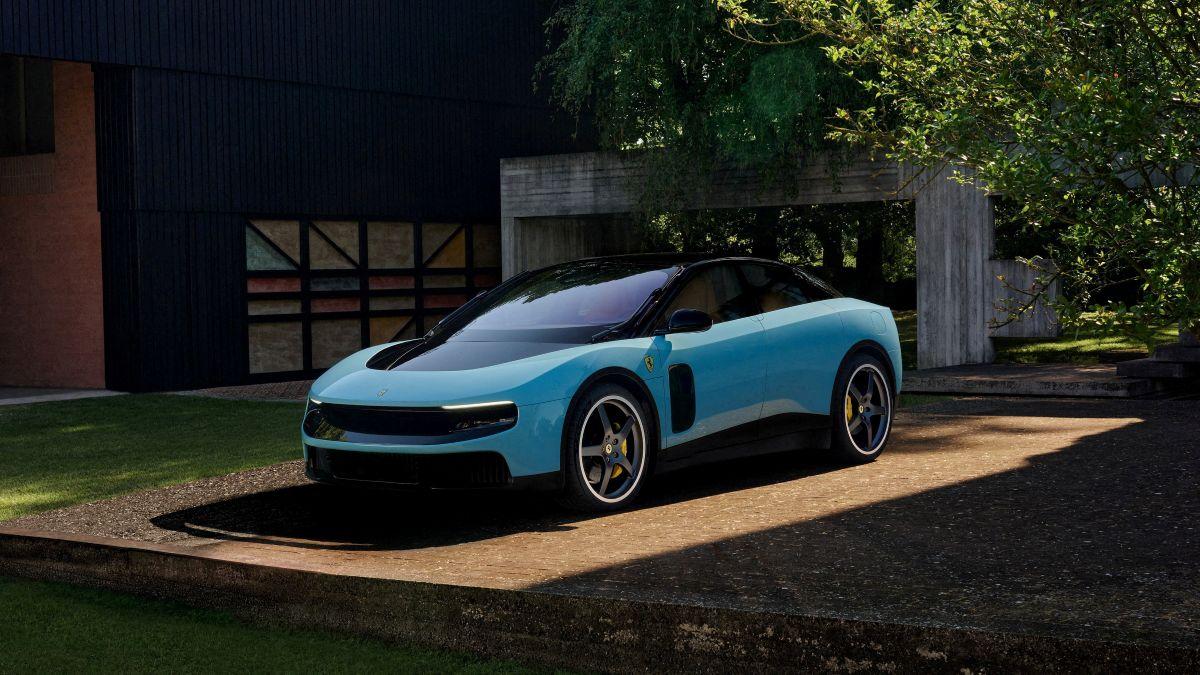
The four-door Luce, Italian for ‘light’, was developed with the help of former Apple design chief Jony Ive and his collective LoveFrom, and is Ferrari’s first five-seater.
Ferrari aims to appeal to families with deep pockets, offering them comfortable seats, high-end tech and a 600-liter boot. Deliveries of the long-awaited Luce, priced at €550,000 ($640,000), are due to begin in the fourth quarter of 2026.
“It’s the result of five years of work,” a company representative told more than 200 reporters gathered in Rome.
The Luce, which amplifies natural vibration sounds from its EV powertrain to maintain the visceral appeal of a traditional Ferrari, marks a gamble that a generation steeped in technology and AI, and less attached to its trademark 12- and 8-cylinder engine legacy, will shift to high-tech luxury EVs.
Ferrari is hoping that will also give it the opportunity to move further into markets such as China, where EVs are already widespread and big petrol cars are heavily taxed.
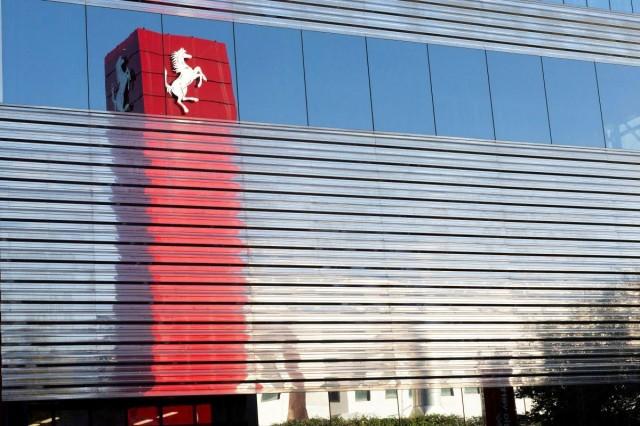
A Ferrari logo is reflected on the external wall of the company’s factory in Maranello, Italy, October 2, 2025.
“In our client base there are many … who are still looking for something completely different, to be used in different moments of life,” said a company executive.
“It’s absolutely stunning,” the executive added of the car, which features four electric motors — one per wheel — which help deliver more than 1,000 horsepower, a top speed above 310 kph, and increased agility for a car weighing more than 2.2 tons.
Ferrari said the Luce has a range of over 500 kilometers.
A light show launch featured five Luces, painted from Ferrari-red to white and light blue, which mark a break from the carmaker’s aggressive, muscular, signature sporty style with a larger body and expansive, glass-led design.
The Luce interior defers to traditional Ferrari luxury, with leather, glass and anodized aluminium surfaces as well as several physical controls which differ from the all-digital, touch-led approach of Tesla and some Chinese EV makers.
Rome
Rome, the capital of Italy, is one of the world’s most historically significant cities, famously known as the “Eternal City.” Founded in 753 BCE according to legend, it was the center of the Roman Empire, which dominated Europe, North Africa, and the Middle East for centuries. Today, Rome is renowned for its ancient landmarks like the Colosseum and Roman Forum, as well as its role as the heart of the Catholic Church, home to Vatican City.
China
China is a vast and ancient country in East Asia with a recorded history spanning over 3,500 years, home to one of the world’s earliest continuous civilizations. It was unified under the first emperor of the Qin Dynasty in 221 BCE and later flourished through dynasties like the Han, Tang, and Ming, which built iconic landmarks such as the Great Wall and the Forbidden City. Today, China is a global economic power, blending its rich cultural heritage with rapid modernization.</div
Rome
Rome, the capital of Italy, is one of the world’s most historically significant cities, famously known as the heart of the ancient Roman Empire. Its history spans over 2,500 years, from its legendary founding in 753 BCE to becoming a center of art, culture, and religion during the Renaissance. Today, Rome is renowned for its iconic landmarks like the Colosseum, Roman Forum, and Vatican City, which together showcase its enduring legacy as the “Eternal City.”
Colosseum
The Colosseum, also known as the Flavian Amphitheatre, is an iconic ancient Roman amphitheater located in the center of Rome, Italy. Construction began under Emperor Vespasian in 72 AD and was completed in 80 AD under his successor Titus, originally hosting gladiatorial contests, public spectacles, and dramas. Despite damage from earthquakes and stone-robbers, it remains a powerful symbol of Imperial Rome and one of the most visited tourist attractions in the world.
Roman Forum
The Roman Forum was the bustling center of ancient Rome, serving as a marketplace, political hub, and site for religious ceremonies for centuries. Its history dates back to the 7th century BCE, with temples, government buildings, and monuments constructed over time, including the Senate House and the Arch of Titus. Today, it stands as a sprawling archaeological ruin, offering a glimpse into the daily life and power of the Roman Empire.
Vatican City
Vatican City is the smallest independent state in the world, serving as the spiritual and administrative center of the Roman Catholic Church. Established as a sovereign entity in 1929 through the Lateran Treaty with Italy, its history dates back to the early Christian era, centered around St. Peter’s Basilica, built over the traditional burial site of Saint Peter. The city is renowned for its iconic cultural treasures, including the Sistine Chapel with Michelangelo’s frescoes and the vast Vatican Museums.
China
China is one of the world’s oldest continuous civilizations, with a recorded history spanning over 3,500 years. It was home to ancient dynasties like the Shang, Zhou, and Qin, and later became a global center for trade, culture, and innovation through the Silk Road. Today, China is known for its rich cultural heritage, including landmarks such as the Great Wall and the Forbidden City, as well as its rapid modernization and global influence.
Great Wall
The Great Wall of China is a series of fortifications built across northern China, with construction beginning as early as the 7th century BC and major sections added during the Ming Dynasty (1368–1644). It was designed to protect Chinese states and empires from invasions and raids by nomadic groups. Stretching over 13,000 miles, it is one of the world’s most iconic cultural sites and a UNESCO World Heritage site.
Forbidden City
The Forbidden City, located in the heart of Beijing, China, served as the imperial palace for 24 emperors during the Ming and Qing dynasties from 1420 to 1912. Construction began in 1406 under Emperor Yongle, and the complex is renowned for its vast scale, traditional Chinese architecture, and cultural significance. Today, it is a UNESCO World Heritage site and houses the Palace Museum, showcasing centuries of Chinese imperial history and art.