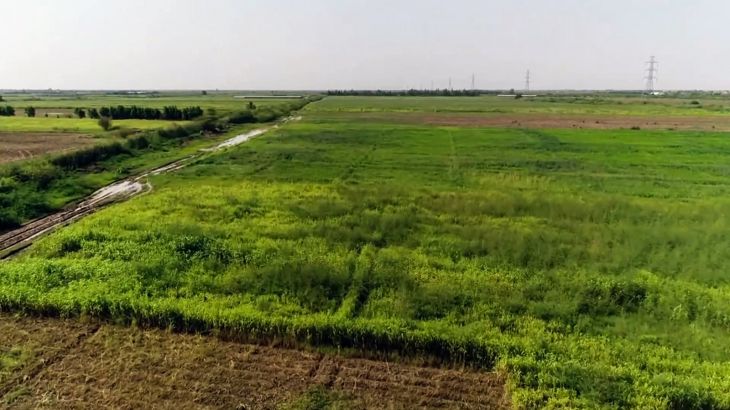
It suffers from one of the harshest paradoxes in the world. While rivers flow, fields stretch as far as the eye can see, and seasons vary, these natural riches turn into a heavy burden in a continent that possesses more than 60% of the world’s unused agricultural land, yet spends over $80 billion annually on food imports.
These figures illustrate the scale of the worsening humanitarian crisis, as a participant in an agricultural forum pointed out that more than 300 million people within Africa alone are threatened by hunger, representing 20% of the continent’s population.
A report states that Sudan represents a living model of this “tragic” paradox, adding that the country, long viewed as a potential breadbasket for Africa, has seen vast parts of its land turn into war and conflict zones, while drought has affected other areas.
Agricultural experts believe that the crisis in Sudan’s agriculture is not linked to a scarcity of resources as much as it is to the absence of planning and fluctuating agricultural policies. An agricultural expert confirms that the crisis lies in the lack of an agricultural policy that protects the farmer, directs agricultural research, supports exports and manufacturing, and ensures the farmer is not left to struggle alone without sufficient technological support or agricultural research.
Impacts of crises on agriculture
From another angle, the report points to the repercussions of regional crises on agricultural production. Between ports affected by navigation disruptions in one area and the expansion of tensions around another, the agricultural production cycle has stalled, and the price of a fertilizer bag in some regions jumped from about $10 to $50.
The effects of the Ukrainian war have also not been absent from the Sudanese agricultural scene, as fuel prices tripled as a result, at a time when it is confirmed that about 20 million people are experiencing severe food insecurity in Sudan.
Despite this scene, the Sudanese government is betting, as clarified in the report, on an ambitious plan targeting the cultivation of 25 million acres.
Khartoum hopes through this plan to restore part of the agricultural role that Sudan has been known for for decades. However, experts believe that the raging war continues to cast its shadow over both the land and the people alike, threatening to thwart any agricultural effort before it even begins.
Since the outbreak of war between two factions in April 2023, Sudanese cities have turned into battlefields and corridors for displacement. The conflict has resulted in the deaths of tens of thousands, the displacement of millions, and the transformation of millions more into lines of hungry and homeless people in remote areas without water, electricity, or health services.