The Confederation of African Football (CAF) held the draw for the group stage of the qualifiers for the 2027 Africa Cup of Nations last Tuesday. The tournament will be co-hosted by Kenya and Tanzania from June 19 to July 17, 2027.
The draw brought back the question of teams that have never reached the finals of the tournament. According to the qualification system, 48 teams were divided into 12 groups of four teams each. The top two teams from each group qualify for the finals, while an additional team qualifies from the groups containing one of the host countries alongside the host.
Ten teams from the continent have never reached the Africa Cup of Nations finals so far: Central African Republic, Eswatini, Lesotho, Seychelles, Eritrea, São Tomé and Príncipe, Djibouti, and Somalia.
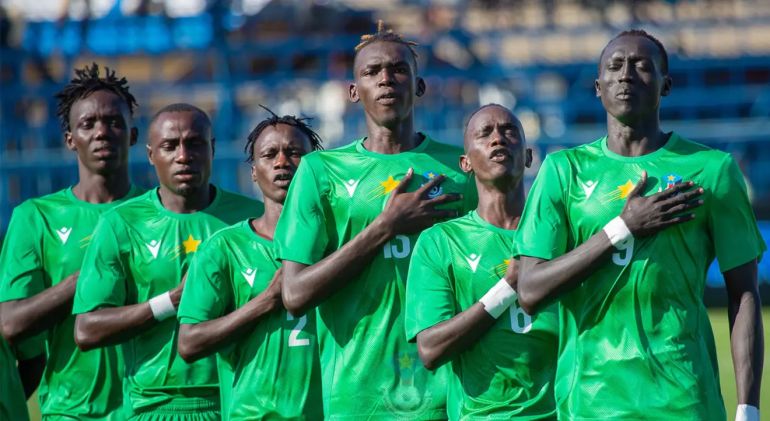
A preliminary round preceded the group stage, involving the 12 lowest-ranked teams in the FIFA World Rankings in home-and-away matches between March 25 and 31, 2026. This round resulted in the elimination of Djibouti, Seychelles, São Tomé and Príncipe, and Eswatini from the teams that had never reached the finals, along with Mauritius. Meanwhile, Somalia, South Sudan, Lesotho, and Eritrea advanced to the group stage, alongside Burundi, which had participated in previous finals.
Thus, the group stage includes five teams from the list of those who have never reached the finals, each with a specific mathematical path to secure their first-ever qualification. In Group 1, Lesotho aims for one of the top two spots against Morocco and Gabon. In Group 2, South Sudan shares a group with Angola and Malawi. In Group 3, Somalia plays against Ivory Coast, Ghana, and Gambia. In Group 6, the Central African Republic competes with Burkina Faso and Benin for the two qualification spots.
Eritrea faces a different situation in Group 4, which includes host country Kenya along with Guinea. Since host groups, according to the qualification system, only grant one additional qualification spot alongside the host, Eritrea must win that single spot from its competitors.
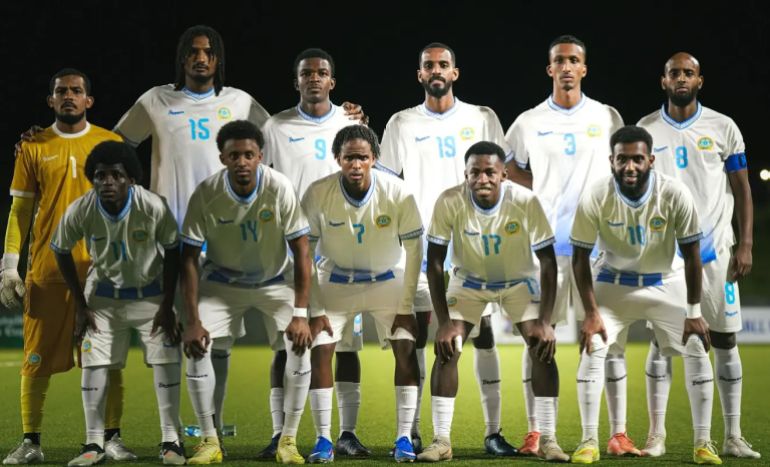
The paths of these five teams in the Nations Cup qualifiers vary greatly throughout their history. A review of their records shows that four of them have come close to qualifying on at least one occasion, while the fifth remains the farthest from the finals.
The best achievement of the Central African Republic was in the qualifiers for the 2013 edition hosted by South Africa, when they eliminated Egypt, the continental champion three times in a row (2006, 2008, and 2010), with a 3-2 win away in Alexandria and a 1-1 draw at home in Bangui, which is considered one of the biggest surprises in qualifier history. The team then reached the final round of qualifiers for that edition before being eliminated by Burkina Faso. They also came close to qualifying again in the 2021 qualifiers, before being eliminated in the final round of the group stage.
Lesotho has never progressed beyond the group stage in its history, with its highest achievement being finishing in lower positions in groups against stronger-ranked teams. Eritrea is the most ambiguous case, having been absent from Nations Cup qualifiers for nearly two decades after its last participation in the qualifiers for the 2008 edition. This is mainly due to the phenomenon of players fleeing abroad seeking asylum because of compulsory military service and political restrictions. The best result this team achieved was finishing second in its group in the 2008 qualifiers with nine points, a ceiling it could not build upon due to its long isolation from continental competition.
South Sudan, one of the newest members of CAF, joined