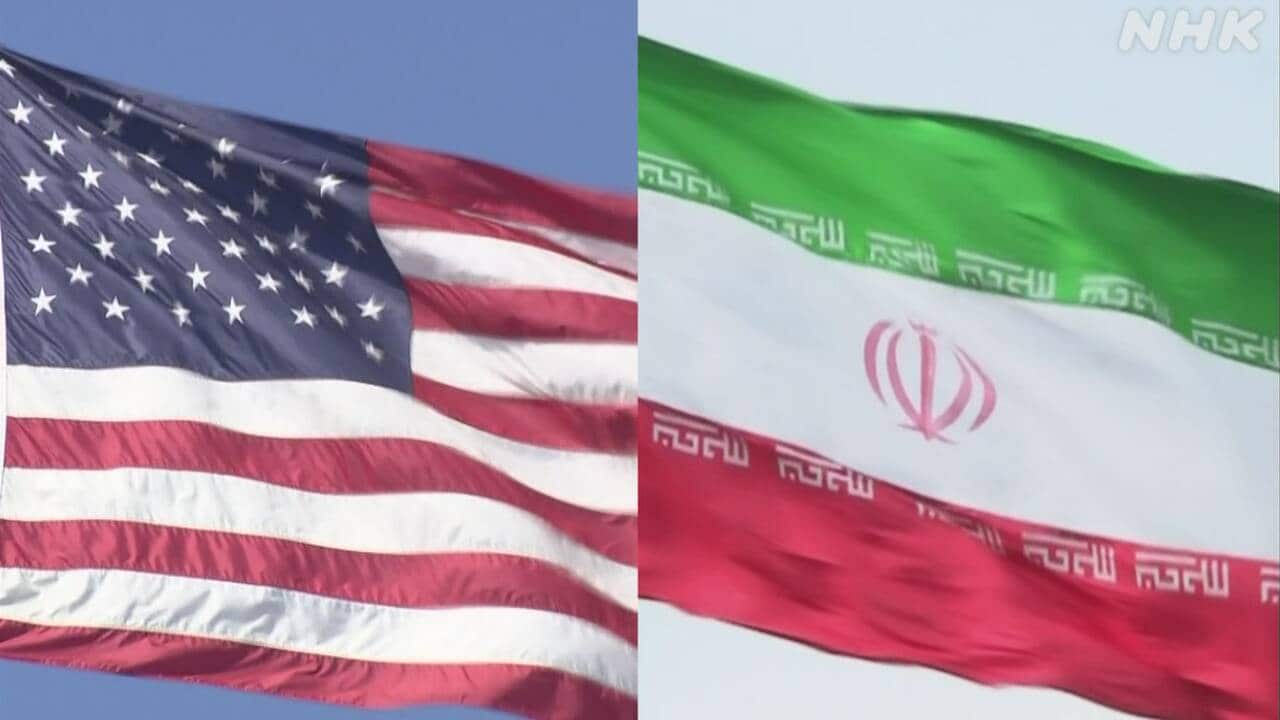
Regarding the negotiations to end the fighting between the United States and Iran, it is reported that the Iranian side is reviewing the contents of a new document received from the American side. President Trump, stating that the process is in its final stages, is awaiting a response from Iran…
Also read
United States
The United States is a large nation in North America, founded in 1776 with the Declaration of Independence from Great Britain. Its history is marked by rapid westward expansion, the Civil War over slavery and states’ rights, and its emergence as a global superpower in the 20th century. Today, the country is known for its diverse culture, economic influence, and iconic landmarks like the Statue of Liberty and the Grand Canyon.
Iran
Iran, historically known as Persia, is a country in Western Asia with a rich cultural heritage spanning over 2,500 years. It was the center of the ancient Persian Empire, known for its monumental architecture and contributions to art, science, and philosophy. Today, Iran is home to numerous UNESCO World Heritage sites, such as Persepolis and the Naqsh-e Jahan Square, reflecting its deep historical and cultural significance.
Statue of Liberty
The Statue of Liberty, a colossal neoclassical sculpture on Liberty Island in New York Harbor, was a gift from France to the United States, dedicated in 1886 to commemorate the centennial of American independence. Designed by Frédéric Auguste Bartholdi and built by Gustave Eiffel, it symbolizes freedom and democracy, welcoming millions of immigrants arriving by sea. The statue has become an iconic American landmark and a UNESCO World Heritage Site.
Grand Canyon
The Grand Canyon is a massive, steep-sided gorge carved by the Colorado River in Arizona, USA, known for its visually overwhelming size and intricate, colorful landscapes. Its geological history spans nearly two billion years, with the canyon itself forming over the past 5-6 million years through erosion. The area has been inhabited by Native American tribes for thousands of years and was designated a U.S. National Park in 1919.
Persepolis
Persepolis was the ceremonial capital of the Achaemenid Empire, founded by Darius I in the 6th century BCE. Located in modern-day Iran, it served as a center for grand celebrations, most notably the annual Nowruz festival, and showcased the empire’s wealth and cultural diversity through its impressive palaces and reliefs. The site was destroyed by Alexander the Great in 330 BCE, but its ruins remain a powerful symbol of ancient Persian civilization and a UNESCO World Heritage site.
Naqsh-e Jahan Square
Naqsh-e Jahan Square, also known as Imam Square, is a historic public square located in Isfahan, Iran. Built in the early 17th century during the Safavid dynasty under Shah Abbas I, it served as a grand center for commerce, ceremonies, and social gatherings. Surrounded by iconic structures like the Shah Mosque, Ali Qapu Palace, and the Sheikh Lotfollah Mosque, the square is a UNESCO World Heritage site and a masterpiece of Persian architecture.