


How Will Movement Be Managed in the Holy Sites?
Transport and crowd movement in the holy sites are managed according to precise operational plans based on an innovative strategy. Movement is organized through smart coordination to ensure smooth flow of crowds, with the holy sites train operating to transport large numbers in record time, alongside field plans and bus routes to ensure the safety of the guests of the Most Merciful.
Among the highlights addressed by Major General Engineer Ali Al-Zahrani, Assistant Commander of the Hajj Security Forces for Traffic Affairs, at the third edition of the Health and Security Forum for Hajj:

Holy Sites
“Holy Sites” is a broad term referring to locations of profound religious significance, often associated with major world faiths. Examples include Jerusalem’s Western Wall, Christianity’s Church of the Holy Sepulchre, and Islam’s Dome of the Rock, each with millennia of contested and sacred history. These sites serve as pilgrimage destinations and symbols of faith, reflecting centuries of devotion, conflict, and cultural exchange.
Health and Security Forum for Hajj
The Health and Security Forum for Hajj is an annual international conference focused on coordinating health, safety, and security measures for the Hajj pilgrimage in Mecca, Saudi Arabia. Established to address the unique challenges of managing millions of pilgrims, the forum brings together global experts to discuss pandemic preparedness, crowd control, and emergency response. Its history reflects Saudi Arabia’s ongoing efforts to modernize pilgrimage management since the mid-20th century, particularly after major health and safety incidents.
Holy Sites
“Holy Sites” generally refers to locations of profound religious significance, such as Jerusalem’s Temple Mount and Western Wall for Judaism, the Church of the Holy Sepulchre for Christianity, and the Dome of the Rock and Al-Aqsa Mosque for Islam. These sites have been centers of worship, pilgrimage, and conflict for millennia, with their histories deeply intertwined with the founding and evolution of major world religions. They continue to serve as sacred spaces for prayer and reflection, while also representing complex layers of cultural and political heritage.
Jerusalem’s Western Wall
The Western Wall, also known as the Wailing Wall, is a remnant of the Second Temple complex in Jerusalem, built around 19 BCE by Herod the Great. It is the holiest site where Jews are permitted to pray, serving as a symbol of Jewish resilience and connection to their ancient heritage. Today, it remains a major pilgrimage and tourist destination, with people placing written prayers in its crevices.
Church of the Holy Sepulchre
The Church of the Holy Sepulchre in Jerusalem is one of Christianity’s most sacred sites, traditionally believed to encompass both the crucifixion site (Golgoth
Holy Sites
“Holy Sites” typically refers to locations of profound religious significance, such as the Temple Mount in Jerusalem, the Western Wall, and the Church of the Holy Sepulchre. These sites are central to Judaism, Christianity, and Islam, with histories spanning millennia, including King Solomon’s Temple, Jesus’s crucifixion, and the Prophet Muhammad’s night journey. They remain active centers of pilgrimage and worship, embodying deep spiritual heritage and ongoing cultural importance.
Jerusalem’s Western Wall
The Western Wall, also known as the Wailing Wall, is a sacred Jewish site in Jerusalem that is a remnant of the Second Temple, which was destroyed by the Romans in 70 CE. For centuries, it has served as a place of prayer and pilgrimage, symbolizing Jewish resilience and connection to their ancient heritage. Today, it remains one of the most significant religious landmarks in the world, where visitors often place written prayers in its crevices.
Church of the Holy Sepulchre
The Church of the Holy Sepulchre in Jerusalem is one of Christianity’s most sacred sites, believed to encompass both the site of Jesus’ crucifixion (Golgotha) and his empty tomb. Originally built by Emperor Constantine in the 4th century, it has been destroyed and rebuilt multiple times, with the current structure dating largely from the 12th century. Today, it is shared among several Christian denominations, including Greek Orthodox, Roman Catholic, and Armenian Apostolic, under a fragile arrangement known as the Status Quo.
Dome of the Rock
The Dome of the Rock is an iconic Islamic shrine located on the Temple Mount in Jerusalem, built between 685 and 691 CE under the Umayyad Caliph Abd al-Malik. It enshrines the Foundation Stone, a sacred site in Judaism, Christianity, and Islam, where Muslims believe the Prophet Muhammad ascended to heaven during the Night Journey. Its gold-covered dome and intricate Byzantine mosaics make it one of the oldest and most architecturally significant Islamic monuments in the world.
Al-Aqsa Mosque
Al-Aqsa Mosque, located in the Old City of Jerusalem, is one of the holiest sites in Islam, believed to be the destination of the Prophet Muhammad’s Night Journey. Originally built in the 7th century CE, the mosque has undergone numerous renovations and expansions under various Islamic dynasties, including the Umayyads and Ottomans. It stands on the Temple Mount, a site also sacred in Judaism and Christianity, making it a focal point of historical and religious significance.
Temple Mount
The Temple Mount, known in Judaism as Har HaBayit and in Islam as the Noble Sanctuary, is a sacred hilltop in Jerusalem’s Old City. It has been a focal point of religious significance for millennia, housing the First and Second Jewish Temples in antiquity and now containing the Al-Aqsa Mosque and the Dome of the Rock, two of Islam’s holiest sites. Due to its profound importance to both Jews and Muslims, the site remains a deeply contested and sensitive location in the Israeli-Palestinian conflict.
Mecca
Mecca is the holiest city in Islam, located in western Saudi Arabia, and is the birthplace of the Prophet Muhammad. It has been a center of pilgrimage for centuries, with the Kaaba—a sacred structure within the Grand Mosque—believed to have been built by Abraham and his son Ishmael. Today, it is the destination of the Hajj pilgrimage, which millions of Muslims undertake annually as a key religious duty.
Second Temple
The Second Temple was the central Jewish place of worship in Jerusalem, built after the Babylonian exile and completed around 515 BCE. It replaced Solomon’s Temple and stood for nearly 600 years, undergoing major expansions under Herod the Great. The temple was destroyed by the Romans in 70 CE, an event that profoundly shaped Jewish history and diaspora.
Related news

News
The Medina Region Municipality has implemented a s...

Medina Municipality continues its efforts to enhance quality of life through oversight and food safety.
During October, the Medina Region Municipality con...
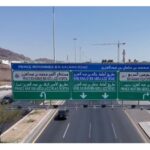
Prince Mohammed bin Salman bin Abdulaziz Road to be named after airport road in Medina.
Custodian of the Two Holy Mosques King Salman bin ...

Municipality approves housing project and offers 6 investment opportunities
The Medina Region Secretariat has approved the imp...
Minister of Transport: Completion of railway connection study with Turkey via Jordan and Syria by end of 2026.
In infographics: Indicators of passenger transport...