The global housing challenge lies in building integrated urban systems that ensure quality of life.
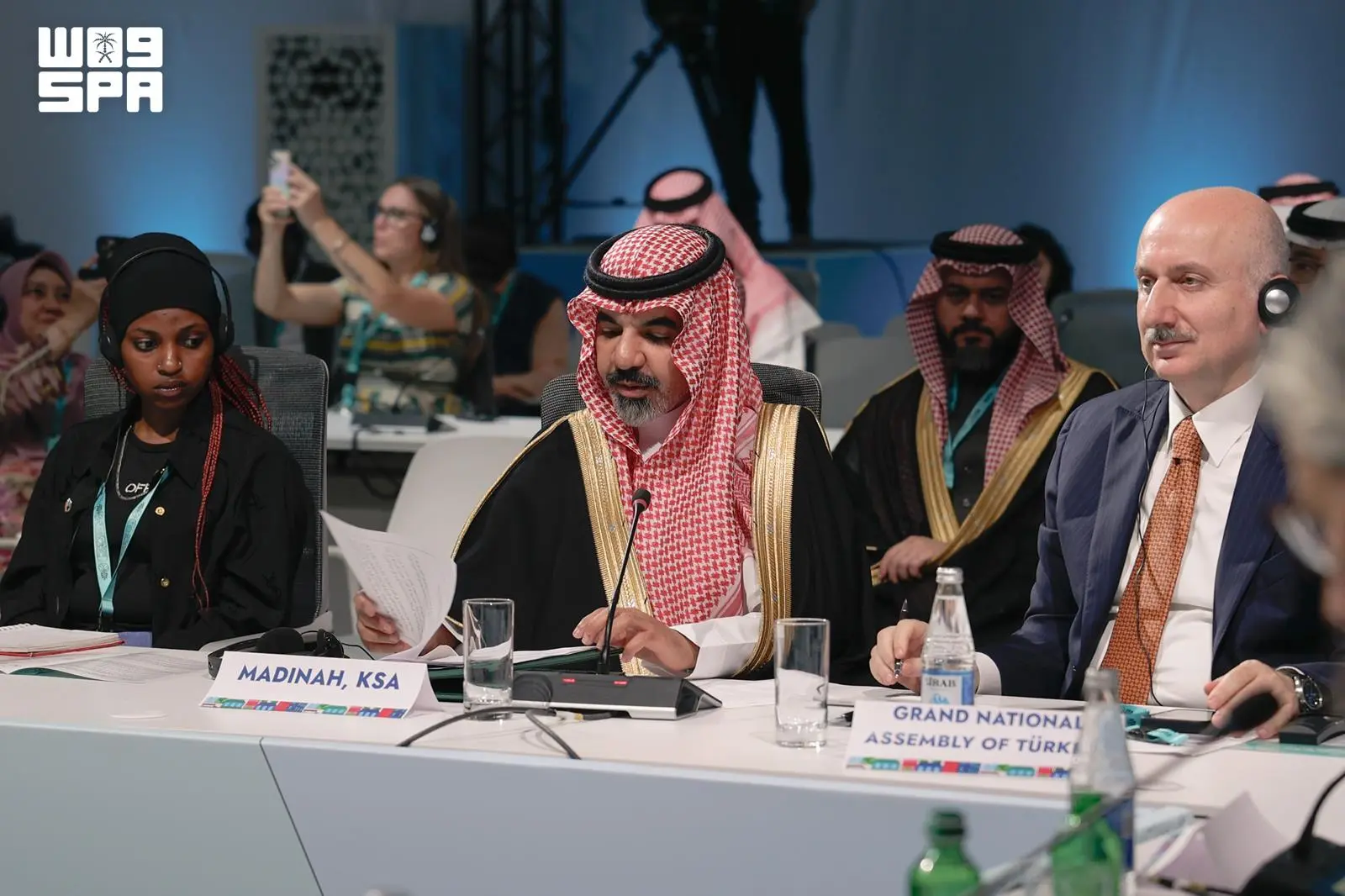
The Mayor of the Madinah Region and CEO of the Region Development Authority emphasized that the global challenge in the housing sector is no longer limited to providing housing units but now lies in building integrated urban systems that ensure quality of life and create cities that are more resilient and sustainable. This came during his participation in the roundtable meeting of local and regional governments as part of the 13th World Urban Forum (WUF13) held in Baku, Azerbaijan, with the participation of city leaders and decision-makers to discuss the future of housing and urban development. He explained that Madinah presents an advanced urban model in addressing local housing challenges, based on aligning global goals with local realities through voluntary reviews of sustainable development goals, transforming international commitments into tangible development outcomes. He pointed out that adopting data as a cornerstone for urban decision-making has improved planning efficiency, directed investments, and achieved a better balance in service distribution, enhancing residents’ quality of life and improving visitors’ experiences. He clarified that Madinah, under Saudi Vision 2030 and with the support and empowerment of the wise leadership, and under the follow-up and supervision of the Governor of the Madinah Region and Chairman of the Region Development Authority, is moving towards achieving a balanced equation that combines preserving its cultural identity with managing rapid urban growth, as part of its preparations to receive 30 million visitors annually by 2030 within a flexible and sustainable urban environment. He confirmed that the role of local government and private sectors forms the cornerstone in formulating effective urban solutions, noting that understanding the local context and integrating efforts with global frameworks are key to building cities capable of facing challenges and achieving sustainable development. Madinah Region’s participation is part of the Kingdom’s delegation at the 12th World Urban Forum (WUF12), which serves as an international platform for shaping the future direction of cities, with the participation of city leaders, decision-makers, and international organizations to discuss innovative solutions for housing and urban development issues, and to promote building safe and resilient cities and communities, contributing to advancing sustainable development globally.
Madinah
Madinah, also known as Medina, is a city in western Saudi Arabia and the second holiest city in Islam after Mecca. Its history is deeply tied to the Prophet Muhammad, who migrated there in 622 CE (an event known as the Hijra), and it became the capital of the early Islamic state. The city is home to Al-Masjid an-Nabawi (the Prophet’s Mosque), where Muhammad is buried, making it a major pilgrimage site for Muslims worldwide.
Baku
Baku is the capital and largest city of Azerbaijan, located on the Caspian Sea. Its history dates back to ancient times, with the walled Inner City (Icherisheher) containing medieval structures like the Maiden Tower and the Palace of the Shirvanshahs. In the modern era, Baku became a major center for the oil industry in the late 19th and early 20th centuries, leading to rapid growth and a unique blend of historic and contemporary architecture.
Azerbaijan
Azerbaijan, located at the crossroads of Eastern Europe and Western Asia, has a rich history shaped by its position along the ancient Silk Road. It was part of various empires, including the Persian, Russian, and Soviet, before declaring independence in 1991. Today, it is known for its diverse culture, modern capital Baku, and its blend of Islamic and pre-Islamic heritage.
Madinah
<div class="text-gray-800
Al-Masjid an-Nabawi
Al-Masjid an-Nabawi, also known as the Prophet’s Mosque, is a major Islamic site located in Medina, Saudi Arabia. It was originally built by the Prophet Muhammad in 622 CE, adjacent to his home, and has since undergone numerous expansions, most notably by the Umayyad, Ottoman, and Saudi rulers. The mosque houses the Green Dome, which marks the burial site of the Prophet Muhammad, and is one of the holiest places in Islam, attracting millions of pilgrims annually.
Prophet’s Mosque
The Prophet’s Mosque, located in Medina, Saudi Arabia, is one of the most sacred sites in Islam, originally built by the Prophet Muhammad himself in 622 CE. It served as a community center, court, and religious school during his lifetime, and houses his tomb under the iconic Green Dome. Over centuries, it has been expanded by various Islamic rulers, now accommodating millions of worshippers annually.
Baku
Baku is the capital and largest city of Azerbaijan, located on the Caspian Sea coast. Its history dates back to ancient times, with the walled Inner City (Icherisheher) containing palaces and mosques from the medieval period, while the 19th and 20th centuries saw an oil boom that transformed it into a modern metropolis. Today, Baku is known for its striking blend of historic architecture and futuristic skyscrapers, including the iconic Flame Towers.
Maiden Tower
The Maiden Tower is a iconic landmark located in Baku, Azerbaijan, with origins dating back to the 12th century. Its exact purpose remains debated, but it is believed to have served as a defensive fortification, a Zoroastrian temple, or an astronomical observatory. The tower is a UNESCO World Heritage Site and features prominently in Azerbaijani folklore, most notably the legend of a princess who jumped from its top to escape an unwanted marriage.
Palace of the Shirvanshahs
The Palace of the Shirvanshahs is a 15th-century architectural complex located in Baku, Azerbaijan, built during the reign of the Shirvanshah dynasty. It served as the royal residence and administrative center, showcasing a blend of Islamic and local architectural styles. The complex, which includes a palace, mosque, mausoleum, and bathhouse, was designated a UNESCO World Heritage Site in 2000.
Inner City (Icherisheher)
Inner City (Icherisheher) is a historic core and UNESCO World Heritage Site located in Baku, Azerbaijan. Dating back to at least the 12th century, it served as the ancient fortified heart of the city, featuring iconic landmarks such as the Maiden Tower and the Palace of the Shirvanshahs. This walled enclave reflects a rich tapestry of Persian, Islamic, and local architectural influences, having survived centuries of invasions and modernization to remain a vibrant cultural symbol.
Silk Road
The Silk Road was a vast network of trade routes connecting East Asia, the Middle East, and Europe, flourishing from around the 2nd century BCE to the 15th century CE. It facilitated the exchange of goods like silk, spices, and precious metals, as well as the spread of ideas, religions, and technologies between civilizations. The route declined after the rise of maritime trade, but its legacy remains as a symbol of cultural and economic interconnection.
Madinah
Madinah, also known as Medina, is a city in western Saudi Arabia and the second holiest city in Islam after Mecca. It holds immense religious significance as the place where the Prophet Muhammad migrated in 622 CE (the Hijra) and established the first Muslim community, and it is home to the Prophet’s Mosque, which contains his tomb. Historically, Madinah served as the capital of the early Islamic caliphate and remains a major pilgrimage destination for Muslims visiting the mosque.