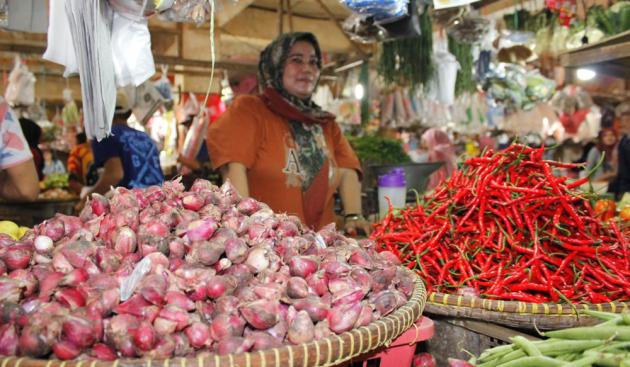
The price of shallots at Serpong Market has reached Rp60,000 per kg, and buyers are starting to decrease.
Shallot Prices Rise in South Tangerang
The price of shallots at Serpong Market, South Tangerang, has surged in recent days, drawing complaints from both traders and buyers.
One trader said shallot prices have reached 60,000 Indonesian rupiah per kilogram, up from the previous range of 45,000 to 50,000 rupiah per kilogram.
“Shallot prices have risen the most in recent days. Many buyers are complaining about the current price increase,” the trader said.
Not only shallots, but the prices of tomatoes and potatoes have also increased. Tomato prices have now risen to 18,000 rupiah per kilogram.
Meanwhile, the prices of several types of chili have actually decreased.
Curly red chili has dropped to 45,000 rupiah per kilogram, while bird’s eye chili has fallen from 100,000 to 80,000 rupiah per kilogram.
Although chili prices are starting to decline, this has not yet boosted the number of buyers at traditional markets.
The trader believes that unpredictable weather is affecting the supply of agricultural products to the market. Additionally, the weakening of the rupiah exchange rate is also seen as impacting food prices.
“There is an influence from the weather and the rupiah’s condition on market prices. As a result, the number of buyers has also decreased,” they said.
Meanwhile, basic food traders at Serpong Market are also complaining about the increasing scarcity of subsidized cooking oil, Minyakita.
According to traders, Minyakita stock has become difficult to find after market operations were halted. Even when available, the selling price has exceeded the highest retail price.
In fact, several traders say that non-subsidized cooking oil is cheaper than the Minyakita currently circulating in the market.
Serpong Market
Serpong Market, located in South Tangerang, Indonesia, is a traditional market that has served the local community for decades, evolving from a small trading post into a bustling hub for fresh produce, clothing, and household goods. Its history reflects the rapid urban development of the Serpong area, which transformed from a rural settlement into a suburban center starting in the 1990s. Today, the market remains a vital part of daily life, offering an authentic glimpse into Indonesian market culture amidst modern surroundings.
South Tangerang
South Tangerang is a rapidly growing city in Banten Province, Indonesia, that was officially established as an independent administrative city in 2008 after separating from Tangerang Regency. Historically, the area was part of the traditional Banten Sultanate and later developed into a key suburban region for Jakarta, known for its modern residential complexes, shopping centers, and educational institutions. Today, it serves as a major satellite city, balancing urban development with cultural heritage sites like the 18th-century Lengkong Historical Park.
Serpong Market
Serpong Market is a traditional market located in the Serpong area of South Tangerang, Indonesia. Historically, it has served as a central hub for local trade and daily necessities, reflecting the area’s rapid development from a suburban region into a bustling urban center. Today, it remains a vibrant spot where residents can find fresh produce, goods, and a taste of local culture.
South Tangerang
South Tangerang is a rapidly growing city in Indonesia’s Banten province, established as an autonomous city in 2008 after separating from Tangerang Regency. Historically, the area was part of the ancient Sunda Kingdom and later developed into a key suburban hub for Jakarta, known for its modern residential complexes, shopping centers, and educational institutions. Today, it serves as a major satellite city, blending urban development with cultural sites like the historic Kaum Kalipasir Mosque.
Indonesia
Indonesia is a Southeast Asian archipelago nation with over 17,000 islands, rich in diverse cultures and history. Its history includes ancient Hindu-Buddhist kingdoms like Srivijaya and Majapahit, followed by centuries of European colonization, primarily by the Dutch. The country declared independence in 1945 and has since become the world’s largest Muslim-majority nation, known for its vibrant traditions, such as batik textiles and wayang puppet theater.
Banten Province
Banten Province, located on the western tip of Java, Indonesia, was once the heart of the powerful Banten Sultanate, a major maritime trading hub from the 16th to 19th centuries. It played a crucial role in the spice trade, attracting European powers like the Portuguese, Dutch, and British. Today, the province is known for its rich cultural heritage, including the iconic Great Mosque of Banten and the remnants of its royal fort.
Tangerang Regency
Tangerang Regency is a region in Banten Province, Indonesia, with a history rooted in its role as part of the ancient Sunda Kingdom and later under Dutch colonial rule. It is known for its cultural diversity, including significant Chinese-Indonesian and Betawi influences, and its rapid urbanization as a satellite area for Jakarta. Today, the regency blends traditional villages with modern industrial and residential developments, reflecting its transformation from a rural area into a key economic hub.
Banten Sultanate
The Banten Sultanate was a powerful Islamic kingdom established in the 16th century on the island of Java, Indonesia, centered in what is now the city of Banten. It rose to prominence as a major trading hub, controlling key spice routes and rivaling the Dutch East India Company before declining due to internal strife and colonial pressure. The sultanate’s legacy endures in its historical sites, such as the Great Mosque of Banten and the remnants of its royal palace.
Jakarta
Jakarta is the capital and largest city of Indonesia, located on the northwest coast of Java. Originally a small port known as Sunda Kelapa, it was renamed Jayakarta in the 16th century before being colonized by the Dutch, who called it Batavia and made it the center of their East Indies trade empire. After Indonesia’s independence, the city was renamed Jakarta in 1949 and has since grown into a sprawling, densely populated metropolis that blends colonial-era architecture with modern skyscrapers.
Lengkong Historical Park
Lengkong Historical Park is a site in Bandung, Indonesia, that commemorates the tragic events of the 1946 Lengkong Incident, a clash between Indonesian independence fighters and Japanese troops. The incident resulted in the deaths of several young Indonesian officers, including Lieutenant Colonel Daan Mogot, and is considered a significant moment in the nation’s struggle for independence. Today, the park serves as a memorial and educational space, featuring a monument and museum that honor the fallen heroes.