-
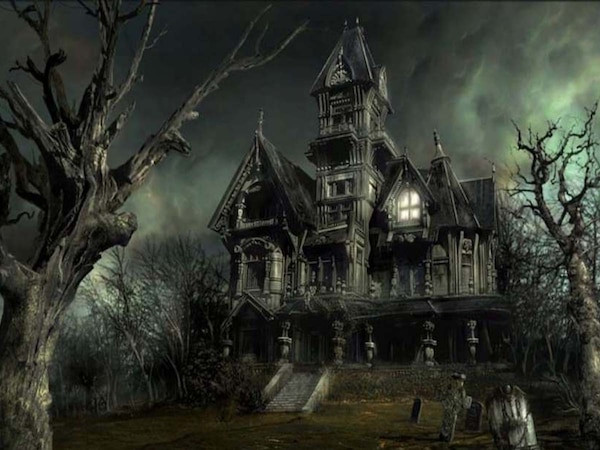
Where Are the Mysterious Buildings of India: Across the country, there are many buildings that have been abandoned for various reasons. People have experienced strange things at these places, which has increased their fear. When others heard these stories, gradually those buildings became famous as haunted bungalows. Rajasthan and Madhya Pradesh are states where there is a high number of ancient palaces, ruins, and ‘haunted bungalows’. The reason is the ancient heritage of both regions, along with the tales and beliefs associated with it. In the capital Bhopal, there is a famous professor colony where a house is called a haunted bungalow. It suddenly got this name after rumors of several bodies being found there. Similarly, since the 1984 gas tragedy, the industrial complex continues to be talked about for paranormal events.
The Scariest Place in the State
In Burhanpur, Madhya Pradesh, there is the Asirgarh Fort. This fort in the state is considered one of the scariest places. It is said that Ashwatthama, the immortal warrior from the Mahabharata era, still wanders in this fort. Ashwatthama, wounded in battle, was cursed that he would not be visible to any human like a spirit, but he would also not be freed from death. Therefore, at midnight in this fort, some mysterious sounds are heard, as if someone is moaning.
The Village Has Been Abandoned for 200 Years
Similarly, near Jaisalmer in Rajasthan, there is the village of Kuldhara. This village has been deserted for 200 years. It is said that a tyrannical minister had his eye on a girl from the village. To protect the girl and their honor, the villagers emptied the village overnight and, as they left, cursed that no one would ever be able to settle there again. Since then, this village has never been inhabited and remains desolate. Out of fear, no one has ever tried to settle in this village.
Mumbai’s Mukesh Mills is a Cursed Building
Mumbai’s Mukesh Mills is among such buildings. It is also considered a cursed building. It is regarded as one of the scariest places in Mumbai. Built in 1870, this mill was destroyed in a fire. Now it is used for shooting, but many film artists have shared strange experiences there. After that, people are afraid to go there.
Asirgarh Fort
Asirgarh Fort, located in the Burhanpur district of Madhya Pradesh, India, is a historic hill fort known for its strategic importance and formidable defenses. Often called the “Key to the Deccan,” it was ruled by several dynasties including the Kalachuris, the Delhi Sultanate, and the Mughals, with Sher Shah Suri and Akbar notably capturing it. The fort features impressive gates, a mosque, and a palace, and it played a crucial role in controlling trade and military routes between northern and southern India.Kuldhara
Kuldhara is an abandoned village in Rajasthan, India, known for its mysterious history and well-preserved ruins. According to local legend, the village was inhabited by the Paliwal Brahmins, who suddenly deserted it overnight in the early 19th century to escape oppressive taxes and persecution from a powerful minister. Today, it is a popular tourist destination, often associated with ghost stories and regarded as a haunted site.<h3 class="text-lg font-semAsirgarh Fort
Asirgarh Fort, located in Madhya Pradesh, India, is a historic hill fortress known for its strategic importance and its role as an impregnable stronghold. Its history dates back to the 15th century when it was ruled by the Faruqi dynasty, and it later became a key site of conflict between the Mughals and the Marathas. The fort, often called the “Key to the Deccan,” features impressive gateways, temples, and a mosque, showcasing a blend of medieval Indian and Islamic architecture.Kuldhara
Kuldhara is an abandoned village in Rajasthan, India, known for its eerie ruins and tragic history. According to local legend, the village was inhabited by the Paliwal Brahmins until the early 19th century, when they mysteriously fled overnight to escape the oppressive tax demands of a local ruler. Today, it is considered one of India’s most haunted sites and a popular tourist destination.Mukesh Mills
Mukesh Mills is a historic cotton textile mill located in Mumbai, India, established in the late 19th century during the city’s industrial boom. Once a thriving part of Mumbai’s textile industry, the mill closed down in the 1980s due to labor disputes and economic decline. Today, it stands abandoned and is known as a popular location for film shoots, as well as a site of urban exploration, though it has also faced controversy over redevelopment plans.Bhopal professor colony
Professor Colony in Bhopal is a historic residential area developed primarily during the early 20th century, originally established to house educators and staff from the city’s growing academic institutions. It reflects Bhopal’s cultural and intellectual heritage, with many bungalows and buildings showcasing a blend of colonial and traditional Indian architectural styles. The colony remains a vibrant neighborhood, symbolizing the city’s longstanding emphasis on education and scholarship.Burhanpur
Burhanpur is a historic city in Madhya Pradesh, India, known for its rich Mughal-era architecture and cultural heritage. It served as a key administrative and military center for the Mughals, notably under Emperor Akbar and Shah Jahan, and was briefly the capital of the Deccan region. The city is famous for landmarks like the Asirgarh Fort, the Jama Masjid, and the Shahi Qila, as well as its connection to the tragic love story of Mumtaz Mahal, who died there.Jaisalmer
Jaisalmer, known as the “Golden City” of India, is a historic fort city in the heart of the Thar Desert in Rajasthan. Founded in 1156 AD by Rawal Jaisal, the city is dominated by its magnificent Jaisalmer Fort, one of the few “living forts” in the world where thousands of residents still reside within its sandstone walls. Its rich history as a strategic outpost on the ancient Silk Road trade route is reflected in its ornate havelis (mansions) and temples, which showcase intricate Rajput architecture.