“I have no grudge against Renho” and “Let’s see how things go first” — varied reactions to the Tokyo LDP chapter chair election
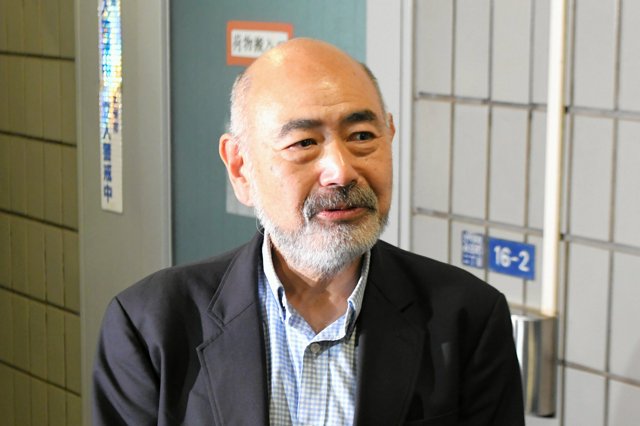
In the federation’s leadership election held on the 15th, Tokyo Metropolitan Assembly member Yuji Kawana (66) was elected as the new leader, defeating a House of Councillors member (58). This marks the first time a local assembly member has become the leader since the establishment of the former Constitutional Democratic Party’s Tokyo federation in 2017, drawing various reactions within the organization.
On the evening of the 15th, Kawana stated, “It means there were many members who were dissatisfied with the current state of the party and the federation.” He criticized the previous executive board as “top-down” and gained broad support from local assembly members.
One Tokyo assembly member analyzed, “I have no grudge against Renho. It’s just that we couldn’t tolerate the current system anymore.” They added, “His abilities are unknown, but being a local government assembly member doesn’t mean he can’t do the job.”
Local party transformation? Some voices of rejection
In an interview after the vote, Renho said, “…
Tokyo Metropolitan Assembly
The Tokyo Metropolitan Assembly is the legislative body of the Tokyo Metropolitan Government, located in the Tokyo Metropolitan Government Building in Shinjuku. Established in 1943, it replaced the earlier Tokyo City Assembly following the merger of Tokyo City and Tokyo Prefecture into a single metropolitan entity. The assembly plays a key role in passing local laws, approving budgets, and overseeing the governor’s administration, reflecting Tokyo’s status as Japan’s capital and a major global city.
House of Councillors
The House of Councillors is the upper house of the National Diet of Japan, established in 1947 under the post-World War II constitution. It serves as a check on the more powerful House of Representatives, with members elected to six-year terms through a mixed electoral system. The chamber was created to provide more stable and deliberative legislative review, replacing the former House of Peers.
Constitutional Democratic Party
The Constitutional Democratic Party, often called the Kadets, was a major liberal political party in pre-revolutionary Russia, founded in 1905. It advocated for a constitutional monarchy, civil liberties, and parliamentary democracy, and was a leading force in the short-lived Provisional Government after the February Revolution of 1917. The party was ultimately suppressed by the Bolsheviks after the October Revolution later that year.
Tokyo federation
The “Tokyo Federation” is likely a reference to the Tokyo Federation of UNESCO Associations, a non-profit organization dedicated to promoting peace and cultural exchange through education, science, and culture in Tokyo. Established in 1947, it works with local communities to support UNESCO’s goals, including heritage preservation and international cooperation. The federation organizes events and programs that foster global understanding, reflecting Tokyo’s role as a hub for cross-cultural dialogue.
Tokyo Metropolitan Assembly
The Tokyo Metropolitan Assembly is the legislative body of the Tokyo Metropolis, established in 1943 when Tokyo City and Tokyo Prefecture were merged. It meets in the Tokyo Metropolitan Government Building in Shinjuku, a landmark complex designed by architect Kenzo Tange. The assembly plays a key role in passing local ordinances, approving budgets, and overseeing the governor of Tokyo.
The Tokyo Metropolitan Assembly is the legislative body of the Tokyo Metropolitan Government, located in the Shinjuku district. Established in its current form in 1943, it replaced the earlier Tokyo City Assembly and became the prefectural legislature for the expanded Tokyo Metropolis. The assembly building is notable for its unique architectural design and serves as a key venue for debating and passing local laws and budgets.
House of Councillors
The House of Councillors is the upper house of the National Diet of Japan, established in 1947 under the post-World War II constitution. It was created to replace the former House of Peers, providing a more democratic and representative legislative body. Members serve six-year terms, with half the seats up for election every three years, ensuring continuity in Japan’s legislative process.
Constitutional Democratic Party
The Constitutional Democratic Party, often called the Kadets, was a major liberal political party in early 20th-century Russia, founded in 1905 during the Russian Revolution. It advocated for a constitutional monarchy, civil liberties, and parliamentary democracy, but was suppressed by the Bolsheviks after the 1917 October Revolution. The party was officially banned in 1918, with many of its leaders exiled or executed.
Tokyo federation
The “Tokyo Federation” is not a specific cultural site or historical location, but rather a term that could refer to various organizations or events in Tokyo, Japan. In a historical context, it might relate to the Tokyo Federation of Trade Unions or other civic groups that emerged during Japan’s post-war reconstruction. Without a specific reference, it is best understood as a broad concept tied to Tokyo’s organizational and political history.
Tokyo Metropolitan Government Building
The Tokyo Metropolitan Government Building is the administrative hub of Tokyo, completed in 1991 and designed by architect Kenzo Tange. Its iconic twin-tower structure, rising 243 meters, serves as the city hall and offers free observation decks with panoramic views. The building replaced the previous Tokyo City Hall in Marunouchi, reflecting Tokyo’s post-war growth and modern governance.
Shinjuku
Shinjuku is a major commercial and administrative hub in Tokyo, Japan, known for its towering skyscrapers, neon-lit entertainment districts, and the bustling Shinjuku Station, one of the world’s busiest railway stations. Historically, it developed from a post town on the Kōshū Kaidō road during the Edo period and later became a vibrant center of culture and nightlife after the Great Kantō earthquake and World War II reconstruction. Today, it offers a striking contrast between the modern high-rise cityscape and traditional sites like the Shinjuku Gyoen National Garden.
National Diet of Japan
The National Diet of Japan, located in Tokyo’s Nagatachō district, serves as the country’s bicameral legislature, consisting of the House of Representatives and the House of Councillors. Its history dates back to the Meiji era, with the first Diet convened in 1890 under the Meiji Constitution, though the current building was completed in 1936. The site symbolizes Japan’s modern parliamentary democracy and has witnessed pivotal political events, including post-war reforms and the enactment of key legislation.
House of Peers
The House of Peers was the upper house of the Imperial Diet in Japan, established under the Meiji Constitution in 1889. It consisted of hereditary nobility, imperial appointees, and high taxpayers, serving as a conservative counterbalance to the elected House of Representatives. The institution was abolished in 1947 with the adoption of Japan’s post-World War II constitution, replaced by the current elected House of Councillors.