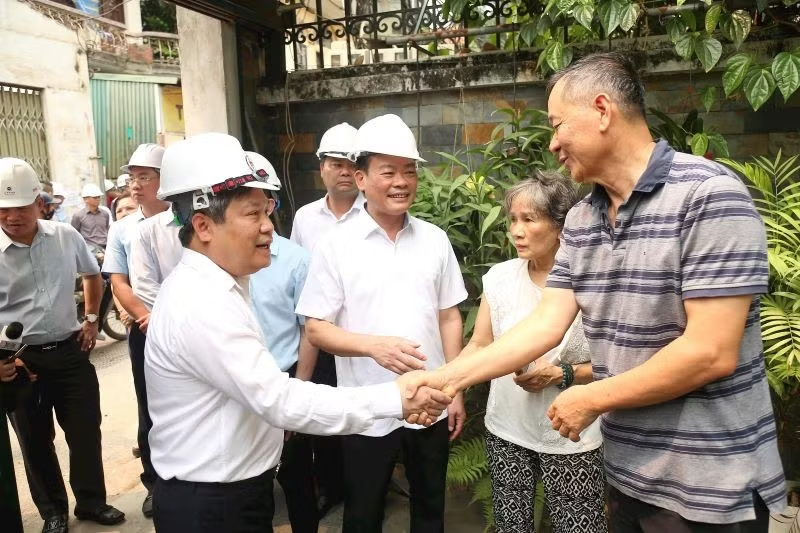
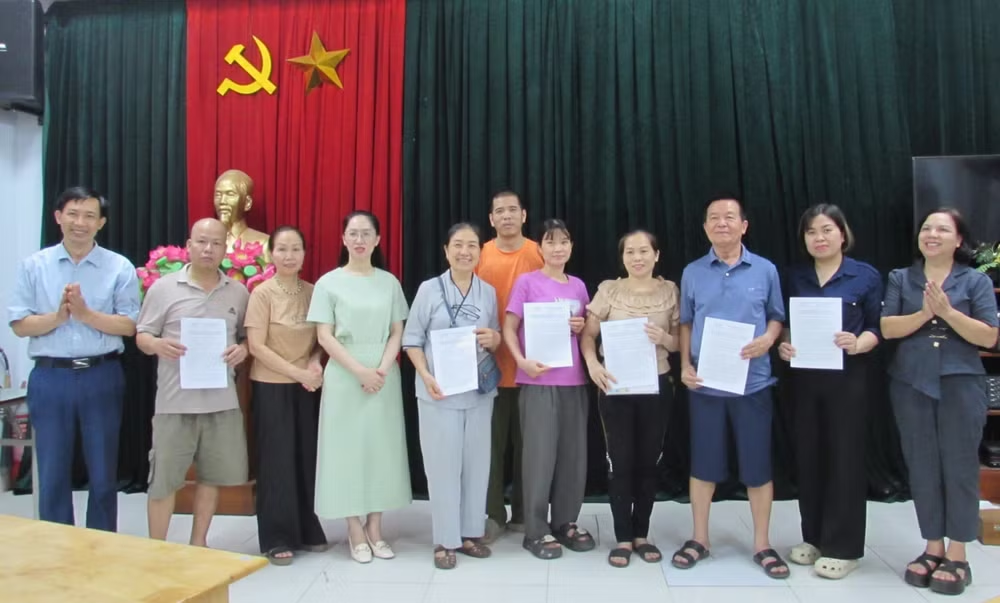
Compensation for land clearance in Hanoi is tied to resettlement and livelihood support for affected residents.
To achieve the GRDP growth target and strive for double-digit growth in 2026, Hanoi identifies accelerating progress and unblocking land resources as a key and urgent task.
Currently, communes and wards across Hanoi are implementing site clearance for approximately 1,428 projects (including 1,281 state-budget projects and 147 non-state-budget projects), among which there are 27 major, key works and projects, contributing to removing bottlenecks and developing the capital’s socio-economy.
The city has focused on strong leadership and direction to remove difficulties and obstacles, unblocking “bottlenecks” in compensation, support, and resettlement work to accelerate the implementation of projects, especially strategic transport infrastructure projects, regional connectivity infrastructure, and key projects of the capital.
The Standing Committee of the City Party Committee has directly led, directed, conducted field inspections, and reviewed the weekly progress of key projects.
The Hanoi City Party Committee has established a Steering Committee for site clearance of the city’s key projects, headed by the Standing Deputy Secretary of the City Party Committee, with a Vice Chairman of the City People’s Committee as the Standing Deputy Head; representatives from relevant Party Committees, departments, branches, and localities as members, to promptly direct and resolve difficulties and arising obstacles during implementation.
Thanks to the synchronized and decisive leadership and direction of the entire political system, site clearance work from November 2025 to date has seen clear progress and achieved many important results.
Many long-standing projects have completed site clearance, notably: Ring Road 1 (Hoang Cau-Voi Phuc section); Ring Road 4-Capital Region; the intersection of the road surrounding the Chu Van An memorial site with Route 70; Tam Trinh Road, along with 4 Red River bridge projects (Hong Ha Bridge, Me So Bridge, Van Phuc Bridge, Ngoc Hoi Bridge) have completed site clearance and are under construction.
The city is focusing on implementing site clearance for Ring Roads 2.5 and 3.5, key transport routes, and 3 Red River bridges including Tu Lien, Tran Hung Dao, and Thuong Cat bridges.
Among these, the three projects of Tu Lien, Tran Hung Dao, Thuong Cat bridges and the remaining sections of Ring Road 2.5 will be completed before June 30, 2026.
At the same time, the city is carrying out site clearance and investment in construction for 9 major projects including: (1) Olympic Sports City Project; (2) Red River Landscape Axis Project; (3) Investment project to build the Medical Complex-Elderly Health Care-Hanoi Medical University in Hoang Mai ward; (4) Investment project to build the Digital Technology Park and Mixed-use Complex in Phu Dien and Tay Tuu wards; (5) National Highway 1A Spatial Axis project associated with urban renovation and re
Chu Van An memorial site
The Chu Van An memorial site is located in Thanh Tri, Hanoi, Vietnam, and honors the life of Chu Van An (1292–1370), a revered Confucian scholar, teacher, and mandarin of the Tran Dynasty. He is celebrated for his integrity and dedication to education, famously resigning from his court position to protest corruption. The site includes his temple and tomb, serving as a place of pilgrimage for those who respect Vietnam’s scholarly traditions and moral heritage.
Hong Ha Bridge
Hong Ha Bridge is a historic iron bridge located in Hai Duong Province, Vietnam, originally built by the French colonial government in the early 20th century. It served as a vital railway and road link connecting Hanoi and Haiphong, playing a key role in regional transport and commerce. The bridge is notable for its distinctive design and has witnessed significant historical events, including periods of war and reconstruction.
Me So Bridge
Me So Bridge is a historic stone arch bridge located in the countryside of northern Vietnam, near the town of Bắc Giang. Originally built during the Nguyễn Dynasty in the early 20th century, it served as a vital transportation link for local communities. The bridge is notable for its elegant architectural design and remains a cherished cultural landmark, symbolizing the region’s heritage and rural charm.
Van Phuc Bridge
Van Phuc Bridge is a historic covered wooden bridge located in Hoi An, Vietnam, believed to have been built in the late 18th or early 19th century. It connects the former Chinese and Japanese quarters of the ancient town, serving as a symbol of cultural exchange and architectural heritage. The bridge features a unique blend of Vietnamese, Chinese, and Japanese design elements, with a small temple dedicated to the Northern God Tran Vo inside.
Ngoc Hoi Bridge
Ngoc Hoi Bridge is a historic bridge located in Hanoi, Vietnam, spanning the Red River and connecting the city to the neighboring province of Hung Yen. Originally built by the French colonial administration in the early 20th century, it played a significant role in transportation and trade, and later witnessed fierce battles during the Vietnam War. Today, it stands as both a functional infrastructure and a symbol of Vietnam’s resilience and historical development.
Tu Lien bridge
Tu Lien Bridge is a historic covered bridge located in Lang Son Province, Vietnam, originally built during the Nguyen Dynasty in 1902. It connects the two banks of the Ky Cung River and features a unique architectural style blending Vietnamese and French colonial influences. The bridge has served as an important cultural and transportation landmark for over a century.
Tran Hung Dao bridge
Tran Hung Dao Bridge is a major cable-stayed bridge in Hai Phong, Vietnam, spanning the Cam River. It was inaugurated in 2015 and named after the revered 13th-century Vietnamese military commander Tran Hung Dao, who famously defeated Mongol invasions. The bridge serves as a key transportation link, connecting the city center with the port area and supporting regional economic development.
Thuong Cat bridge
Thuong Cat Bridge is a historic iron bridge in Hanoi, Vietnam, originally built by the French colonial administration in the early 20th century to connect the Red River’s banks and serve local transport. It has witnessed significant historical events, including wartime destruction and subsequent repairs, and remains an iconic landmark symbolizing the area’s resilience and cultural heritage. Today, it continues to function as a vital link for the community, blending old-world charm with modern daily life.