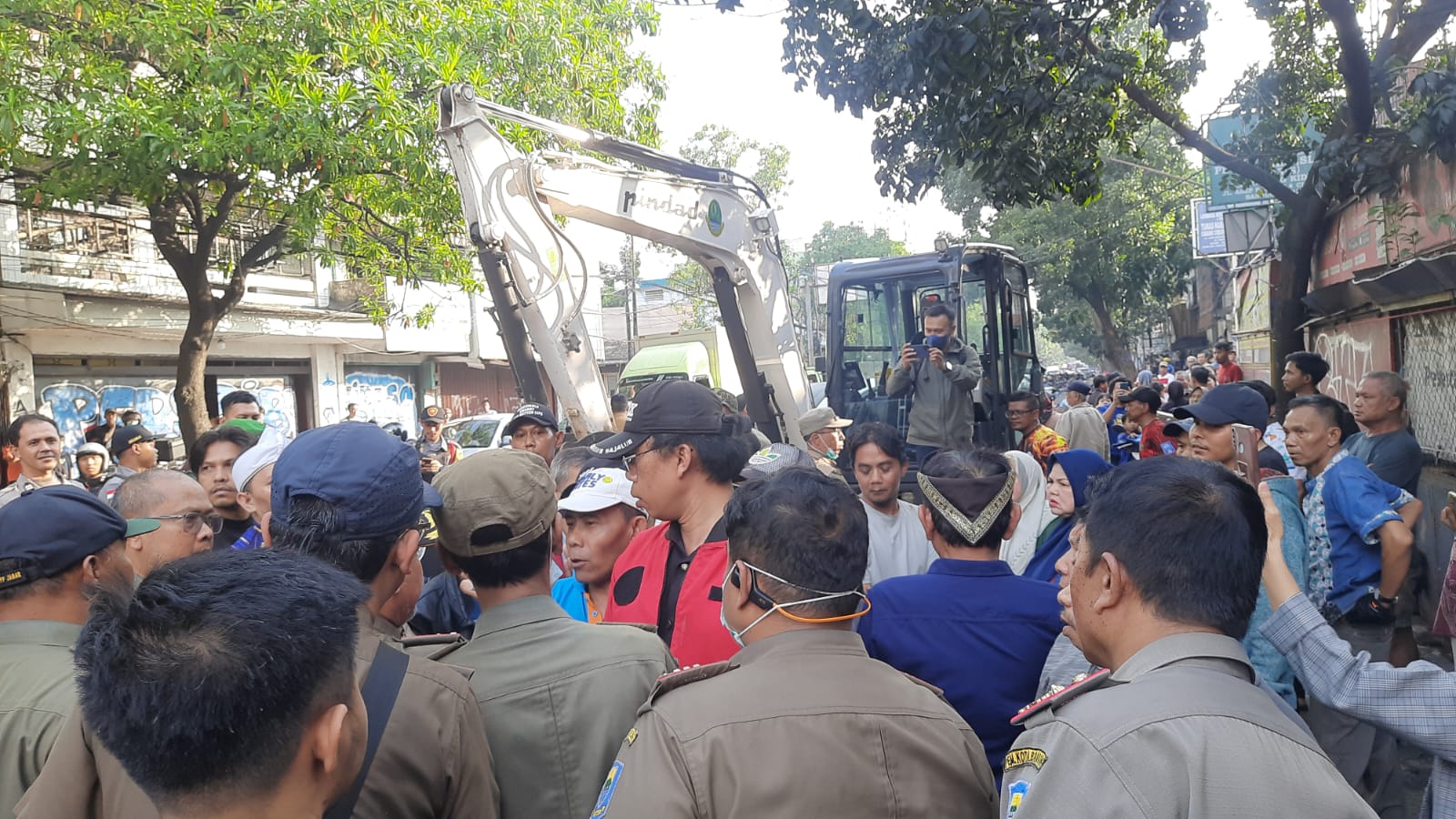
BANDUNG- West Java Governor Dedi Mulyadi personally intervened to resolve the ongoing issue of organizing street vendors along the Cicadas Street corridor in Bandung City. This step was taken after the Governor previously urged Bandung Mayor Muhammad Farhan to promptly address the prolonged public space order problem in the area.
Before the demolition execution began, Dedi Mulyadi first held a persuasive dialogue with Cicadas street vendor coordinator Amang Herman. During the meeting, both parties agreed on a plan to organize the pedestrian area and clean up dozens of semi-permanent kiosks that have long been blamed as the epicenter of congestion in East Bandung.
Going beyond mere eviction, Dedi Mulyadi also offered concrete solutions by providing new job opportunities for vendors affected by the execution.
“We have agreed to carry out a total reorganization. The kiosks will be dismantled and tidied up. In return, I will provide new job solutions for the street vendors here,” said Dedi Mulyadi during a direct site inspection in Cicadas on Monday (May 18).
According to Dedi, the job provision scheme is considered far more effective and realistic than conventional relocation plans that have stalled without significant progress. He emphasized that although regulations on clearing road space do not require compensation, the government must be present to provide an economic safety net.
“My focus is on providing solutions for their livelihood. Don’t let them be confused about where to go and lose their daily income after their stalls are dismantled,” he stressed.
The organization of the Cicadas area is crucial because the route will be integrated with the Greater Bandung Bus Rapid Transit mass transportation infrastructure project. With the sidewalk area cleared of illegal kiosks, the face of the Bandung City pedestrian corridor is expected to become green again and function optimally for pedestrians.
Shortly after the dialogue with the vendor coordinator concluded, the clearing instructions were massively executed. Based on on-site observations, one unit of heavy equipment was deployed to demolish wooden and tarp kiosk structures. Meanwhile, several vendors chose to cooperate by packing and moving their merchandise independently to areas away from the sidewalk.
Head of the West Java Provincial Satpol PP, Tulus Arifan, confirmed that this joint operation involved personnel from West Java Satpol PP, Bandung City Satpol PP, and local community protection officers. “This clearing is a direct follow-up to the Governor’s instruction to restore the fundamental function of sidewalks for pedestrians. This also continues the organization scheme previously initiated by the Bandung City Government,” explained Tulus.
As of 3:30 PM local time, Satpol PP recorded that at least 20 street vendor kiosks had been dismantled and leveled. This number is predicted to continue increasing as the cleaning operation is still scheduled for the next few days.
Tulus added that the complete data on the total number of kiosks subject to the organization will later be released in detail by the Bandung City Government as the authority holder for the area.