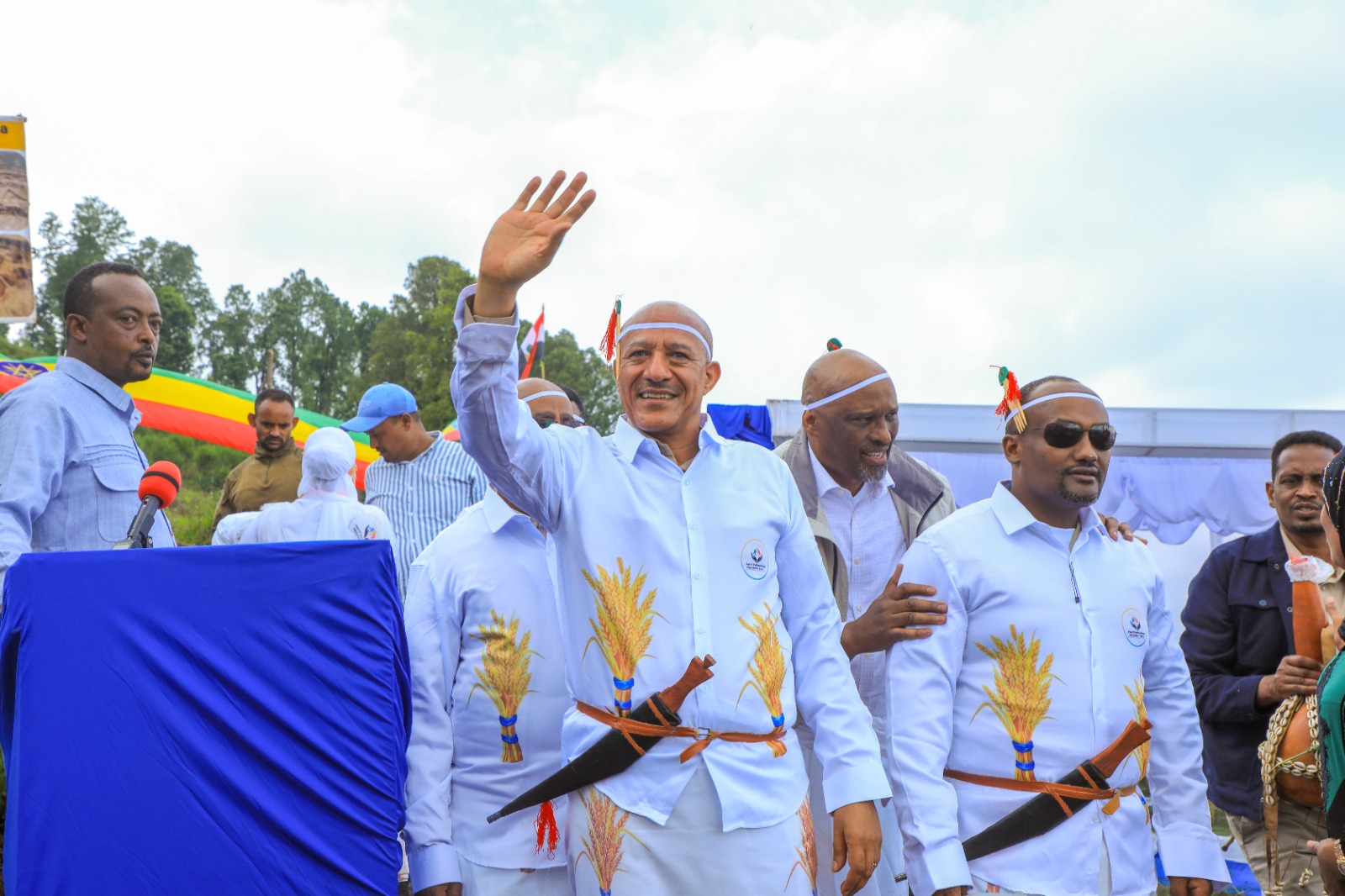
Addis Ababa, May 17, 2026 Ethiopia’s Deputy Prime Minister, Temesgen Tiruneh, stated that Ethiopia’s integrated agricultural initiatives play a key role in achieving the country’s goal of food self-sufficiency.
The Deputy Prime Minister made these remarks during a visit to inspect agricultural development and environmental protection projects in the Garawa area, located in East Hararghe, Oromia Region.
The visit was attended by a number of federal and regional officials, including Addisu Aregawi.
Temesgen highlighted the Garamulita area as an emerging model for agricultural transformation and environmental conservation, noting that the region’s long history and natural beauty are complemented by significant development efforts.
He added that local farmers, organized into groups, are making notable progress in horticulture, fruit production, livestock development, and beekeeping.
Addis Ababa
Addis Ababa, meaning “New Flower” in Amharic, is the capital and largest city of Ethiopia, founded in 1886 by Emperor Menelik II. It has since grown into a major political and cultural hub, serving as the headquarters for the African Union and other international organizations. The city is known for its rich history, vibrant markets, and landmarks such as the National Museum, which houses the famous hominid fossil “Lucy.”
Garawa
Garawa is an Aboriginal Australian cultural site located in the Northern Territory, known for its ancient rock art and archaeological significance. The area has been inhabited by the Garawa people for thousands of years, with evidence of their rich cultural traditions and deep connection to the land. Today, it remains an important place for preserving Indigenous heritage and understanding pre-colonial Australian history.
East Hararghe
East Hararghe is a zone in the Oromia Region of eastern Ethiopia, known for its rich cultural heritage and historical significance as part of the ancient Harar trade route. The area has long been a center for Islamic scholarship and commerce, with the city of Harar—a UNESCO World Heritage site—nearby, influencing its development. Historically, East Hararghe was a key agricultural region, producing coffee and khat, and it played a role in the resistance against colonial expansion in the 19th century.
Oromia Region
The Oromia Region is a large, culturally rich area in Ethiopia, serving as the homeland of the Oromo people, the country’s largest ethnic group. Historically, the region was shaped by the Oromo migrations and expansions from the 16th century onward, and it later became a key center of resistance against imperial rule. Today, it is known for its diverse landscapes, including the Bale Mountains and the Rift Valley lakes, as well as its vibrant traditions in music, language, and the Gadaa system of governance.
Garamulita
Garamulita is a small village located in the mountainous region of Dagestan, Russia, known for its ancient terraced fields and stone towers. Historically, it was part of the Avar Khanate and served as a defensive stronghold, with its unique architecture reflecting the traditional mountain culture of the Caucasus. Today, the site is valued for its well-preserved medieval structures and scenic landscape, offering insight into the region’s historical settlement patterns.