Half a million displaced in Niger amid worsening security in the Sahel, says UN.
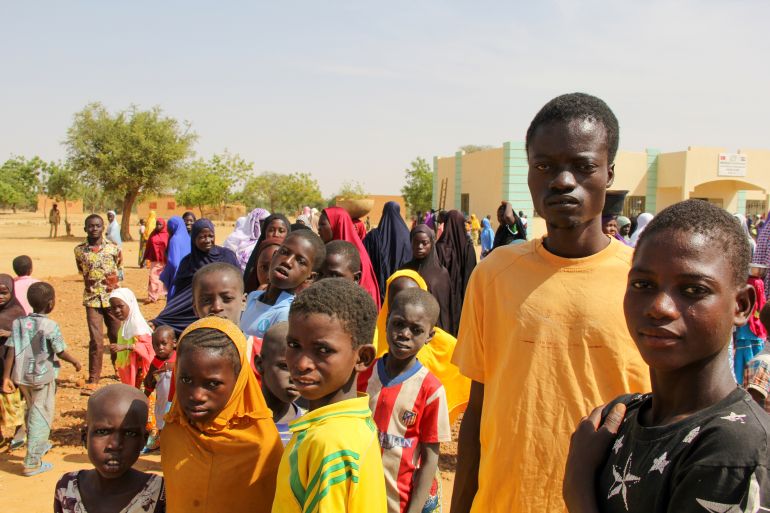
The United Nations High Commissioner for Refugees revealed that Niger now hosts more than half a million internally displaced people, as the UN Secretary-General warned that the deteriorating security situation in the Sahel region has led to a humanitarian emergency.
The UN refugee agency reported that Niger hosts more than half a million internally displaced people, more than half of whom are children and 23% are women, with an annual increase of 8%. The agency explained that trend analysis remains limited because data is irregularly validated by Nigerien authorities.
It added that the total number of people living in forced displacement situations in Niger exceeds one million, more than half of whom are internally displaced, mainly concentrated in two southern regions, while the rest are refugees and asylum seekers.
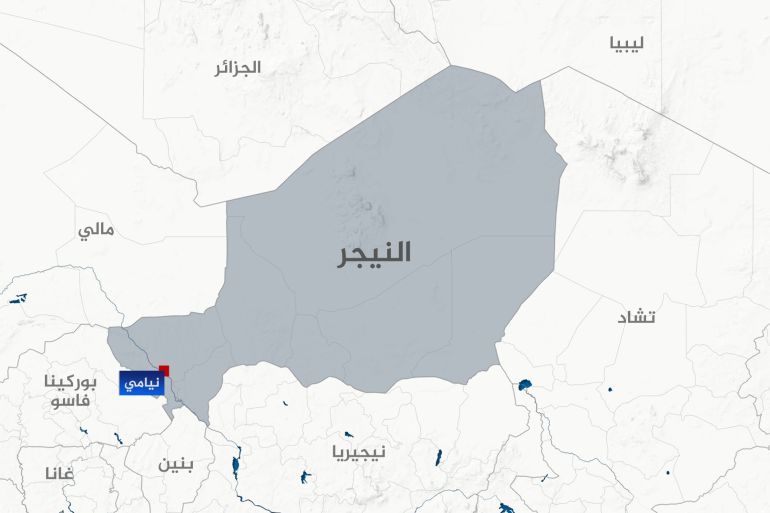
According to the agency, among the approximately 550,000 internally displaced people, 45% are registered in the Tillabéri region in southwestern Niger, which has seen a marked security deterioration with repeated attacks targeting civilians and defense and security forces, mass displacement, and protection risks, especially in border areas. A third of the displaced are in the Diffa region, another area under pressure from groups described as terrorist.
Niger hosts 447,000 refugees and asylum seekers, more than half of whom are children. The majority come from Nigeria, as well as Mali and Burkina Faso.
Regional Dimension
In addition to internally displaced people, Niger hosts 447,000 refugees and asylum seekers, more than half of whom are children, according to the agency. The majority come from Nigeria, as well as Mali and Burkina Faso, and their number increased by 3% over the year, which the agency attributes to registration activities.
In a press conference following the tenth annual summit between the parties two days ago on Wednesday, the Secretary-General stated that “the deterioration of the security situation in the Sahel has led to a humanitarian emergency characterized by increasing violence against civilians, widespread displacement, and growing food insecurity.”
He added that the situation has “seriously deteriorated” following the “operational alliance” between the Support Group for Islam and Muslims and Al-Qaeda. He called for “dialogue and cooperation among all countries in the region” to enhance security and political cooperation in the face of “the serious threat of terrorism and violent extremism.”
Tillabéri region
The Tillabéri region is located in southwestern Niger, along the Niger River and near the borders with Mali and Burkina Faso. Historically, it has been a crossroads for trade and cultural exchange, with its towns like Tillabéri and Niamey (the capital) playing roles in pre-colonial Songhai and later French colonial administration. Today, the region faces challenges such as desertification and security threats from militant groups, but it remains an important agricultural and economic area.
Diffa region
The Diffa region, located in the far southeast of Niger, is a historically significant area known for its role as a crossroads for trade and cultural exchange in the Sahel. Its economy and way of life have long been centered around the seasonal floods of Lake Chad and the Komadougou Yobé River, supporting agriculture and fishing. In recent decades, the region has faced severe challenges due to the Boko Haram insurgency, leading to displacement and humanitarian crises.
Sahel region
The Sahel is a vast, semi-arid region stretching across Africa south of the Sahara Desert, acting as a transitional zone between the desert and the savannas. Historically, it was home to powerful medieval empires like Ghana, Mali, and Songhai, which thrived on trans-Saharan trade routes. Today, the region faces significant challenges, including desertification, food insecurity, and political instability.
Niger
Niger is a landlocked country in West Africa, named after the Niger River that flows through its southwest. Its history includes powerful pre-colonial empires like the Songhai Empire, followed by French colonization in the late 19th century, before gaining independence in 1960. Today, Niger is known for its rich cultural diversity, including the Tuareg and Hausa peoples, as well as landmarks like the ancient city of Agadez and the W National Park.
Nigeria
Nigeria, located in West Africa, is a nation with a rich and diverse history, home to ancient kingdoms such as the Nok, Benin, and Oyo empires. Colonized by the British in the late 19th century, it gained independence in 1960 and has since grown into Africa’s most populous country, known for its vibrant cultures, languages, and economic influence. Today, Nigeria is a cultural powerhouse, celebrated for its literature, music (like Afrobeats), and film industry (Nollywood).
Mali
Mali is a West African country with a rich history as the heart of the powerful Mali Empire, which flourished from the 13th to 16th centuries under rulers like Mansa Musa, renowned for its wealth and Islamic scholarship. Today, it is home to several UNESCO World Heritage sites, including the legendary city of Timbuktu and the Cliff of Bandiagara in Dogon Country. Despite facing political instability and conflict in recent decades, Mali’s cultural heritage remains a vital symbol of its historical significance.
Burkina Faso
Burkina Faso, a landlocked country in West Africa, was formerly known as Upper Volta before gaining independence from France in 1960. It was renamed Burkina Faso in 1984, meaning “Land of Upright People,” under the revolutionary leader Thomas Sankara. The country is known for its rich cultural heritage, including vibrant music, traditional mask festivals, and historic sites like the Ruins of Loropéni, a UNESCO World Heritage site dating back to the 11th century.