Japan’s foreign policy lacks a broad vision for regional stability.
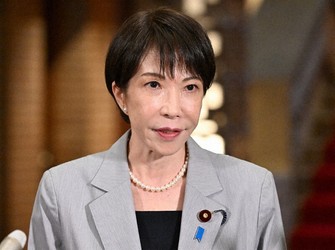
Prime Minister Sanae Takaichi speaks to reporters ahead of her trip to Vietnam and Australia, at the prime minister’s official residence in Tokyo on May 1, 2026.
Japanese Prime Minister Sanae Takaichi has unveiled a diplomatic policy centered on strengthening Japan’s economic security. During the recent Golden Week holiday, she toured Vietnam and Australia and called for cooperation to bolster supply chains for strategic materials.
At the foundation of the policy is the “Free and Open Indo-Pacific” (FOIP) initiative advocated in 2016 by then Prime Minister Shinzo Abe. It aims to boost the regional economy while promoting the principles of the rule of law and free trade.
Takaichi stressed her belief that nations in the region can become “stronger and more prosperous together.” What she put front and center was a framework in which like-minded countries work together to secure energy and critical minerals.
China is stepping up its economic coercion using rare earths. The aim of countering this kind of “weaponization of the economy” by a major power is understandable.
In Vietnam, Takaichi stated that Japan would support crude oil procurement in response to the de facto blockade of the Strait of Hormuz. A joint statement issued in Australia included assistance for the distribution of liquefied natural gas and coal. On the security front, she also indicated a policy to provide defense equipment free of charge to partner countries.
However, the effectiveness of these policies is unforeseeable. It requires enormous time and money to build supply chains for scarce resources, from their development and production to distribution. Relationships of trust among participating countries are indispensable.
In this regard, the behavior of the United States, which has been expected to play a central role in the FOIP, has become a source of concern. The Donald Trump administration, which prioritizes its “America First” doctrine, has imposed high tariffs even on allies. The U.S. has launched an attack on Iran in violation of international law, shaking the international order.
Japan and other countries have inseparable economic ties with China, and it is difficult to pursue development without the country. If the exclusive nature of an “anti-China coalition” is brought to the fore, it will be difficult to secure support from countries caught between the U.S. and China. It could also heighten regional tensions.
Regardless, it remains unclear how the Takaichi administration views its China policy. Japan-China relations worsened after the prime minister’s controversial remarks in November last year about a potential Taiwan contingency and moves to reopen dialogue are nowhere in sight. Parliamentary diplomacy and private-sector exchanges are also sluggish.
What matters is how Japan can contribute to regional stability. The prime minister needs to forge diplomacy grounded in a broad, comprehensive perspective.
Vietnam
Vietnam is a Southeast Asian country with a rich history shaped by centuries of Chinese rule, French colonization, and the Vietnam War. Its cultural heritage is reflected in ancient temples, vibrant festivals, and a cuisine renowned for dishes like pho and banh mi. Today, Vietnam is known for its stunning landscapes, from Ha Long Bay to the Mekong Delta, blending tradition with rapid modernization.
Australia
Australia is a country and continent located in the Southern Hemisphere, known for its diverse landscapes ranging from vast deserts to tropical rainforests and iconic coastlines. Its history began with Indigenous Aboriginal and Torres Strait Islander peoples, who have lived there for over 65,000 years, followed by British colonization starting in 1788. Today, Australia is a multicultural nation, blending ancient Indigenous heritage with modern influences from waves of immigration.
Free and Open Indo-Pacific (FOIP)
The Free and Open Indo-Pacific (FOIP) is a strategic concept promoted by Japan and later adopted by other nations, including the United States, to ensure peace, stability, and economic prosperity in the Indo-Pacific region. It emphasizes principles such as the rule of law, freedom of
Free and Open Indo-Pacific (FOIP)
The Free and Open Indo-Pacific (FOIP) is a strategic concept promoted by Japan and later adopted by other nations, including the United States, to ensure regional stability, maritime security, and economic prosperity from the Indian Ocean to the Pacific. Originating in Japanese Prime Minister Shinzo Abe’s 2016 speech in Nairobi, it emphasizes rule of law, freedom of navigation, and connectivity, partly as a response to China’s growing influence and territorial claims in the region. Today, FOIP serves as a framework for diplomatic and security cooperation among like-minded countries, though it has also sparked debate over geopolitical competition.
Strait of Hormuz
The Strait of Hormuz is a narrow, strategically vital waterway connecting the Persian Gulf to the Gulf of Oman and the open ocean. Historically, it has been a key maritime route for trade and oil shipments for centuries, with its importance amplified in the modern era as a chokepoint for roughly 20% of the world’s petroleum. Control over the strait has been contested by regional powers, including Iran and Oman, and its security remains a central issue in global geopolitics.
Vietnam
Vietnam is a Southeast Asian country with a rich history shaped by centuries of Chinese rule, French colonization, and the Vietnam War. Its cultural heritage is reflected in ancient temples, vibrant festivals, and diverse cuisine, while landmarks like Ha Long Bay and Hoi An showcase its natural beauty and historical architecture. Today, Vietnam is known for its rapid economic growth and resilient spirit, blending tradition with modernity.
Australia
Australia is a continent-country known for its ancient Indigenous cultures, which date back over 65,000 years, and its colonial history beginning with British settlement in 1788. The country is home to iconic natural landmarks like the Great Barrier Reef and Uluru, as well as vibrant cities such as Sydney and Melbourne. Today, Australia is a multicultural nation with a rich blend of Aboriginal heritage and immigrant influences.
Tokyo
Tokyo, the capital of Japan, is a sprawling metropolis that blends cutting-edge modernity with deep historical roots. Originally a small fishing village named Edo, it became the seat of the Tokugawa shogunate in 1603 and was renamed Tokyo (“Eastern Capital”) when Emperor Meiji moved the imperial court there in 1868. Today, it is a global hub for culture, technology, and commerce, known for landmarks like the Imperial Palace, Senso-ji Temple, and the bustling Shibuya crossing.
China
China is one of the world’s oldest continuous civilizations, with a recorded history spanning over 3,500 years. It is home to iconic cultural sites such as the Great Wall, the Forbidden City, and the Terracotta Army, reflecting its rich imperial past and philosophical traditions like Confucianism and Taoism. Today, China blends its ancient heritage with rapid modernization, making it a unique and influential global power.
United States
The United States is a vast country in North America, originally formed by thirteen British colonies that declared independence in 1776. Its history includes westward expansion, the Civil War over slavery, and growth into a global economic and cultural superpower. Today, it is known for its diverse population, iconic landmarks like the Statue of Liberty, and influential role in world affairs.
Iran
Iran, historically known as Persia, is a country in West Asia with a rich cultural heritage spanning over 2,500 years, including the powerful Achaemenid Empire and the ancient city of Persepolis. Its culture is deeply rooted in Persian language, art, and traditions, such as Nowruz (Persian New Year) and intricate carpet weaving. Despite modern political changes, Iran remains a significant center of Islamic art, poetry, and architecture, with famous sites like the Nasir al-Mulk Mosque and the ruins of the ancient city of Pasargadae.