Shocking: Former Minister Reveals Islah Party’s Anomaly Within the Government… and Calls on Washington for a Dangerous Decision to End It!
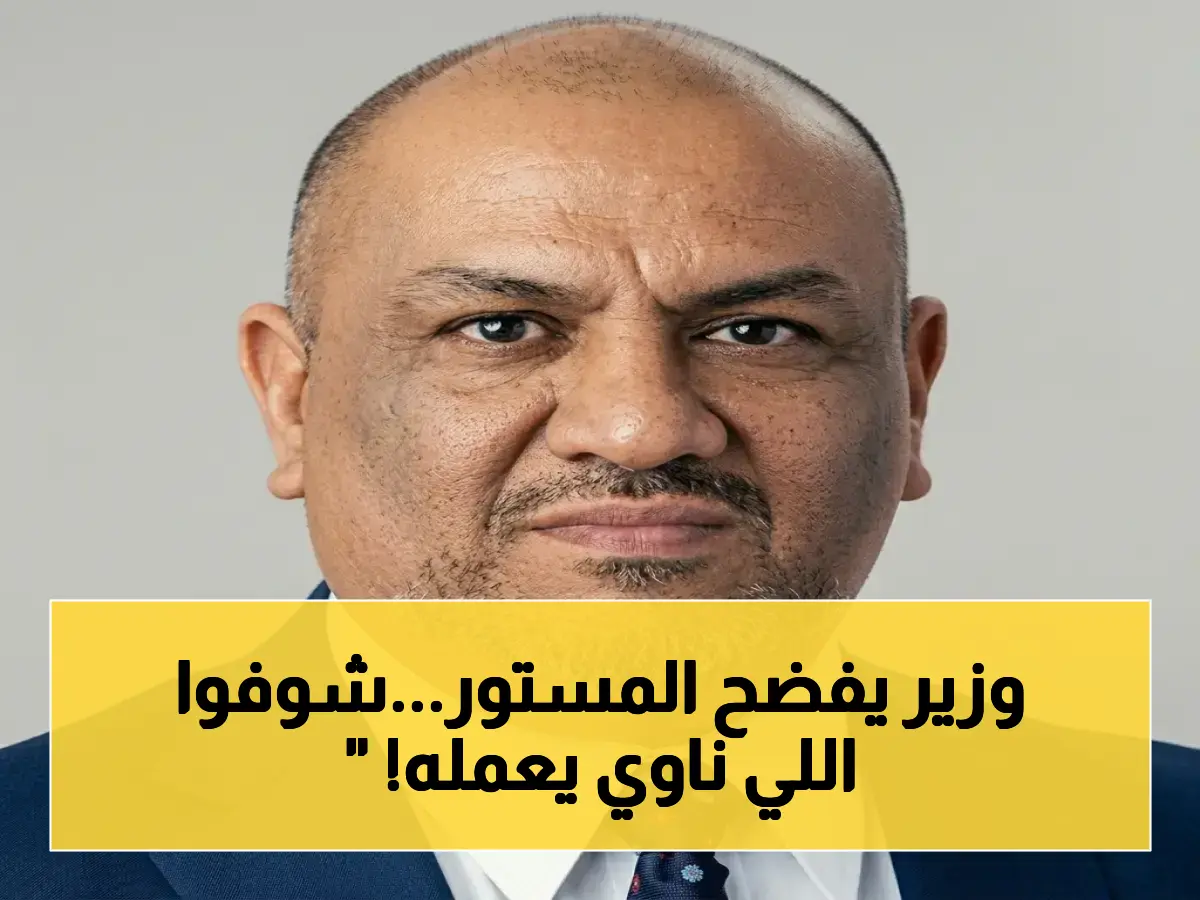
Former Foreign Minister Khaled al-Yamani described the presence of the Islah Party within the legitimate Yemeni government and the Presidential Leadership Council as an “anomaly,” and directly called on Washington to make a decision to end this presence.
Al-Yamani stated on the “X” platform that the party, which he considered one of the most active branches of the Muslim Brotherhood, runs a network of dozens of entities including schools, associations, mosques, and companies, capable of managing billions of dollars.
The former minister added that the party intersects on the ground with the Iranian Revolutionary Guard, asserting that current facts demonstrate the danger of the group and its role in the region.
Al-Yamani highlighted statements by Saudi Minister of Islamic Affairs, Dawah, and Guidance Abdul Latif Al al-Sheikh, who warned against Muslim Brotherhood groups, considering them to carry clear messages about the dangers of these groups.
He also cited the counter-terrorism strategy issued by the White House on May 6, which described the Muslim Brotherhood as the “root of modern Islamic terrorism,” expecting that U.S. actions would include the group’s branches in several countries.
The former minister’s statements sparked significant interaction on social media, between supporters of his stance toward the party and opponents who saw it as a political escalation deepening divisions within the Yemeni scene.
Iranian Revolutionary Guard
The Islamic Revolutionary Guard Corps (IRGC) is a powerful branch of Iran’s military, established after the 1979 Iranian Revolution to protect the country’s Islamic system. Unlike the regular army, it is ideologically loyal to the Supreme Leader and oversees Iran’s ballistic missile program, as well as its influence abroad through forces like the Quds Force. The IRGC also plays a major role in Iran’s economy and politics, and has been designated a terrorist organization by the United States.
White House
The White House is the official residence and workplace of the President of the United States, located in Washington, D.C. Construction began in 1792 under President George Washington, and it was first occupied by John Adams in 1800. The building was burned by British forces in 1814 during the War of 1812, but was later rebuilt and expanded, becoming a symbol of American leadership.
Iranian Revolutionary Guard
The Islamic Revolutionary Guard Corps (IRGC) is a powerful branch of Iran’s military, established after the 1979 Islamic Revolution to protect the country’s revolutionary ideology and leadership. Unlike the regular army, it oversees Iran’s strategic weapons programs, including ballistic missiles, and exerts significant influence over the country’s political, economic, and social spheres. The IRGC has also been involved in regional conflicts, such as in Syria and Iraq, and is designated as a terrorist organization by the United States.
White House
The White House is the official residence and workplace of the President of the United States, located in Washington, D.C. Construction began in 1792, and it was first occupied by President John Adams in 1800. The building was burned by British forces during the War of 1812, but was later rebuilt and expanded, becoming a enduring symbol of the American presidency.
</div
White House
The White House is the official residence and workplace of the President of the United States, located in Washington, D.C. Its construction began in 1792 under President George Washington, and it was first occupied by President John Adams in 1800. The building was set on fire by British troops during the War of 1812 but was later rebuilt and has since undergone numerous renovations and expansions.
Iranian Revolutionary Guard
The Islamic Revolutionary Guard Corps (IRGC) is a powerful branch of Iran’s military, established shortly after the 1979 Islamic Revolution to protect the country’s new theocratic system. Unlike the regular army, the IRGC is tasked with safeguarding the revolution’s ideals, and it has grown into a major political, economic, and military force in Iran. Its history includes significant involvement in the Iran-Iraq War (1980–1988) and its ongoing influence as a key player in the region, including through its Quds Force, which conducts overseas operations.