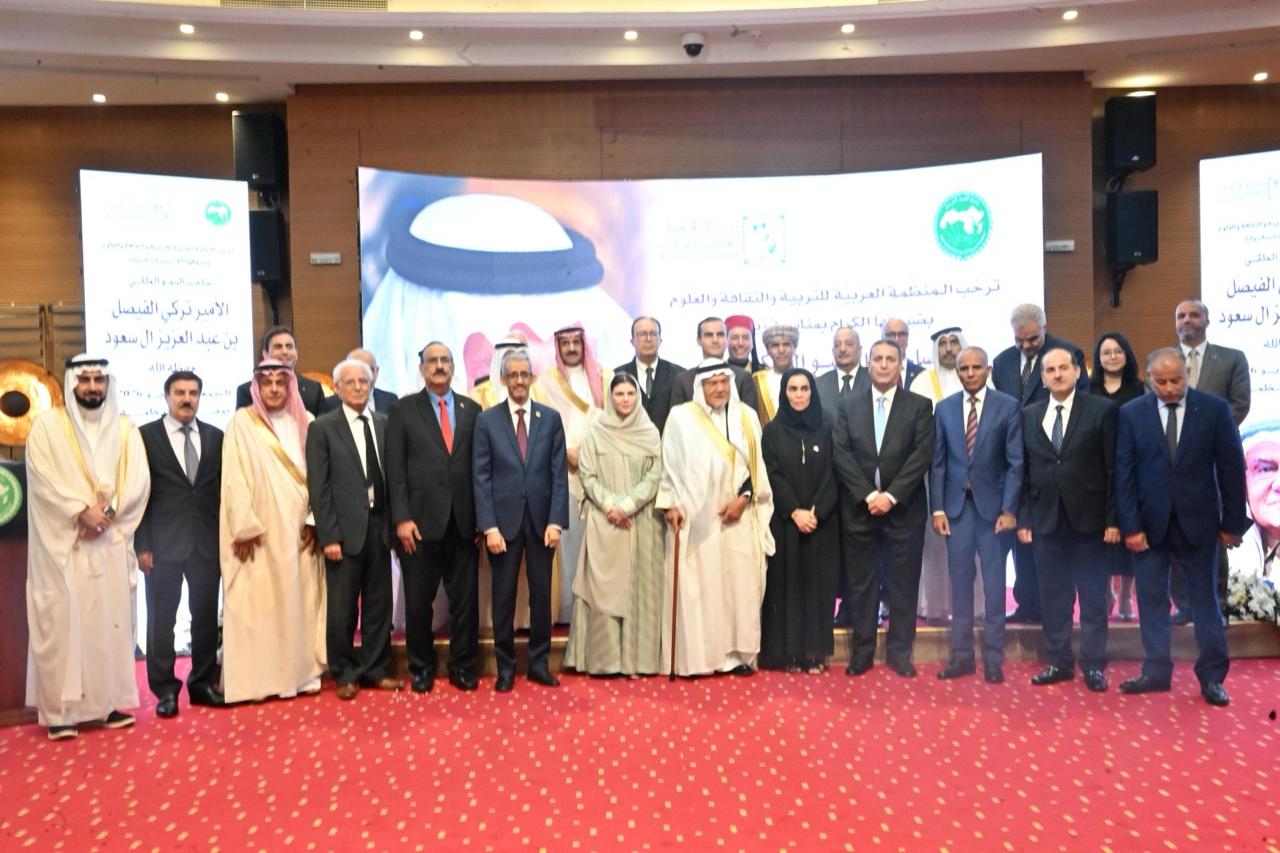
Prince Turki Al-Faisal, Chairman of the Board of Directors of the King Faisal Center for Research and Islamic Studies, stated that Arab culture should not isolate itself or be closed-minded about dialogue. Instead, it begins with loyalty to one’s homeland while being open to the world, and sees joint Arab action as a shared destiny. He emphasized that education, culture, and science together represent an Arab project capable of using heritage and modern achievements to build an effective human presence based on the values of justice and fairness.
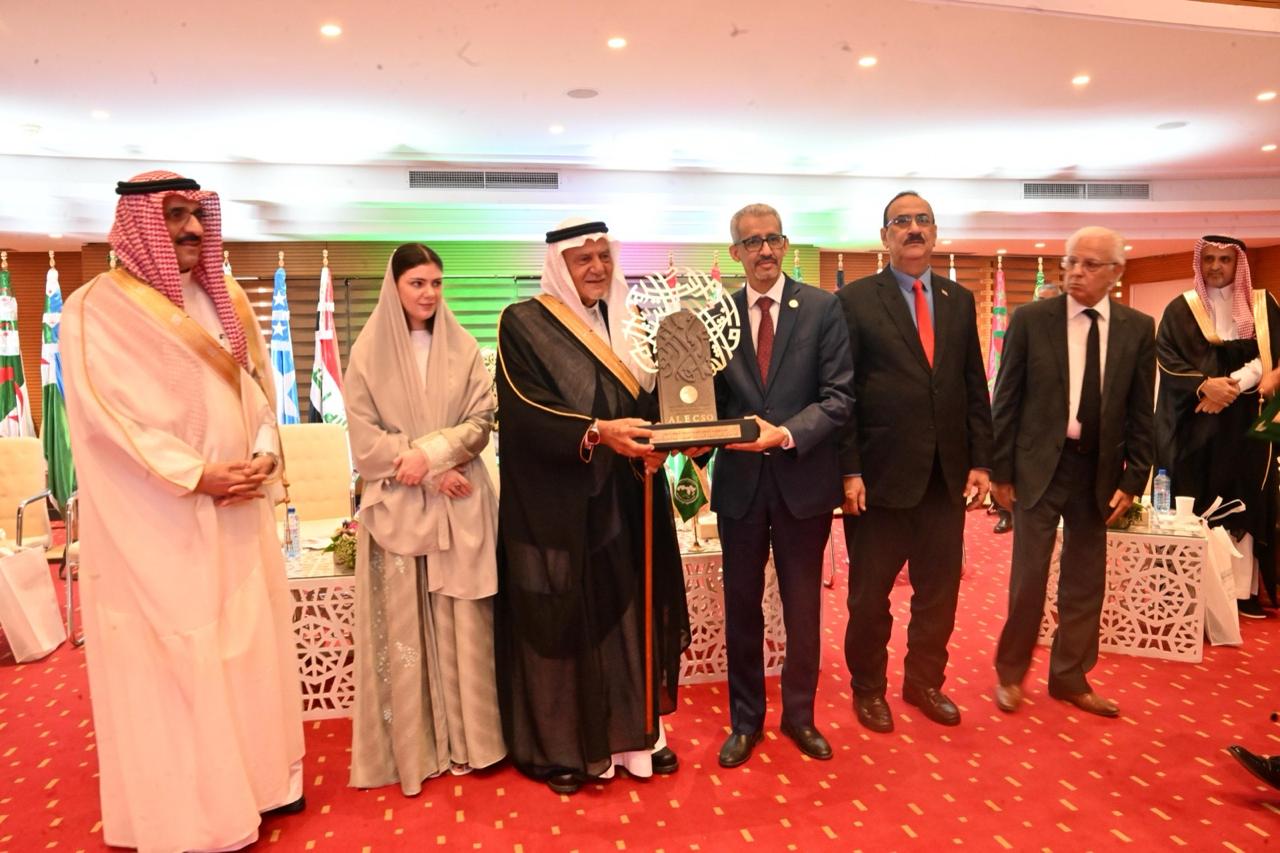
This happened during a lecture he gave titled “The Mission of the King Faisal Center for Research and Islamic Studies in Serving Arab Culture,” on Friday, at the headquarters of the Arab League Educational, Cultural and Scientific Organization (ALECSO) in Tunisia, as part of his visit to the Tunisian Republic, which included the launch of the “Chair of Arab and Islamic Crafts” jointly between ALECSO and the King Faisal Center for Research and Islamic Studies.
He pointed out that Arab culture, throughout its history, has been a bridge between East and West, and a cradle of knowledge and civilization. He recalled the civilizational heritage of Tunisia and its major intellectual and cultural contributions, as well as the lasting presence of Kairouan, Zaytouna, and Carthage in the history of Arab culture, along with the contributions of Tunisian figures and thinkers in building Arab and Islamic awareness. He stressed that holding the lecture at ALECSO’s headquarters carries a symbolic meaning that combines the Arab dimension with the humanistic message of culture.
He also emphasized that defending Arab culture is inseparable from defending humanity and its dignity, and from the right of peoples to preserve their narrative and to call things by their names. He considered that defending the Arab narrative and the cultural right to name things is part of defending the Arab human being and his dignity.
Prince Turki Al-Faisal affirmed that the Palestinian cause will remain present in Arab, Islamic, and human consciousness, describing Palestine as “an Arab memory and an open wound in the global conscience.” He pointed out that protecting humanity is inseparable from protecting its history, culture, and memory, and that preserving the land is linked to preserving the book, the story, and identity.
He addressed the mission of the King Faisal Center for Research and Islamic Studies, explaining that the Center was established to help serve the causes of Arabs and Muslims, opening its doors to researchers from all over the Arab and Islamic world without discrimination or exclusion, based on the belief that culture, knowledge, and dialogue are essential tools for building human solidarity and enhancing civilizational communication. This is a vision that believes Arab solidarity is not a passing slogan, but an intellectual and institutional effort based on dialogue and building cultural bridges.
He also recalled part of the vision of King Faisal bin Abdulaziz, affirming that a nation that does not carry a cultural project cannot carry a deep political project. He cited the contents of King Faisal’s speech before the Tunisian National Assembly in 1386 AH / 1966 AD, which included a call to establish security, peace, and justice, reject greed and interference in others’ affairs, and adhere to shared religious and human values in building the future.
Prince Turki Al-Faisal explained that supporting major causes requires awareness, education, media, and cultural institutions that preserve heritage and address the world in the language of the era. He noted that the “King Faisal Charitable Foundation” was launched one year after the martyrdom of King Faisal, before the King Faisal Center for Research and Islamic Studies emerged from it in 1403 AH / 1983 AD, to be a practical extension of the mission of science, dialogue, and building bridges between Arab culture and the world.
He pointed out that the Arab book has historically been a house of reason, a memory of the city, and a record of knowledge, with its pages carrying the traces of scholars and the journeys of copying, circulation, and knowledge.
He spoke about the Center’s care for manuscripts and Arab and Islamic heritage, stating that the Center holds more than twenty-eight thousand original manuscript titles, in addition to tens of thousands of photographed manuscripts, covering various fields including Quranic sciences, Hadith, jurisprudence, language, literature, philosophy, medicine, astronomy, and mathematics.