)
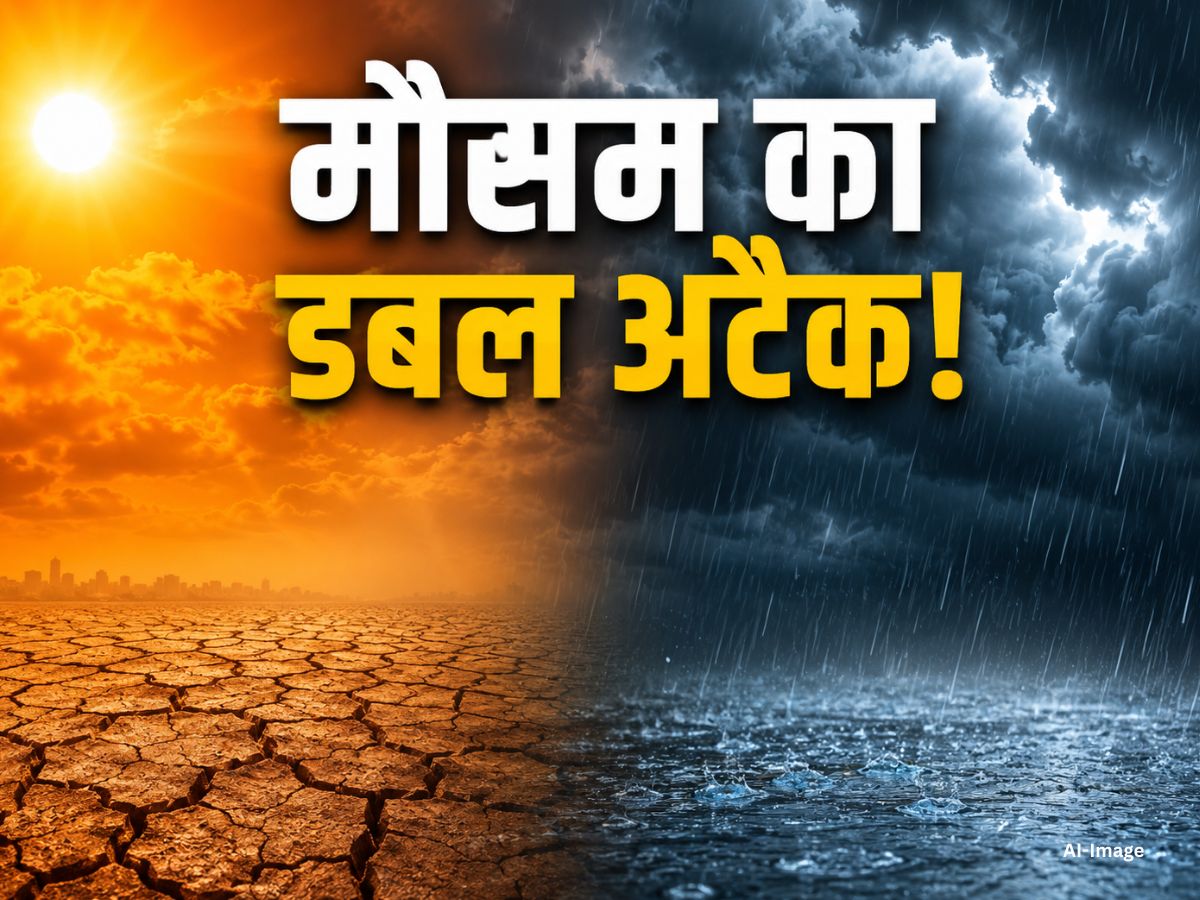
Weather across different parts of the country has presented two completely different pictures. On one side, northwest India is gripped by intense heat and heatwaves, while on the other, heavy rain, storms, and thunderstorms have begun in southern and northeastern states. The weather department says the monsoon is gradually advancing northward, causing this major difference in weather patterns.
The India Meteorological Department (IMD) has issued a heatwave alert for western parts of Rajasthan, Uttar Pradesh, west and east Madhya Pradesh, Vidarbha, Punjab, Haryana, Delhi, and Chhattisgarh. In these areas, strong sunlight and hot winds during the day could increase people’s discomfort. In Delhi, temperatures are expected to reach between 39 and 42 degrees Celsius. The sky will mostly remain clear, with very low chances of rain. The weather department has advised people to avoid going out during the afternoon, drink plenty of water, and protect themselves from the sun.
Which states will experience heavy rainfall?
While northern India is reeling from heat, the weather pattern in southern and northeastern India will be completely different. According to the IMD, heavy to very heavy rainfall may occur in Arunachal Pradesh, Assam, Meghalaya, sub-Himalayan West Bengal, Sikkim, the Andaman and Nicobar Islands, Tamil Nadu, Kerala, and parts of Karnataka. These areas are also likely to experience thunderstorms with strong winds, which could reach speeds of 40 to 50 kilometers per hour. Especially in the hilly regions of the northeast, there is a risk of flash floods and landslides, so people have been advised to stay alert.
What is the El Niño effect?
El Niño is a natural climate phenomenon that forms in the Pacific Ocean, and its impact is not limited to the sea but affects weather across the entire world. When seawater in the central and eastern parts of the Pacific Ocean becomes warmer than normal, El Niño conditions arise. Along with this, wind patterns also change, disrupting the global weather balance. Due to El Niño, the weather cycle becomes erratic in different parts of the world. Many countries face conditions like heavy rain and floods, while some regions experience severe droughts. The rise in temperature and unusual weather behavior also have a major impact on agriculture, water resources, and daily life.
How important is the El Niño effect for India?
El Niño is considered very significant for India as well, because it is directly linked to the monsoon. According to weather scientists, since 1980, in about 70 percent of El Niño years, the monsoon in India has been weaker than normal. Weak rainfall led to drought-like conditions in many states and also affected agricultural production. This is why the weather department and scientists constantly monitor every El Niño activity in India.
What will the weather be like in major cities?
Mumbai will continue to experience hot and humid weather. Temperatures here could range between 32 and 35 degrees Celsius, with light rain possible in some places.
Bengaluru will see cloudy skies, with thunderstorms and rain likely. Chennai will remain hot and humid, where temperatures could reach 36 degrees Celsius. Kolkata and Hyderabad will also have hot weather, but with clouds and chances of thunder and light rain in some areas.
When will the monsoon reach India?
The southwest monsoon has arrived in parts of the southeast Arabian Sea, the Bay of Bengal, the Andaman Sea, and the Nicobar Islands. The weather department estimates that the monsoon may reach Kerala around May 26, though there is a possibility of a four-day variation. Until then, northern India is expected to continue facing intense heat, while pre-monsoon rains in southern and northeastern India will continue to provide relief to people.
Rajasthan
<