Heavy rain and flash floods cause landslides in Sikkim; army rescues stranded tourists.
Sikkim is reeling under landslides and flash floods triggered by relentless heavy rain. The army launched an operation to rescue tourists stranded on the Nathu La road. Multiple roads remain blocked. Heavy rain is also lashing Bhutan, where streams and rivers have overflowed onto roads. Meanwhile, as the heavy rain in the hills of Sikkim and Bhutan drains down to the plains, rivers like the Teesta and Torsa are swelling. According to the regional meteorological center in Sikkim, heavy to very heavy rain will continue in the northern plains until Monday.
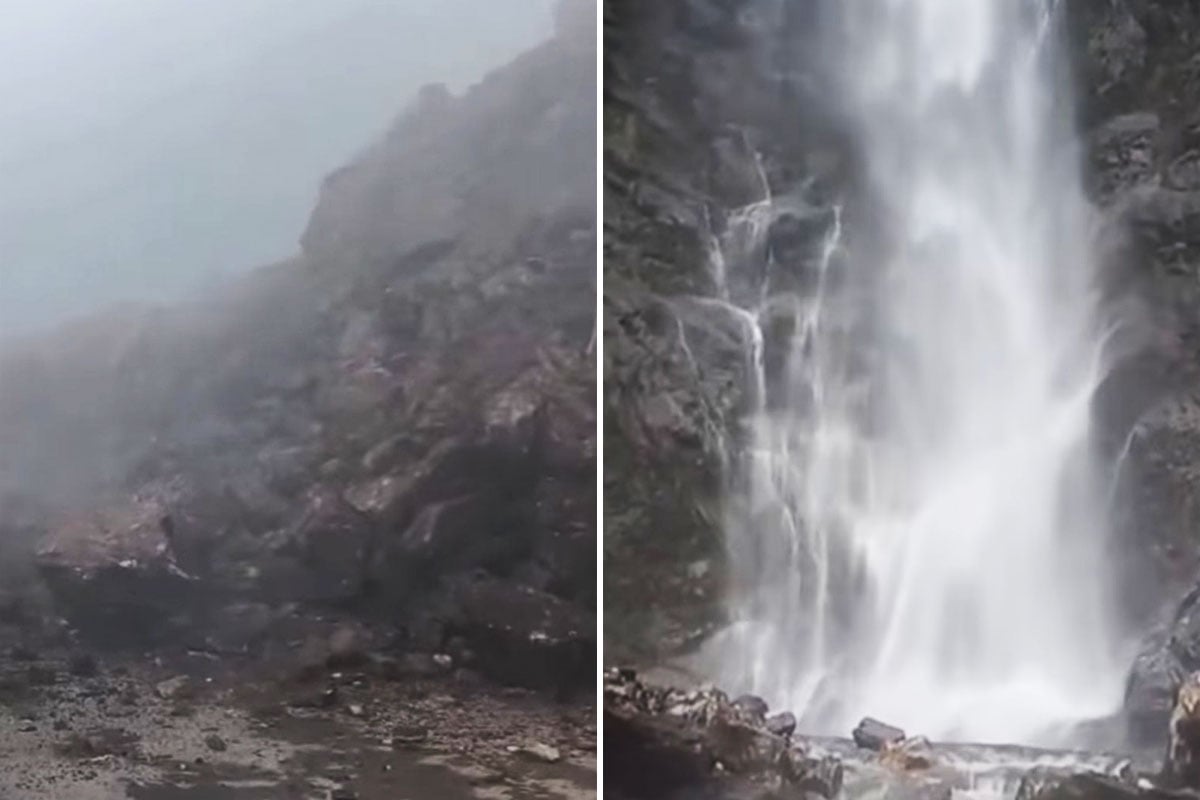
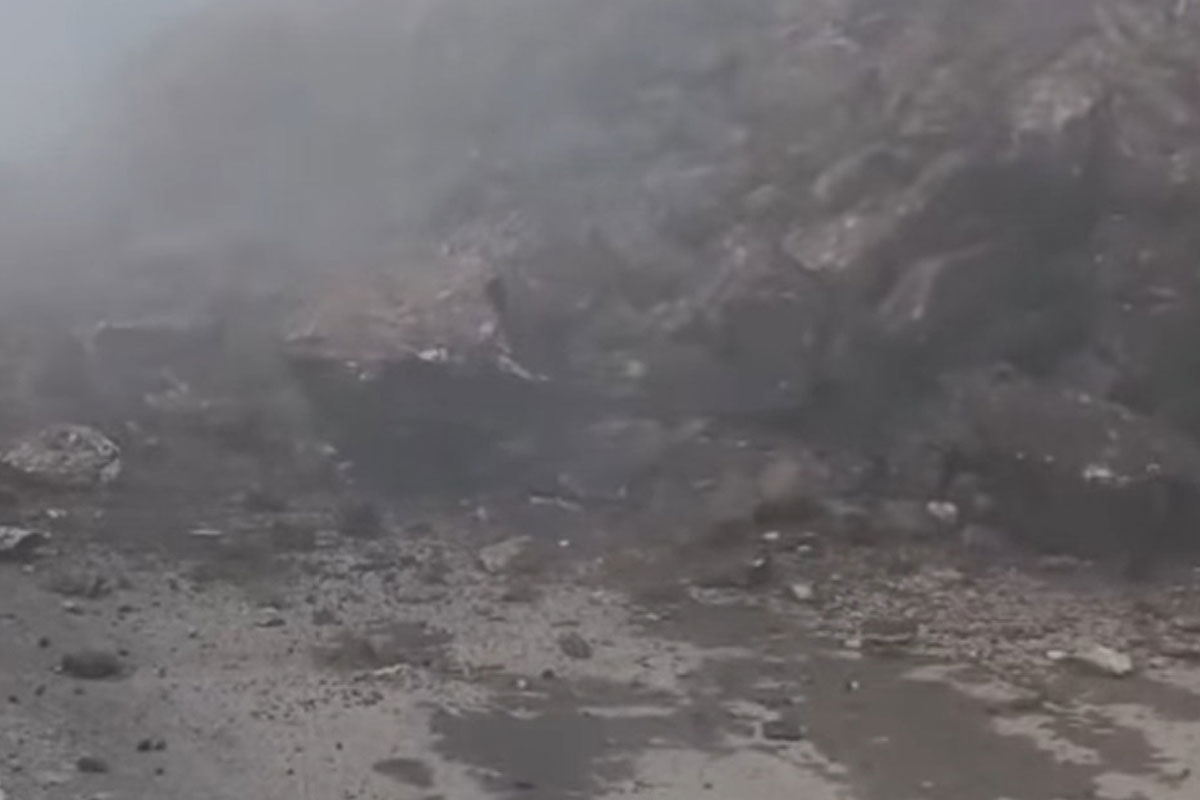
According to the meteorological office, continuous rain caused a landslide on the Nathu La road around noon. The road was blocked, severing connectivity on the route to Gangtok. Over a hundred tourists were stranded. After being stuck for about six hours, soldiers from the army’s Trishakti Corps launched a special operation and rescued them. Sikkim administration sources said the tourists were stranded on their way back after visiting Nathu La and the Baba Harbhajan Singh temple. The army carried out the rescue operation despite sub-zero temperatures, slippery roads, and adverse weather conditions.
Read more:
Road blocked by landslide. Image: Collected
The army stated that arrangements for medical aid, hot meals, snacks, and drinking water have been made for the stranded tourists until the debris is cleared and traffic resumes. Due to continuous rain, a road near Dikchu-Singtam was partially damaged as three culverts overflowed, bringing traffic to a halt there as well. The road was repaired by Saturday noon. A truck got stuck on a landslide-affected road, disrupting traffic from the Indira Bypass towards the STNM Hospital. Several rivers in Sikkim are swelling due to the heavy downpour. Flash flood conditions have developed in the Miyang Chu river at Tung Nagar in North Sikkim.
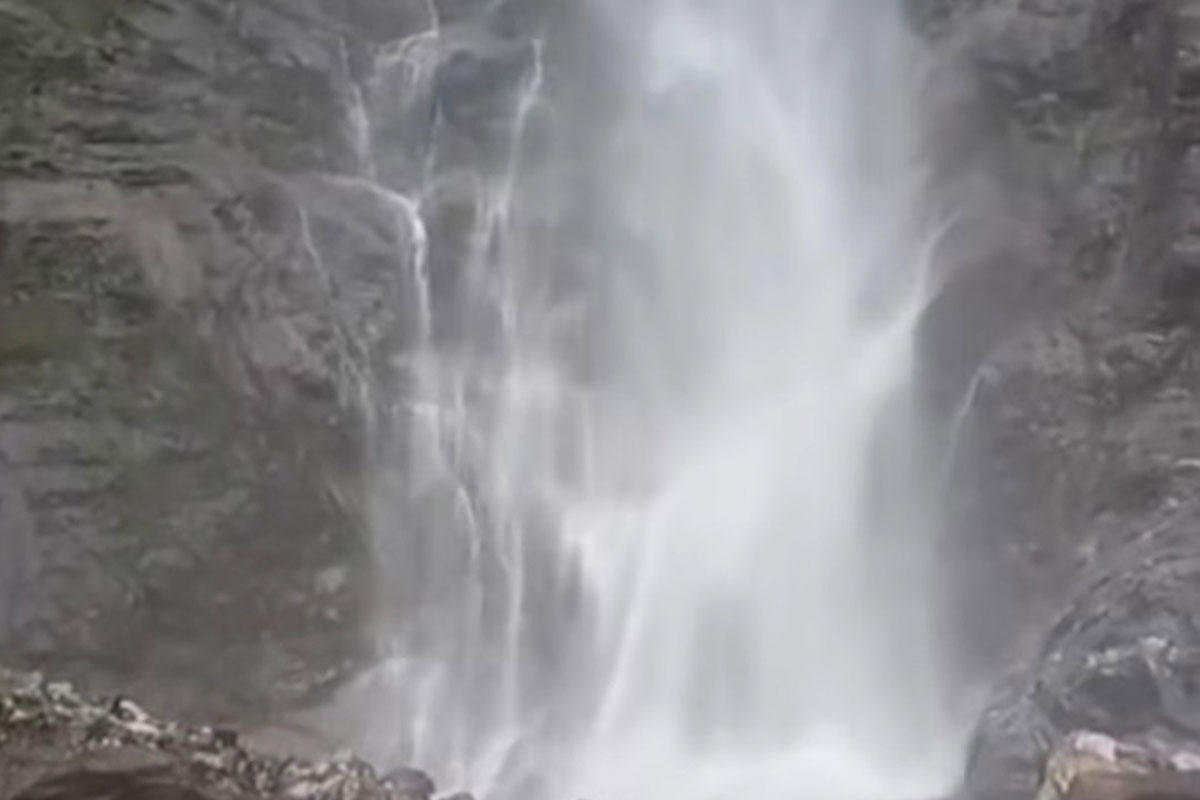
Water cascading down like a stream from above. Image: Collected.
Due to heavy rain in Sikkim, the water level of the Teesta river has risen in the northern plains. Meanwhile, heavy rain is also lashing Jalpaiguri, Alipurduar, and the adjacent hills of Bhutan. Several rivers, including the Torsa, Titi, and Bangri, are swelling. In the border town of Jaigaon, the India-Bhutan road has been submerged by the Torsa river. Additionally, connectivity to Totopara has been severed. Gopinath Raha, the head of the Sikkim meteorological center, said there is a possibility of heavy to very heavy rain on Saturday and Sunday nights in the Alipurduar and Jalpaiguri districts. Heavy to very heavy rainfall has also been forecast.
Nathu La
Nathu La is a high-altitude mountain pass in the Himalayas, located on the border between India’s Sikkim state and China’s Tibet Autonomous Region. Historically, it was part of the ancient Silk Route, facilitating trade between India and Tibet, but it was closed after the 1962 Sino-Indian War. Reopened in 2006 for cross-border trade, it remains a strategically important site and a popular tourist destination.
Baba Harbhajan Singh temple
The Baba Harbhajan Singh temple, located near the Nathu La Pass in Sikkim, India, is a unique shrine dedicated to an Indian Army soldier who died in 1968. According to local legend, his spirit continued to patrol the border, warning of enemy movements and protecting troops, leading to the construction of a temple in his honor by the army. The site is revered by both soldiers and civilians, symbolizing devotion and sacrifice, and is maintained with regular rituals, including a ceremonial bed prepared for his “spirit” each night.
Gangtok
Gangtok is the capital city of the Indian state of Sikkim, nestled in the eastern Himalayas. Originally a small hamlet on the ancient Silk Route, it grew in prominence after becoming a major stop for traders and pilgrims traveling to Tibet. Following India’s independence and Sikkim’s merger in 1975, Gangtok developed into a modern urban center, renowned for its stunning mountain views, Buddhist monasteries, and vibrant culture.
Dikchu-Singtam
Dikchu-Singtam is a region in the Indian state of Sikkim, known for its scenic beauty and the Dikchu River. The area is historically significant for its role in the development of hydropower projects, particularly the Dikchu Hydroelectric Project, which has contributed to the local economy and infrastructure. It also reflects the cultural and natural heritage of Sikkim, blending traditional Lepcha and Bhutia influences.
STNM Hospital
STNM Hospital, located in Gangtok, Sikkim, is the state’s oldest and largest government healthcare facility. Originally established in the 1950s, it was named after the late Sikkim Queen, S.T. Namgyal, and has since grown into a key referral and teaching hospital serving the region. It provides a wide range of medical services and plays a crucial role in public health for the local population and surrounding areas.
Miyang Chu river
The Miyang Chu River is a significant waterway in the Tibetan region, flowing through the Yarlung Valley, which is considered the cradle of Tibetan civilization. Historically, it is closely tied to the early Tibetan Empire, as the Yarlung Valley was the homeland of the first Tibetan kings, including the legendary King Nyatri Tsenpo. The river’s fertile banks supported agriculture and settlement, playing a vital role in the region’s cultural and political development.
Teesta river
The Teesta River is a major waterway in the Indian subcontinent, originating in the Himalayas of Sikkim and flowing through West Bengal before entering Bangladesh. Historically, the river has been a vital source for agriculture and livelihoods, and it was the site of the 17th-century Battle of Teesta between the Mughal Empire and the Kingdom of Sikkim. Today, it is known for its stunning turquoise waters and is a popular destination for white-water rafting and ecotourism.
Torsa river
The Torsa River originates in the Chumbi Valley of Tibet, China, and flows through the Indian state of West Bengal and into Bangladesh, where it is known as the Kaljani River. Historically, it has served as a significant natural boundary and water source for the region, with its course shaping local agriculture and settlement patterns. The river is also culturally important, featuring in local folklore and as a site for traditional fishing and irrigation practices.