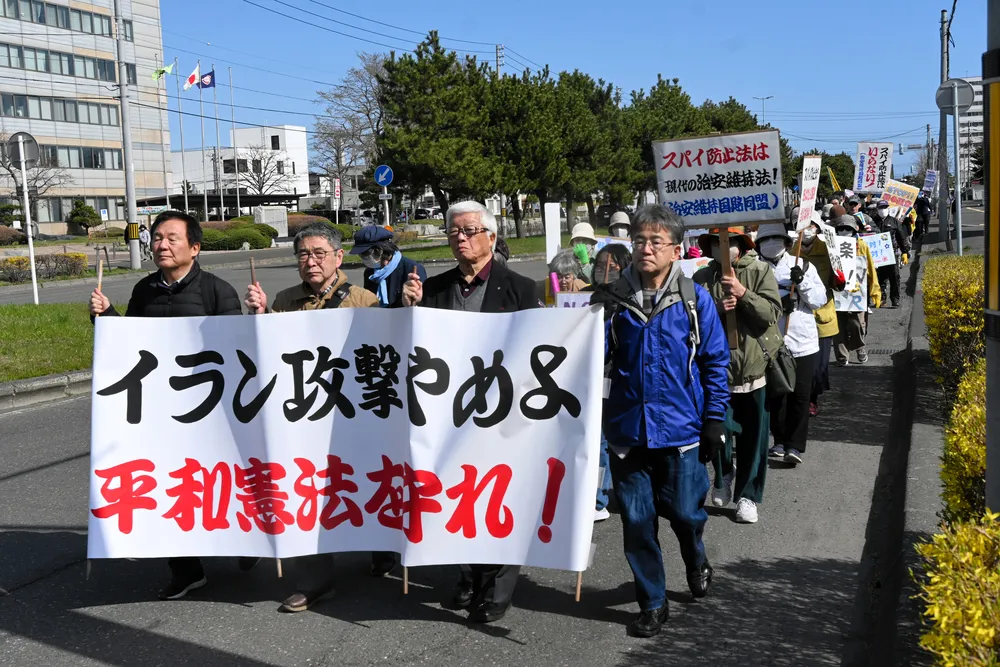
Demonstrations against the U.S. and Israeli attack on Iran took place on the 25th in Tomakomai City, where about 170 people raised slogans such as “Stop the war.”
Tomakomai City
Tomakomai City is a port city located on Hokkaido’s Pacific coast, Japan. Historically, it developed rapidly after the Meiji Restoration as a key hub for coal shipping and later for heavy industries like paper manufacturing and oil refining. Today, it serves as an important industrial and logistics center, known for its scenic Lake Utonai wildlife sanctuary and access to nearby natural attractions like Lake Shikotsu.
Tomakomai City
Tomakomai City is a port city located in southwestern Hokkaido, Japan, known for its industrial development and natural beauty. Historically, it grew rapidly in the late 19th and early 20th centuries as a key hub for shipping and paper manufacturing, and it was designated a city in 1922. Today, it serves as a gateway to nearby attractions like Lake Shikotsu and offers a mix of urban amenities and access to outdoor recreation.
Hokkaido
Hokkaido, Japan’s northernmost main island, was historically known as Ezo and was inhabited by the indigenous Ainu people before large-scale Japanese settlement began in the late 19th century. Following the Meiji Restoration, the region was officially renamed Hokkaido in 1869 and developed rapidly through agriculture, mining, and infrastructure projects. Today, it is famous for its natural beauty, ski resorts, and unique culture that blends Ainu heritage with modern Japanese influences.
Lake Utonai
Lake Utonai is a shallow, brackish lake located in Hokkaido, Japan, near the town of Tomakomai. Designated as a Ramsar Wetland site in 1991, it serves as a critical stopover point for migratory birds, including the endangered red-crowned crane. Historically, the area has been valued for its rich biodiversity and was traditionally used by the indigenous Ainu people for fishing and hunting.
Lake Shikotsu
Lake Shikotsu is a caldera lake located in Shikotsu-Toya National Park in Hokkaido, Japan, known for its crystal-clear waters and scenic beauty. Formed approximately 40,000 years ago by a massive volcanic eruption that created a caldera, it is one of Japan’s deepest lakes and never freezes over due to its depth. The lake is a popular destination for outdoor activities like canoeing and camping, and it holds cultural significance as a sacred site for the indigenous Ainu people.
Tomakomai City
Tomakomai City is a port city located on the southwestern coast of Hokkaido, Japan. It developed rapidly in the late 19th and early 20th centuries as a key industrial and shipping hub, particularly for coal and paper products. Today, it remains an important economic center known for its heavy industry, natural harbors, and proximity to Lake Utonai, a Ramsar-designated wetland.
<div
Tomakomai City
Tomakomai City is a port city located on Japan’s northern island of Hokkaido, known for its industrial development and natural beauty. Historically, it grew rapidly in the late 19th and early 20th centuries as a key port for exporting coal and timber, and it later became a hub for paper manufacturing and heavy industry. Today, it also serves as a gateway to the scenic Lake Shikotsu and nearby national parks.
Lake Utonai
Lake Utonai is a shallow freshwater lake located in Hokkaido, Japan, near the Pacific coast. It is a designated Ramsar Site, recognized for its importance as a habitat for migratory waterfowl and other wildlife, particularly along the East Asian-Australasian Flyway. Historically, the area has been used for conservation and nature observation, with efforts to preserve its diverse ecosystems and bird populations since the 20th century.
Lake Shikotsu
Lake Shikotsu is a caldera lake located in Shikotsu-Toya National Park in Hokkaido, Japan, formed approximately 40,000 years ago by a volcanic eruption. Known for its exceptional water clarity and deep blue color, it is one of the northernmost ice-free lakes in Japan. The area is also home to hot springs and offers outdoor activities like kayaking and hiking, with the surrounding forests providing habitat for diverse wildlife.
Hokkaido
Hokkaido, Japan’s northernmost island, was originally inhabited by the Ainu people before large-scale Japanese settlement began in the late 19th century. It was officially incorporated as a territory in 1869, and its development was spurred by the Meiji government’s efforts to modernize and exploit its natural resources. Today, Hokkaido is famous for its unspoiled nature, ski resorts, and annual Sapporo Snow Festival.
Shikotsu-Toya National Park
Shikotsu-Toya National Park is a scenic protected area in Hokkaido, Japan, known for its volcanic landscapes, caldera lakes, and hot springs. The park was established in 1949 and encompasses two major caldera lakes—Lake Shikotsu and Lake Toya—formed by ancient volcanic eruptions thousands of years ago. Visitors can explore active volcanoes like Mount Usu and Mount Showa-shinzan, which emerged from farmland during eruptions in the 20th century.