The operational plan for the Hajj season of the year 1447 AH includes more than 150 qualitative and enriching initiatives, implemented during the season to bring about a qualitative leap in the quality of religious services provided to pilgrims.

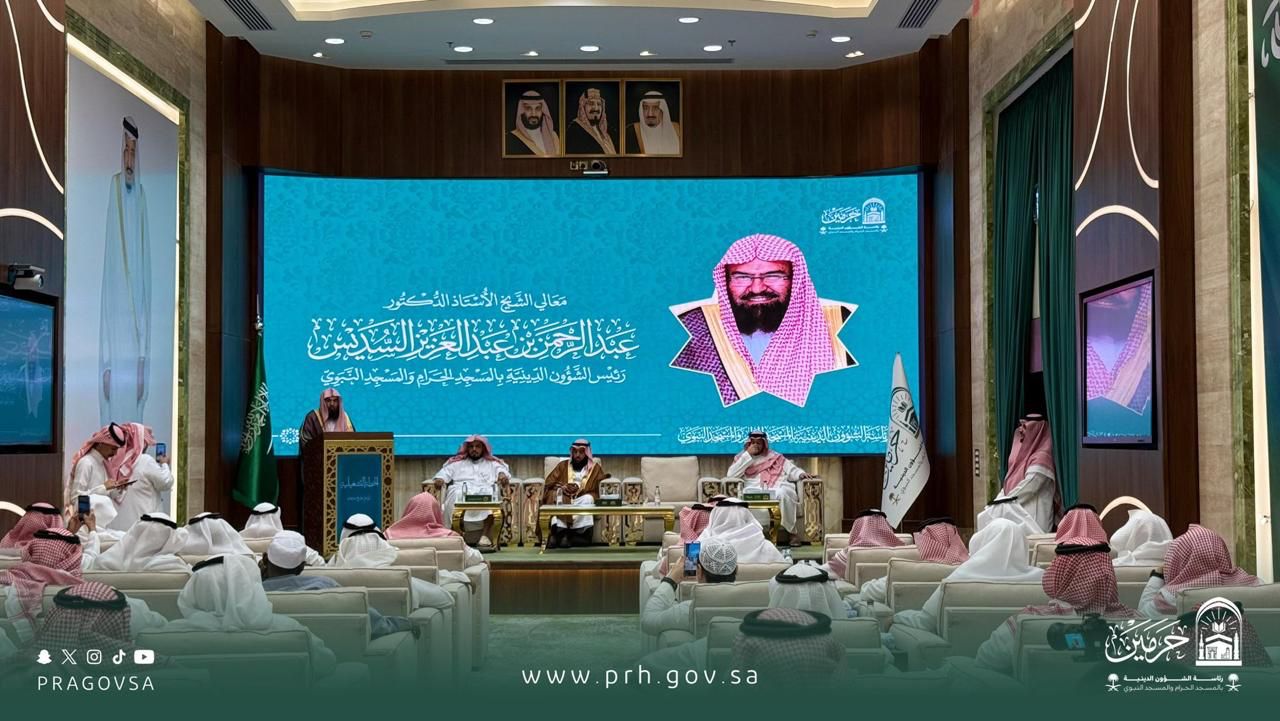
During the announcement of the Hajj season plan at the headquarters of the Religious Affairs Presidency in Mecca today, it was stated that employing artificial intelligence in the operational plan represents a qualitative leap in developing religious services, in line with the goals of the Year of Artificial Intelligence in the Kingdom, and enhancing the pilgrims’ experience. It was emphasized that the plan enhances global reach through 60 languages, using an advanced digital system and modern technologies to serve the guests of the Most Merciful.
It was confirmed that the operational plan for Hajj 1447 AH is based on established legal and methodological foundations, and aims to enrich the religious and cognitive experience of pilgrims through an integrated system of qualitative programs. This represents an extension of the aspirations of the wise leadership—may God support them—in raising the quality of religious services and enriching the experience of the guests of the Most Merciful. The General Consultant of the Religious Affairs Presidency presented the executive programs of the plan, which include an integrated system of initiatives for imams, scientific lessons, answering questions, and Quran circles, contributing to the dissemination of Islamic knowledge and enhancing guidance. It was emphasized that the operational plan for Hajj 1447 AH stems from a strategic vision that enhances the enrichment of the pilgrims’ experience and enables them to perform their worship in an integrated spiritual environment supported by the latest technologies…
The operational plan for the Hajj season is based on the seven strategic goals of the Presidency and achieves them, through two tracks: qualitative enriching initiatives and seasonal routine operational works that require expansion or intensification during the Hajj season, to enrich the religious experience of the pilgrims.
Media and communication supervisors welcomed the media, appreciating their pivotal role in highlighting the message of the Two Holy Mosques and conveying their lofty, moderate content to the world.
The operational plan of the Religious Affairs Presidency for the Hajj season of 1447 AH includes 10 enriching tracks, more than 150 initiatives, and services provided in 60 languages, all within a state of full readiness according to the highest quality standards, to enrich the pilgrims’ experience and enhance the global message of the Two Holy Mosques.

Mecca

Mecca is the holiest city in Islam, located in modern-day Saudi Arabia, and is the birthplace of the Prophet Muhammad. Its history dates back to pre-Islamic times as a trading hub, but it gained profound religious significance after the Prophet’s revelations in the 7th century. Today, it is the destination for the Hajj pilgrimage, centered around the sacred Kaaba within the Masjid al-Haram mosque.

Two Holy Mosques

The “Two Holy Mosques” refers to the Masjid al-Haram in Mecca and the Masjid al-Nabawi in Medina, the two holiest sites in Islam. Masjid al-Haram surrounds the Kaaba, which Muslims face during prayer, and has been a center of pilgrimage since the time of Prophet Abraham. Masjid al-Nabawi was built by the Prophet Muhammad in the 7th century and contains his tomb, making it a site of immense spiritual significance for millions of visitors each year.

Mecca

Mecca is the holiest city in Islam, located in western Saudi Arabia, and is the birthplace of the Prophet Muhammad. Historically, it has been a significant center for trade and pilgrimage long before Islam, and today it is the destination of the Hajj pilgrimage, which every able-bodied Muslim is required to undertake at least once. The city’s most sacred site is the Kaaba,

Mecca

Mecca, located in modern-day Saudi Arabia, is the holiest city in Islam and the birthplace of the Prophet Muhammad. It has been a major religious center for centuries, primarily due to the Kaaba, a sacred structure that Muslims around the world face during prayer. As the destination of the annual Hajj pilgrimage, Mecca has deep historical and spiritual significance, drawing millions of pilgrims each year.

Two Holy Mosques

The “Two Holy Mosques” refers to the Masjid al-Haram in Mecca and the Masjid al-Nabawi in Medina, the two holiest sites in Islam. The Grand Mosque in Mecca surrounds the Kaaba, the direction of prayer for Muslims worldwide, and has been a pilgrimage site since the time of Prophet Abraham. The Prophet’s Mosque in Medina, originally built by the Prophet Muhammad himself, houses his tomb and has been expanded over centuries to accommodate millions of worshippers.

Masjid al-Haram

Masjid al-Haram, located in Mecca, Saudi Arabia, is the holiest site in Islam, encompassing the Kaaba, which Muslims face during prayer. Its history dates back to the time of Prophet Ibrahim (Abraham) and his son Ismail, who are believed to have built the Kaaba, with the mosque expanding significantly over centuries to accommodate millions of pilgrims. It serves as the focal point for the Hajj and Umrah pilgrimages, drawing worshippers from around the world.

Masjid al-Nabawi

Masjid al-Nabawi, located in Medina, Saudi Arabia, is the second holiest mosque in Islam, originally built by the Prophet Muhammad in 622 CE. It served as his home, a community center, and the first mosque in Islamic history, and it now houses the Prophet’s tomb beneath its iconic Green Dome. Over centuries, it has been expanded by various Islamic rulers, becoming a major pilgrimage site for millions of Muslims each year.

Medina

Medina is a city in western Saudi Arabia, considered the second holiest city in Islam after Mecca. It is historically significant as the place where the Prophet Muhammad migrated in 622 CE (the Hijra) and established the first Muslim community. The city is home to Al-Masjid an-Nabawi (the Prophet’s Mosque), which contains his tomb and is a major destination for pilgrims.

Kaaba

The Kaaba is a sacred cuboid building at the center of Islam’s holiest mosque, Al-Masjid al-Haram in Mecca, Saudi Arabia. According to Islamic tradition, it was originally built by the Prophet Abraham and his son Ishmael, and it has been a site of pilgrimage for centuries. Muslims around the world face the Kaaba during their daily prayers, and it is the focal point of the annual Hajj pilgrimage.

Related news

Gulf Art Unit

Unity is that strong bond, conscious of the region...

Tuesday, 18 Jumada al-Thani 1447, Issue 19128

Al Jazeera is a Saudi daily newspaper published by...

Acceptance of commercial license ownership transfer

An electronic service provided through the "My Mun...