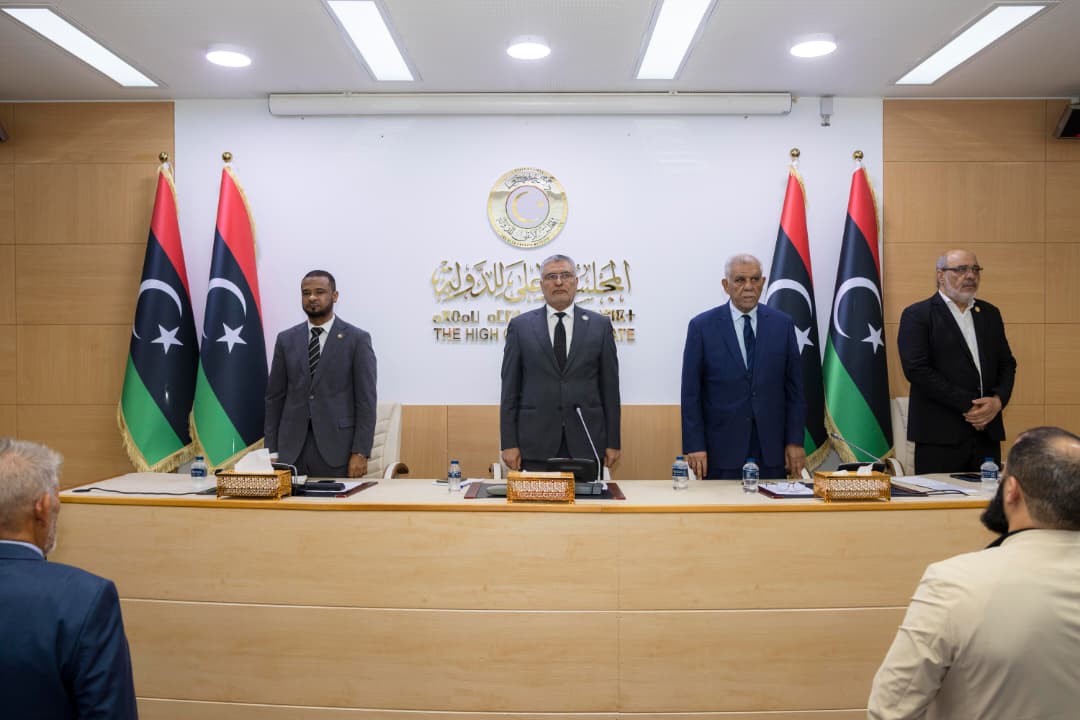
Libyan-Spanish Economic Forum held in Madrid to boost partnership and investment.
The Libyan-Spanish Economic Forum concluded in Madrid on Friday, chaired by the Minister of Industry and Minerals of the Government of National Unity, leading the Libyan delegation, with high-level participation from government officials and representatives of the public and private sectors from both countries.
The Ministry of Industry and Minerals stated that the forum discussed opportunities for cooperation in several areas, along with reviewing investment opportunities available in the Libyan market and ways to transfer technical and technological expertise to enhance economic integration between the two countries.
Participants also emphasized the importance of supporting partnerships between economic institutions and facilitating communication between the public and private sectors, contributing to creating a more effective investment environment.
The forum concluded with an emphasis on the need to translate its outcomes into practical projects that support economic development and achieve mutual interests between the two sides.
Madrid
Madrid is the capital and largest city of Spain, with a history dating back to the 9th century when it was founded as a Moorish fortress. It became the royal capital in 1561 under King Philip II, which spurred its growth into a major political and cultural hub. Today, Madrid is renowned for its grand boulevards, world-class art museums like the Prado, and vibrant plazas such as the Plaza Mayor.
Madrid
Madrid, the capital of Spain, has a rich history dating back to the 9th century when it was founded as a Moorish fortress. It became the royal capital in 1561 under King Philip II, transforming into a political and cultural hub. Today, Madrid is renowned for its vibrant arts scene, historic landmarks like the Royal Palace, and world-class museums such as the Prado.
Madrid
Madrid is the capital and largest city of Spain, known for its rich cultural heritage and vibrant arts scene. Originally established as a fortress in the 9th century by the Emir of Córdoba, it became the permanent royal capital in 1561 under King Philip II. Today, Madrid is famous for landmarks like the Royal Palace, the Prado Museum, and its lively plazas and neighborhoods.
Prado
The Prado Museum, officially the Museo Nacional del Prado, is Spain’s premier art museum, located in Madrid. Founded in 1819 as a public gallery for the Spanish royal collection, it houses one of the world’s finest collections of European art, particularly strong in works by Spanish masters like Goya, Velázquez, and El Greco. Today, it is a major cultural landmark, attracting millions of visitors annually to view its vast holdings of paintings, sculptures, and other artworks from the 12th to the early 20th centuries.
Plaza Mayor
The Plaza Mayor is a historic central square in Madrid, Spain, whose origins date back to the 16th century when it was commissioned by King Philip II. Originally a market and site for public events like bullfights and executions, it was redesigned by architect Juan de Herrera and later rebuilt after a fire in 1790. Today, it remains a popular tourist destination, surrounded by iconic buildings with balconies and the statue of King Philip III at its center.
Royal Palace
The Royal Palace, often a primary residence of a monarch, serves as both a seat of government and a symbol of national heritage. Historically, many royal palaces, such as the Palace of Versailles in France or the Forbidden City in China, were built to project power and wealth, evolving from fortified castles into elaborate centers of court life. Today, many are open to the public as museums, preserving centuries of art, architecture, and political history.